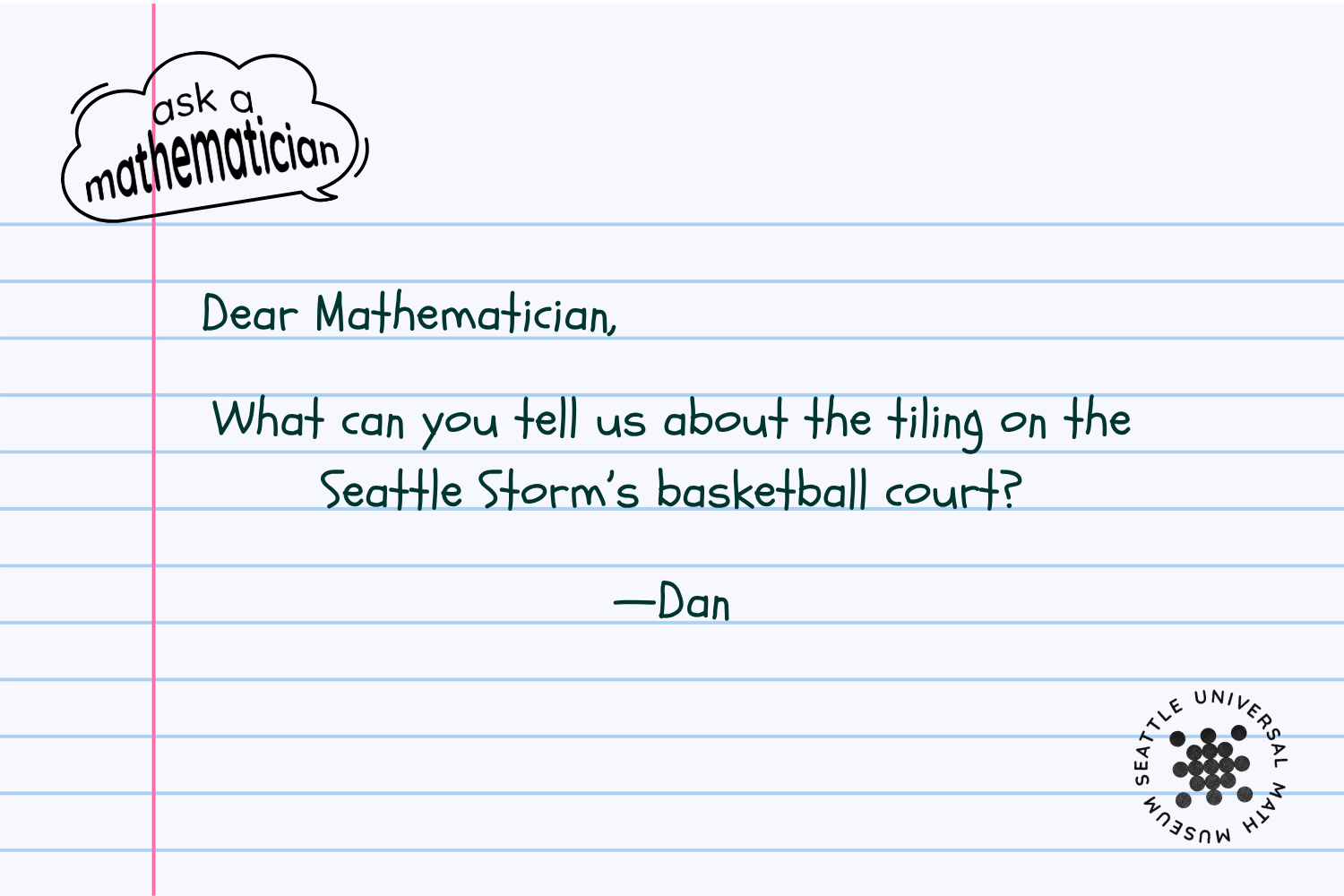
What can you tell us about the tiling on the Seattle Storm’s basketball court?
In this week’s Ask a Mathematician, we look at an interesting pattern in the woodwork of the Seattle Storm’s basketball court in Climate Pledge Arena and similar pattern at the BECU Storm Center for Basketball Performance.
Explain the theory of relativity
In today’s Ask a Mathematician, we look at the theory of relativity.
Is math a science?
In this week’s Ask a Mathematician, we look at the often blurry line between math and science.
Is there math in Seattle?
While there’s some math in Seattle landmarks, there’s also plenty of math to be found in your Seattle neighborhood. Join me on a walk around my neighborhood, where I spot some interesting geometric and topological structures.
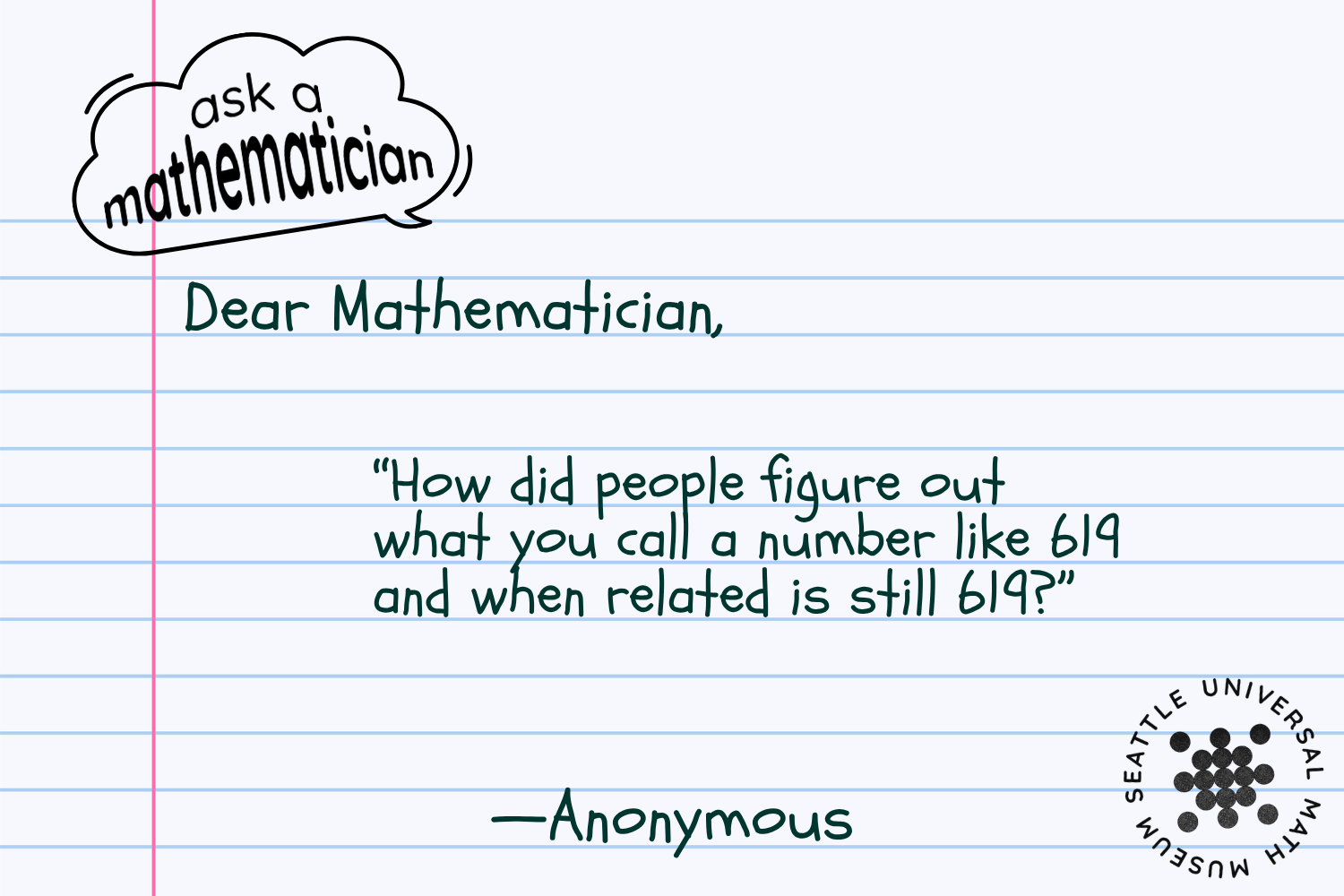
Why do we have to do the P first in PEMDAS?
In this week’s Ask a Mathematician, we look at the order of operations and how it came about.
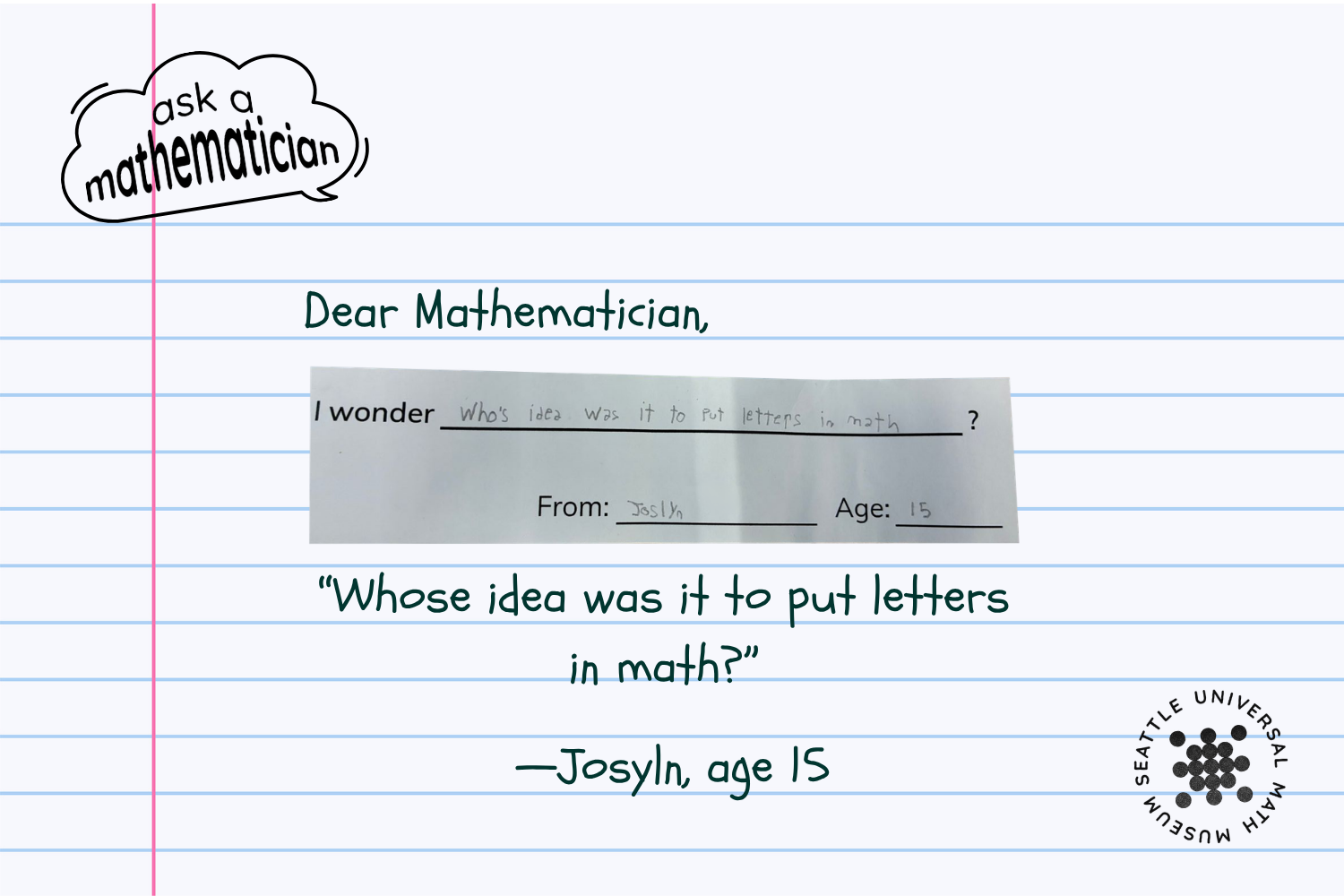
Whose idea was it to put letters in math?
In this week’s Ask a Mathematician, we look a the ways letters were slowly introduced into math over the ages.
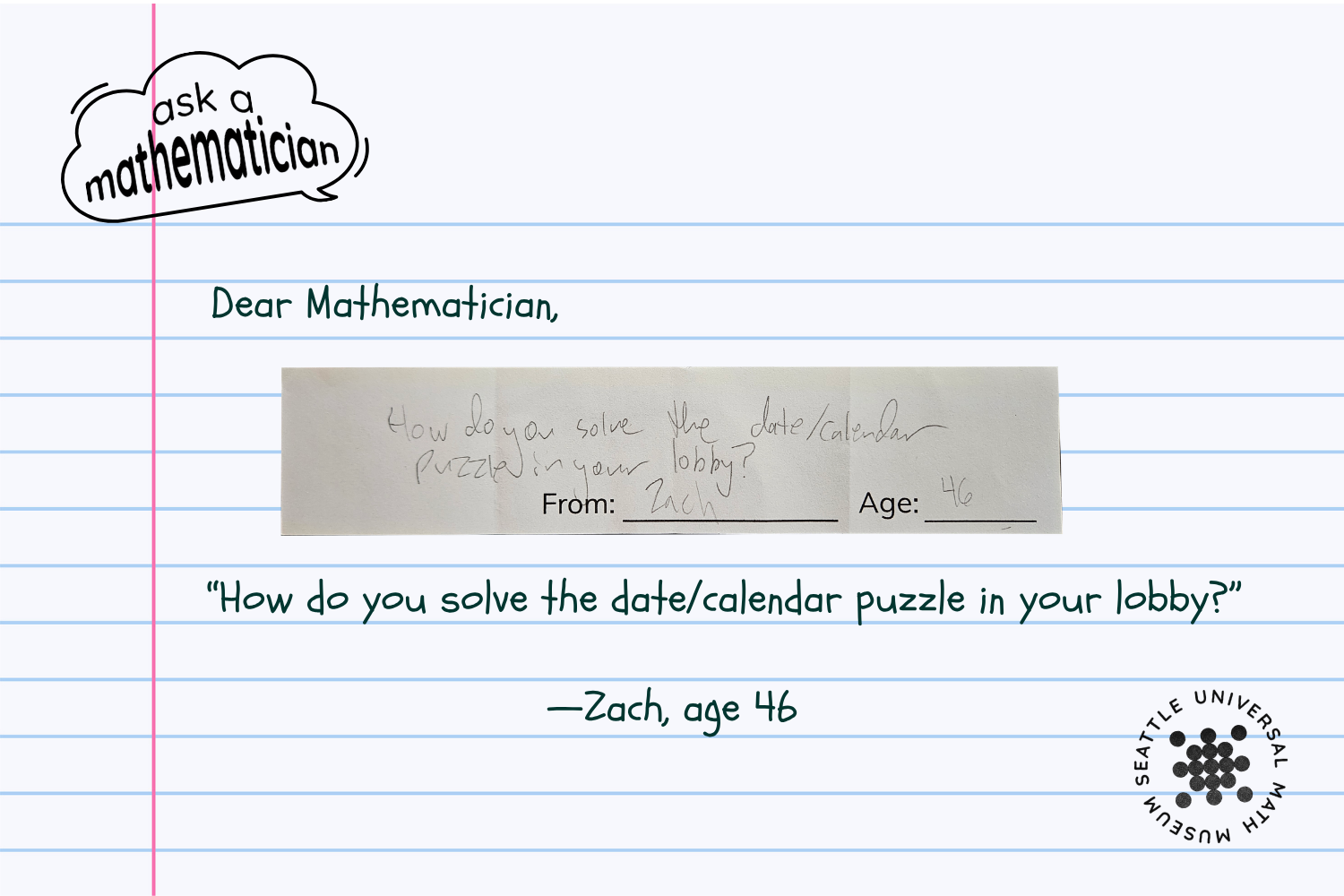
Polyhex Puzzle-a-Day
In this week’s Ask a Mathematician, we look at Steven Stadnicki’s polyhex puzzle-a-day calendar.
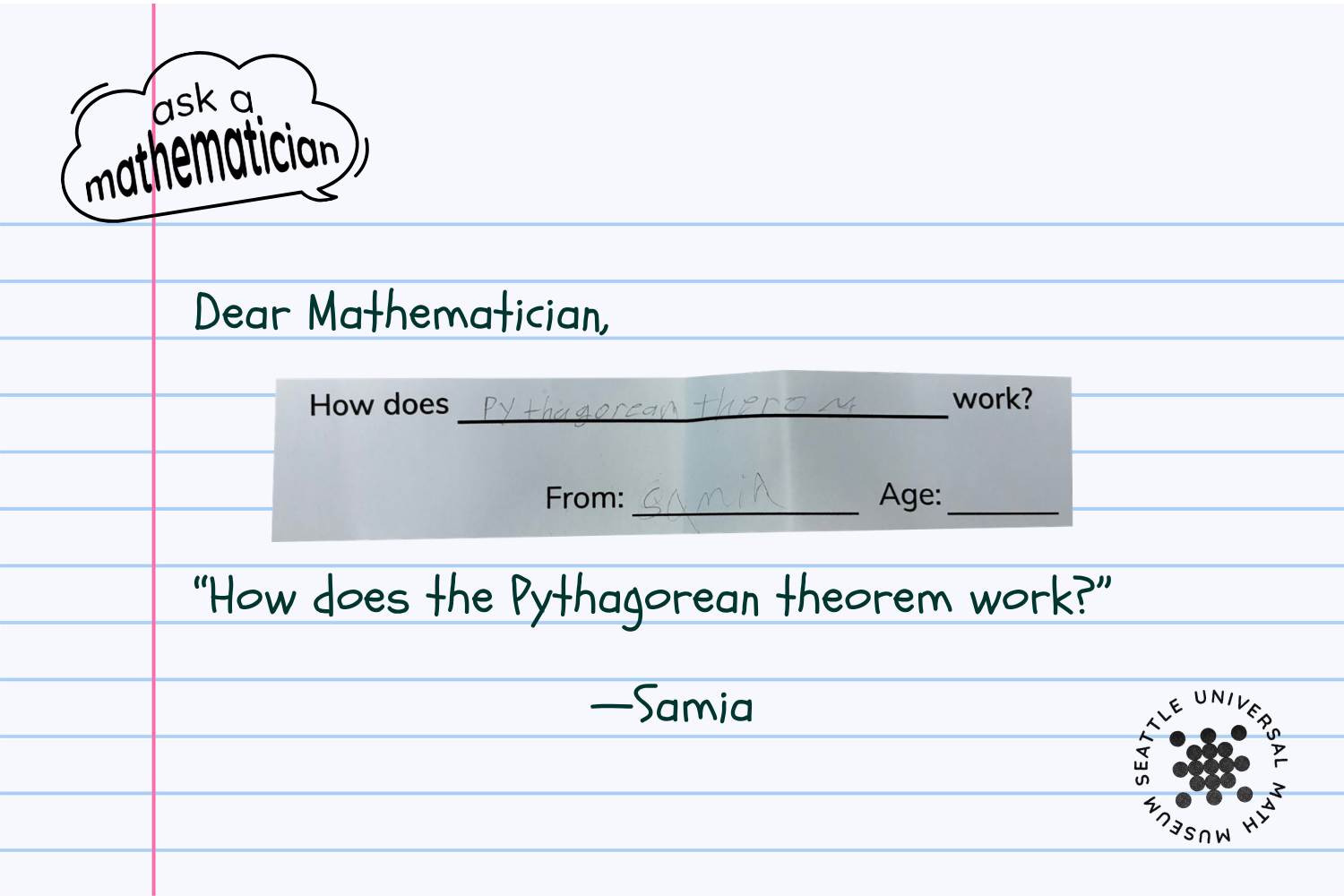
How does the Pythagorean theorem work?
In this week’s Ask a Mathematician, we look at a proof of the Pythagorean theorem, some generalizations, and its relationship with distances in 2D, 3D, and beyond.
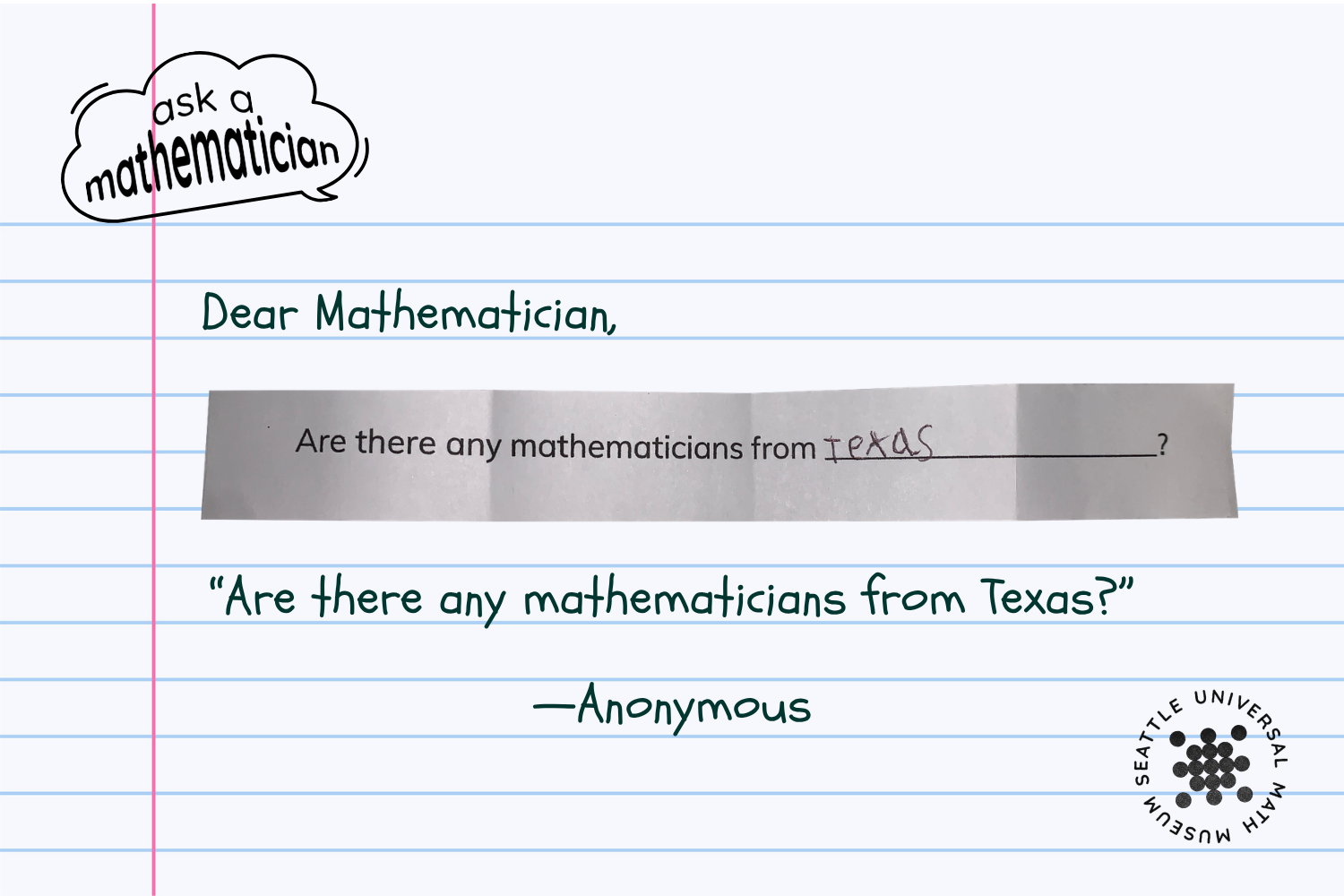
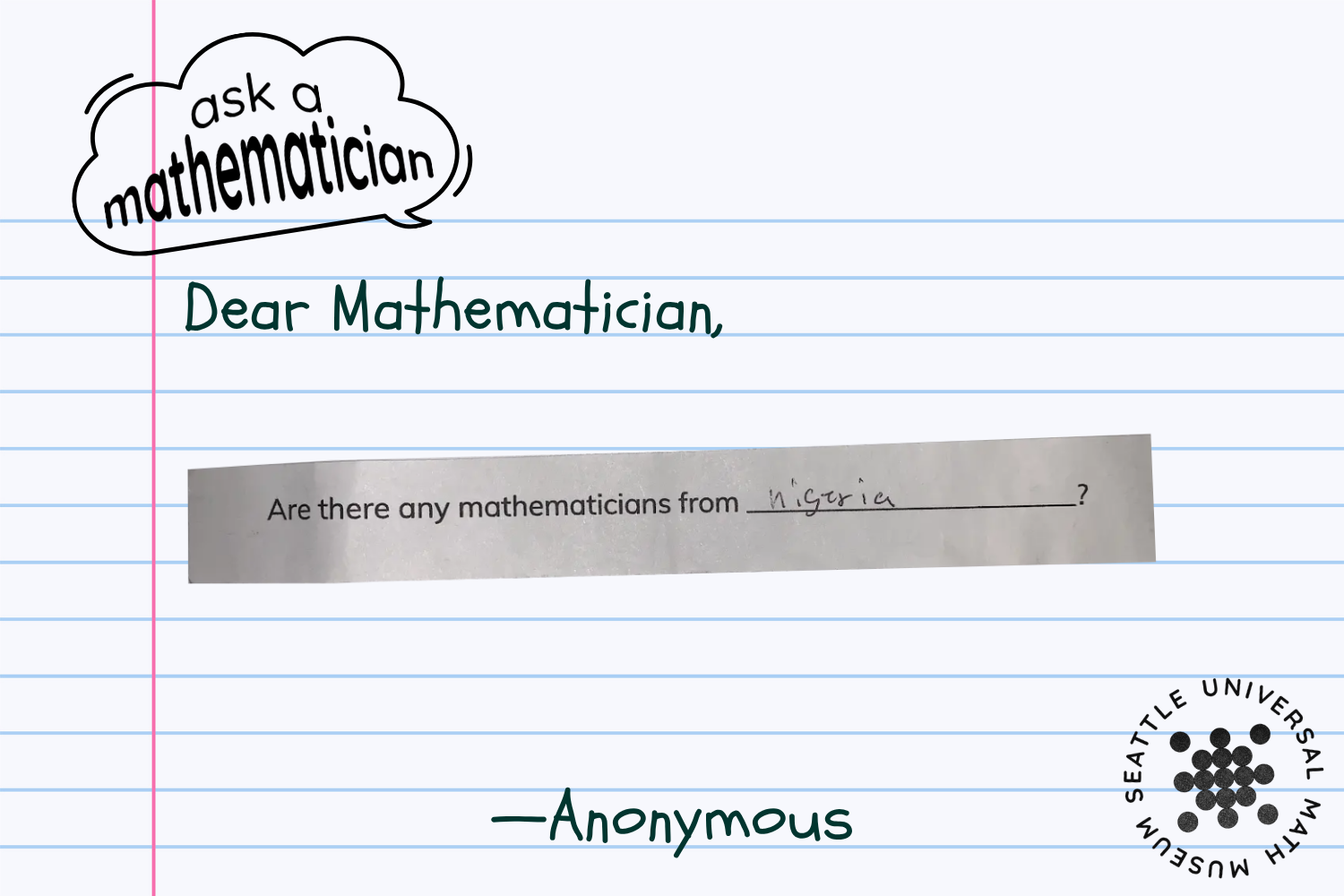
Are there any mathematicians from Texas?
Are there mathematicians from Texas? Absolutely! In this week’s Ask a Mathematician, we look at the distinguished careers of Thomas Hales and Mary Wheeler.
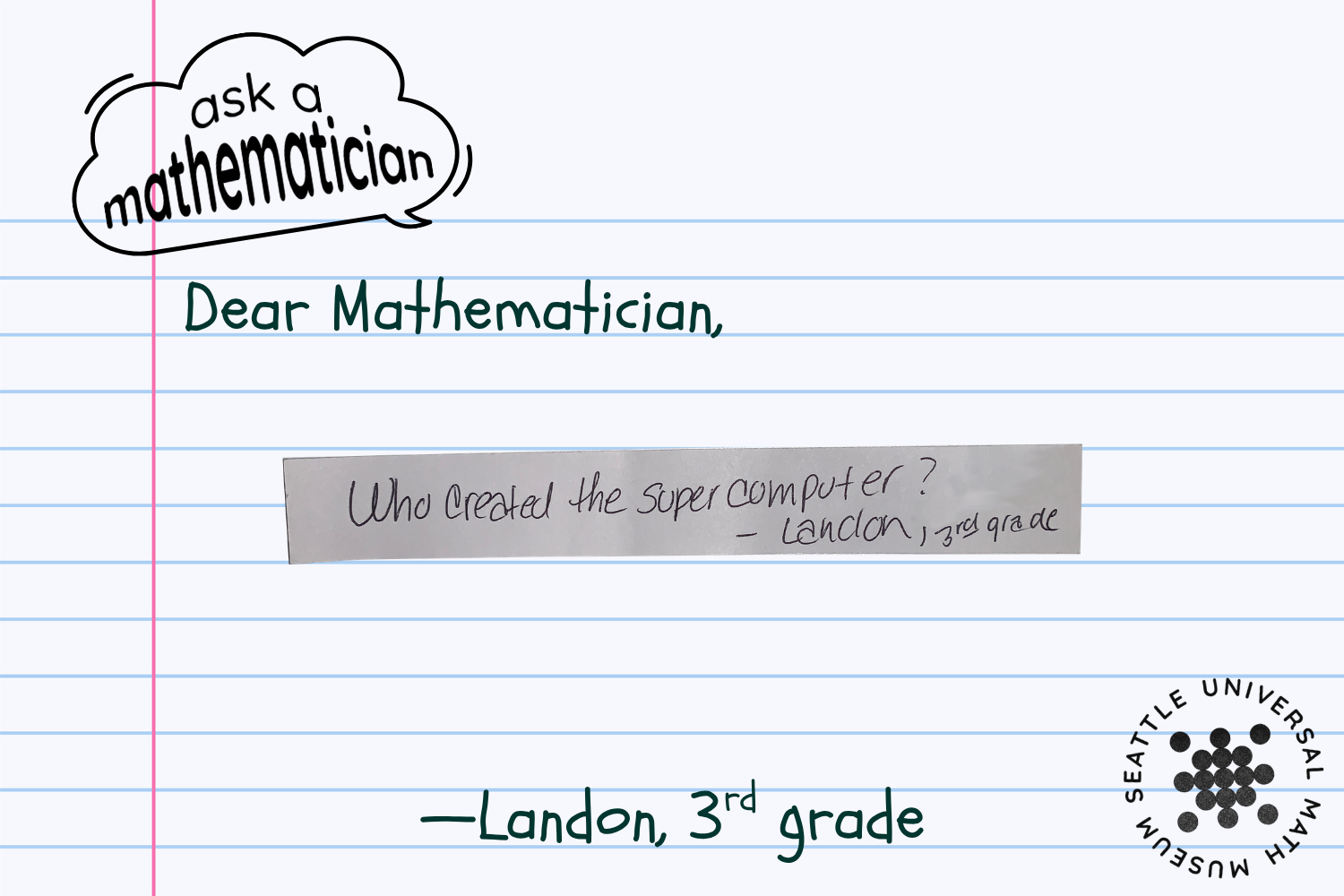
Can AI produce novel mathematical proofs?
AI can already generate mathematical proofs—but can it create genuinely new mathematics? In this month's Ask a Mathematician, Nick Rauh explores the rapidly evolving relationship between artificial intelligence and mathematical discovery. From the limitations of today's AI models to recent breakthroughs on longstanding problems, he examines what mathematicians mean by a "novel proof" and why that question is more complicated than it first appears.