
Is there math in Seattle?

“Is there math in Seattle?” — Paige
Absolutely, there is! I tend to see things that spark mathematical questions every day in Seattle. The other week, a friend and I were driving down I-5. I was in the passenger seat, so had a little more freedom to just take in the skyline. When we passed by the stadiums, I found myself wondering what the shape of the arches on their roofs are.
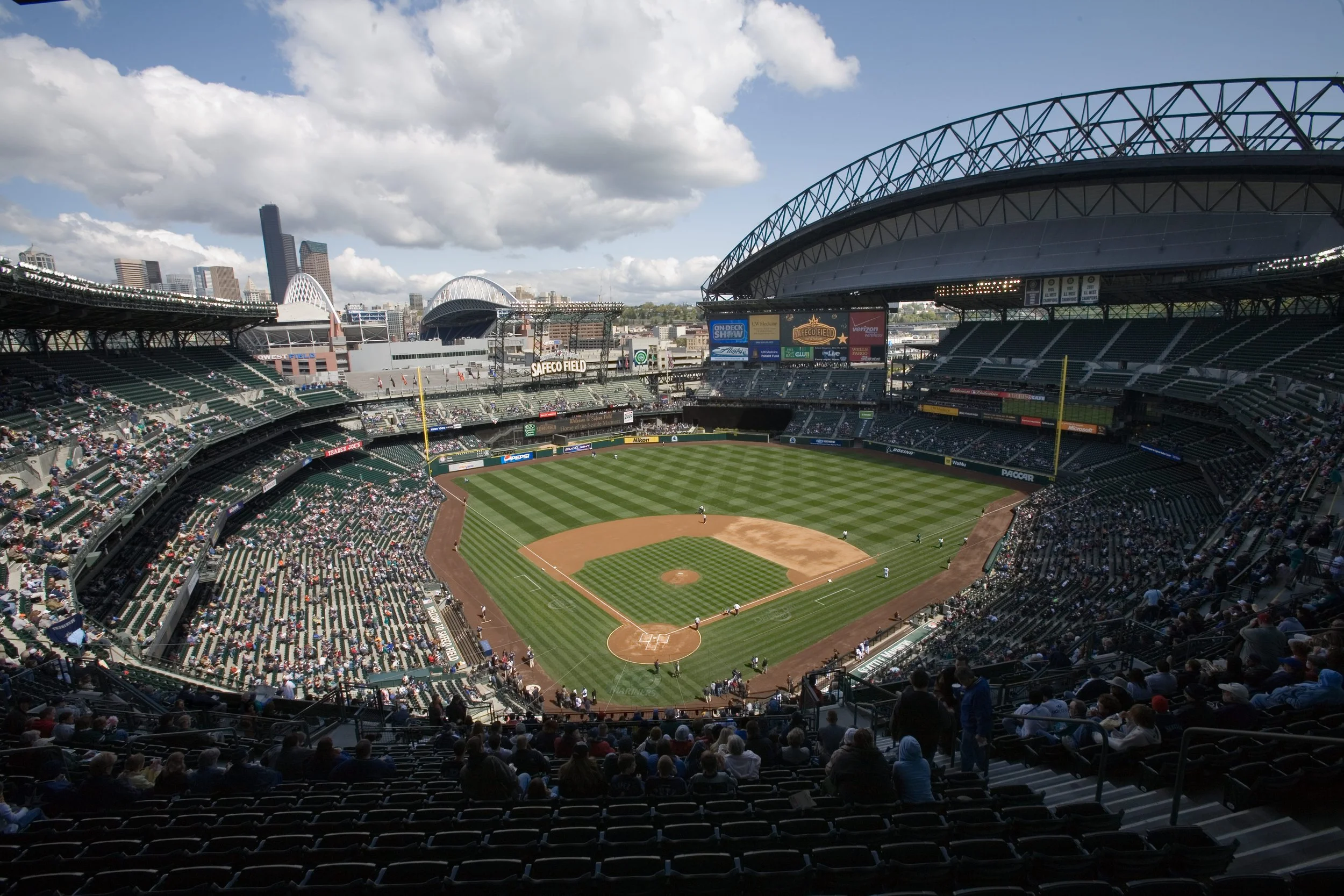
Lumen Field as seen from T-Mobile Park (Qwest Field and Safeco Field, respectively, in 2007). (Source: Cacophany, via Wikimedia.)
I dug around for a bit and didn’t find anything conclusive, but a patent for a retractable roof mechanism suggested T-Mobile Park’s arches are probably circular arcs. I haven’t gotten to the bottom of it yet, but that might make for a good future Math in Real Life!
While many of Seattle’s iconic structures have some mathematical flair, you don’t have to travel too far to find math. There’s almost certainly plenty of math in your own neighborhood! I took a quick 30 minute walk around my neighborhood, scouting for some math.
My math walk
One of the first things I saw was this garden hose:
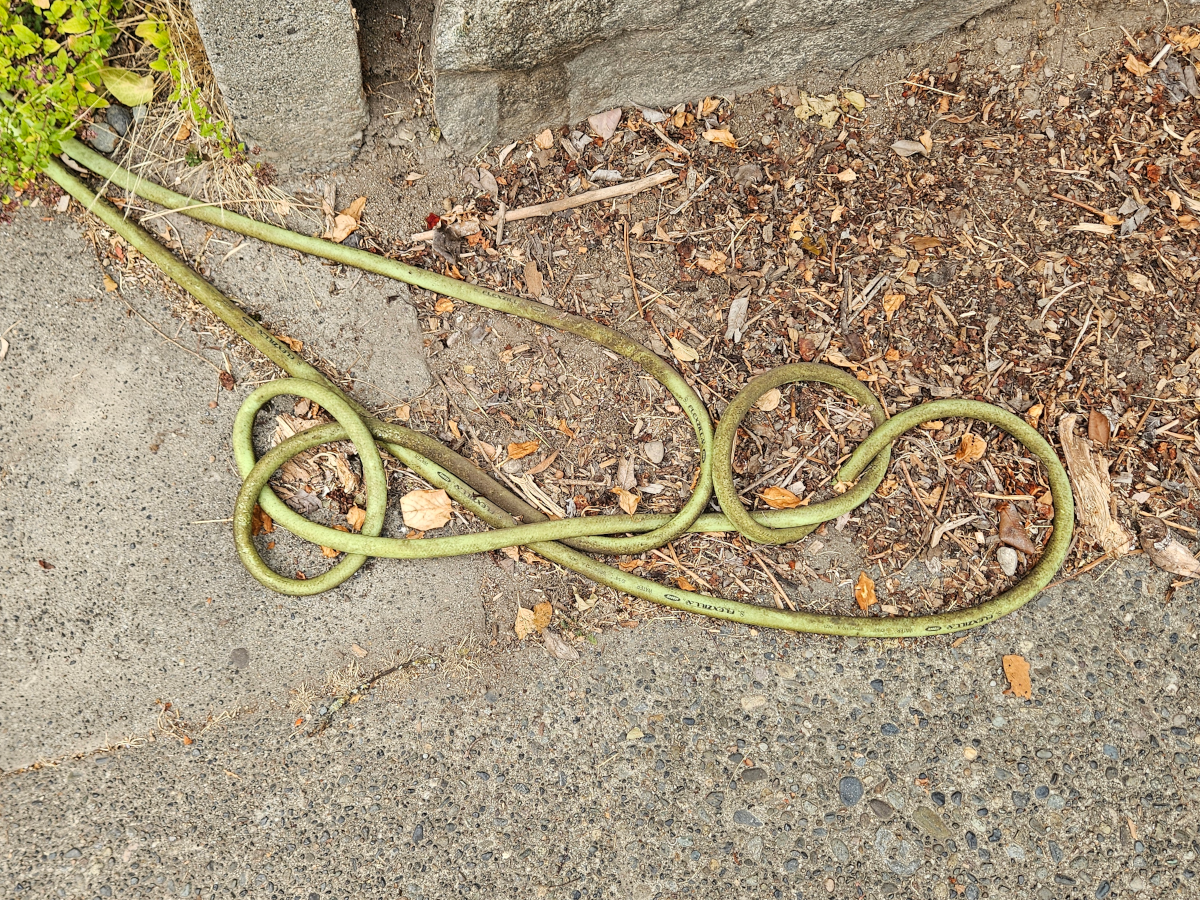
Looks pretty tangled! How hard would it be to untangle it? Well, I see two trefoil knots in there, which are honest to goodness knots that would require me to find the end of the hose to have any hope of untying them. Depending on whether they have the same or different chirality, the composite knot is a granny knot or a square knot, respectively.

Granny knot (left) and square knot (right). (Renderings by Jim Belk, via Wikipedia.)
Based on the way the hose leaves the left trefoil crossing over itself and enters the right trefoil crossing under itself, it looks like we have a granny knot on our hands!
As I continued my walk, I passed a church with a small playground. Here’s one of the structures they had for kids to play on:
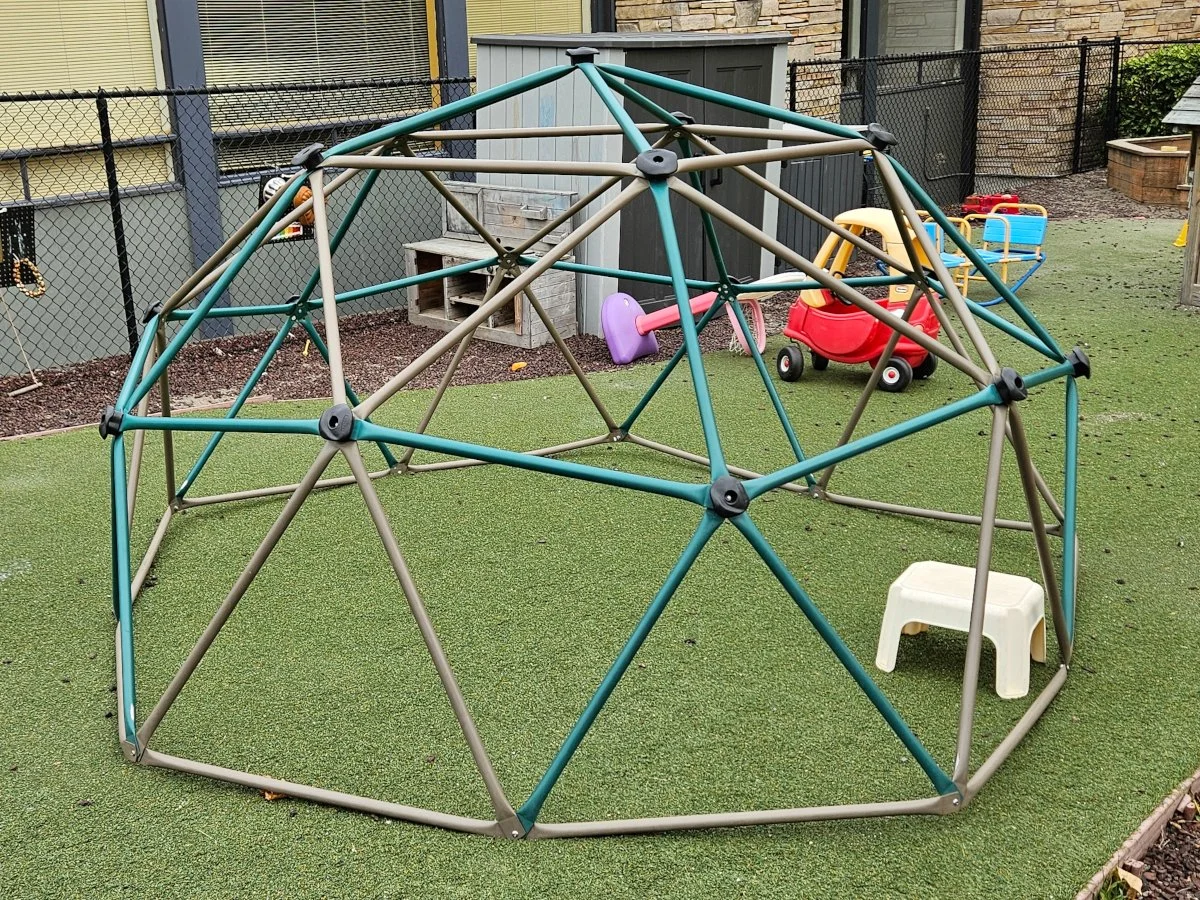
I remembered seeing a similar structure in a yard a few streets over, so I steered my walk that way to see if it was actually the same structure. The joints were handled a little differently, but the overall geometric structure is the same:
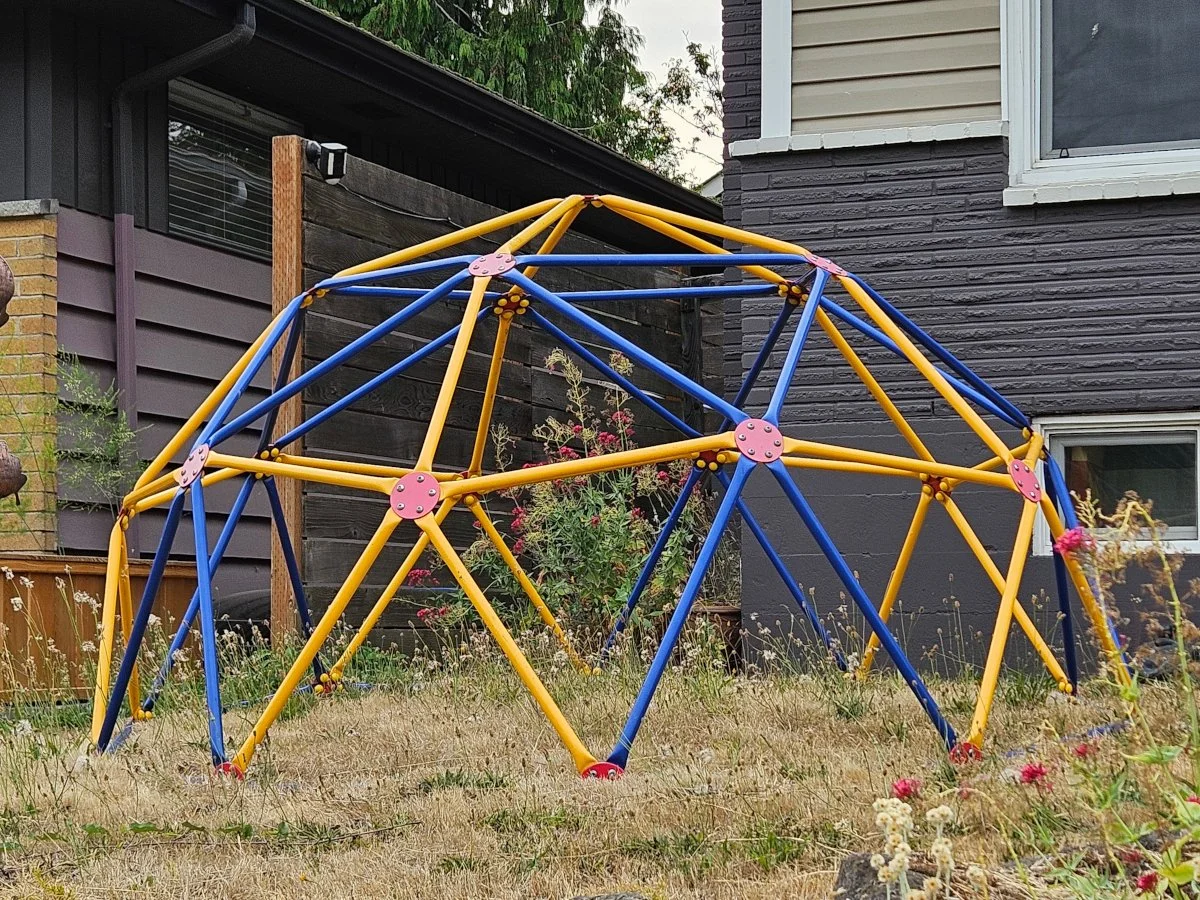
If you focus on just the brown and blue struts, you’ll see pentagons and triangles. The way those shapes are set is exactly as they are in an icosidodecahedron, an Archimedean solid:
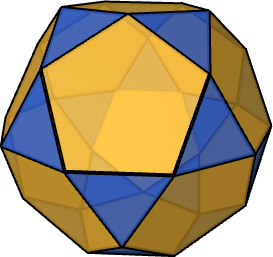
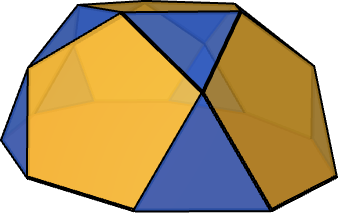
The icosidodecahedron has the interesting property that, as a spherical polygon, all of its edges lie along unbroken great circles — i.e., any edge lies along an entire equator of edges. A consequence of that is that we can nicely cut the shape along an equator into an approximately hemispherical dome that will sit flat on the ground:
Triangle frames are rigid while pentagonal frames are not, so to reinforce this structure you could triangulate each pentagon. My guess is they did it in a way that makes it so all junctions have the same distance from the icosidodecahedron’s center, creating a geodesic dome:
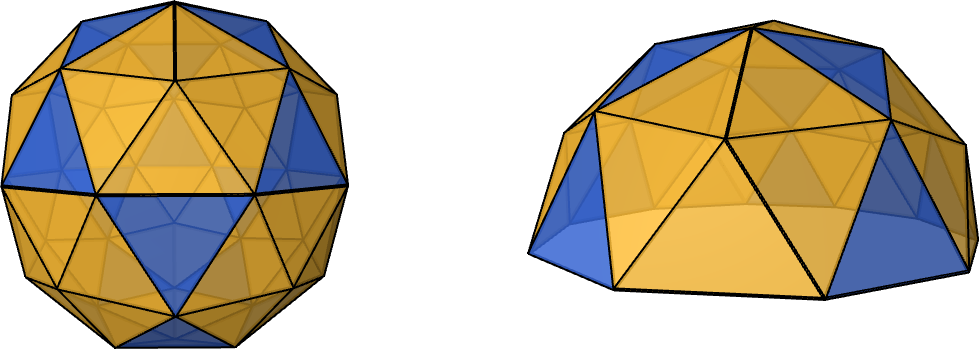
That bottom decagon formed by the equator isn’t rigid, so there might still be some flexing. We can see the green and brown structure doesn’t rest as flatly on the ground as it could due to flexing.
A block or two later, I noticed this garden wall:
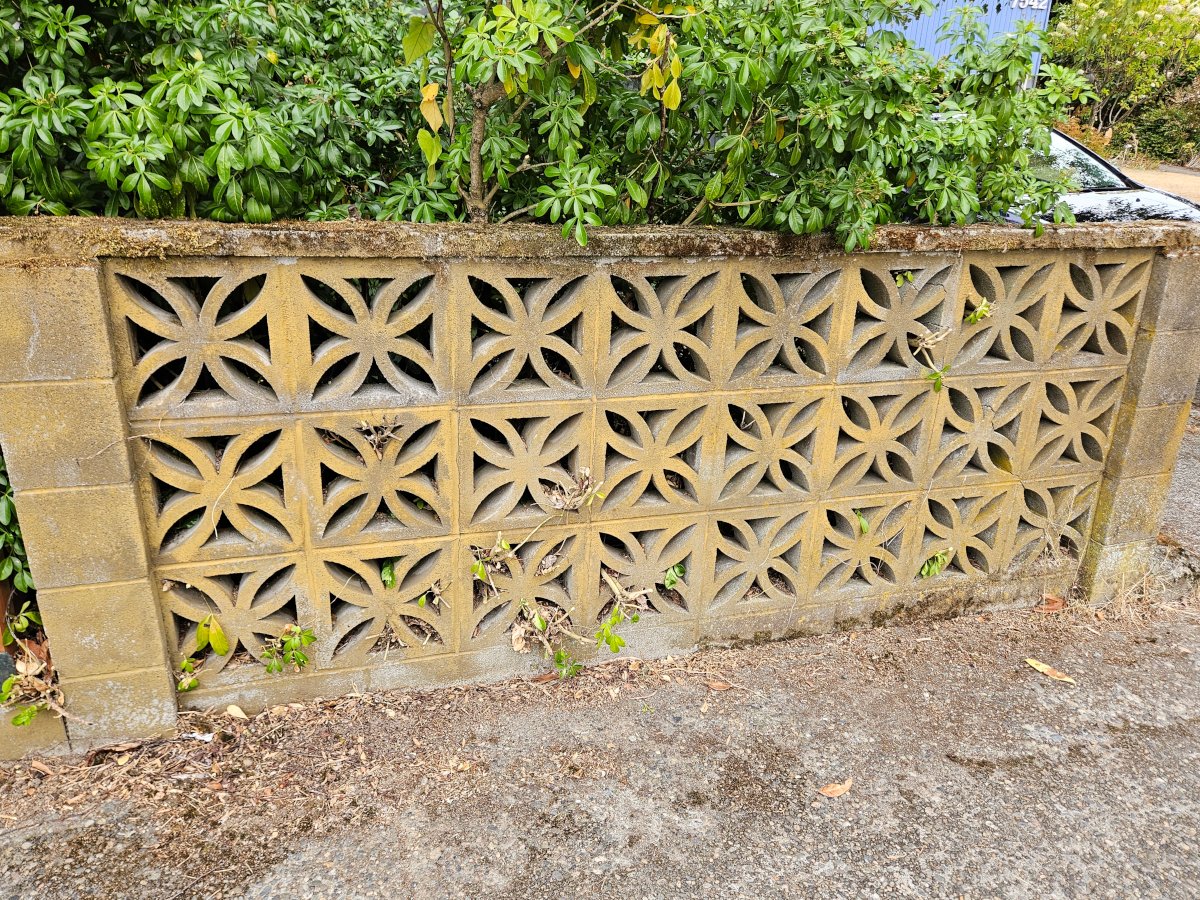
What a nice pattern! Here’s how I would design those blocks using circles and lines:
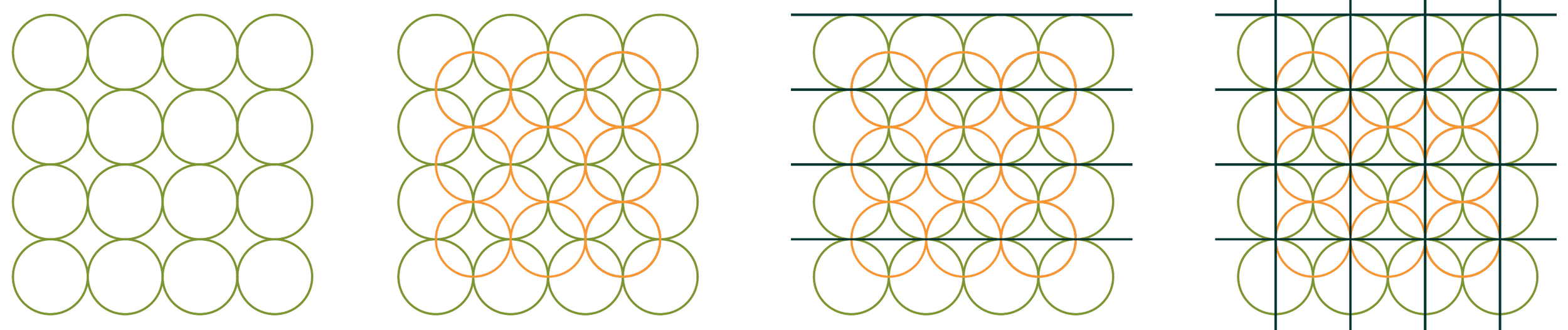
Zooming in and stylizing it:
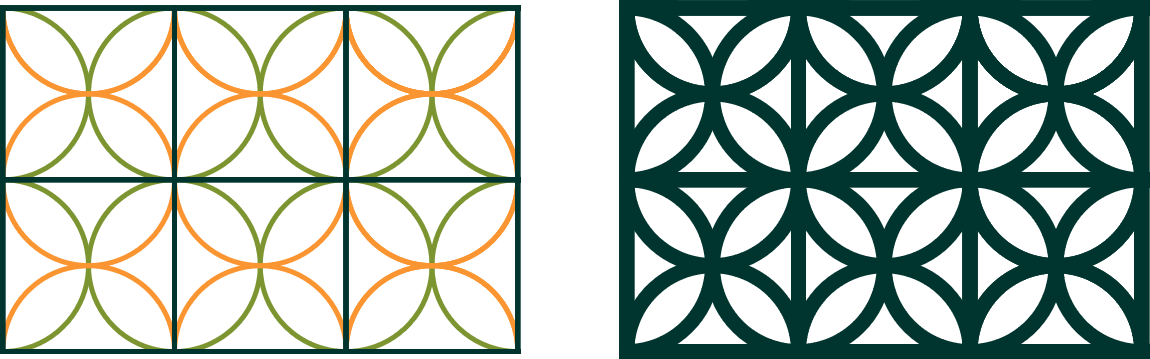
This is a geometric pattern that you could design with a compass and straightedge.
Towards the end of my walk, I saw something pretty wild in an elementary school playground. I’m a little surprised I hadn’t noticed this thing before! Unfortunately, they were doing construction in the lot, so I couldn’t get a closer look, but I’m very curious about its geometry:
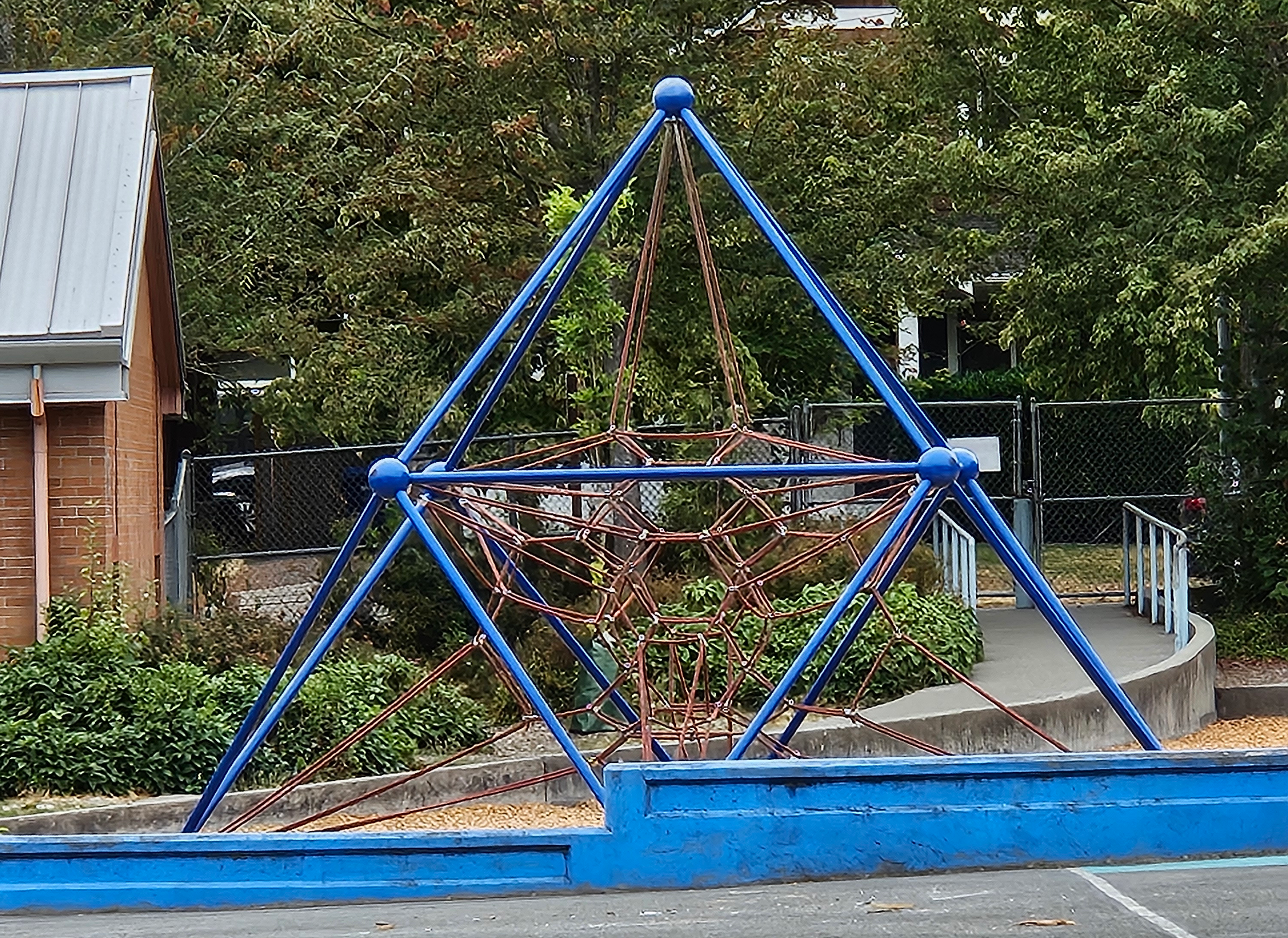
I’ll have to take a closer look at the bands inside another time!
What math can you spot in your neighborhood?