
Seattle Universal Math Museum presents
Math Out Loud
Conversations That Bring Math to Life
Math Out Loud is a monthly lecture series designed for the curious, the creative, and the “I didn’t know math could do that” crowd. No prior math knowledge required—just bring your curiosity.
November 12 | Math in Concert
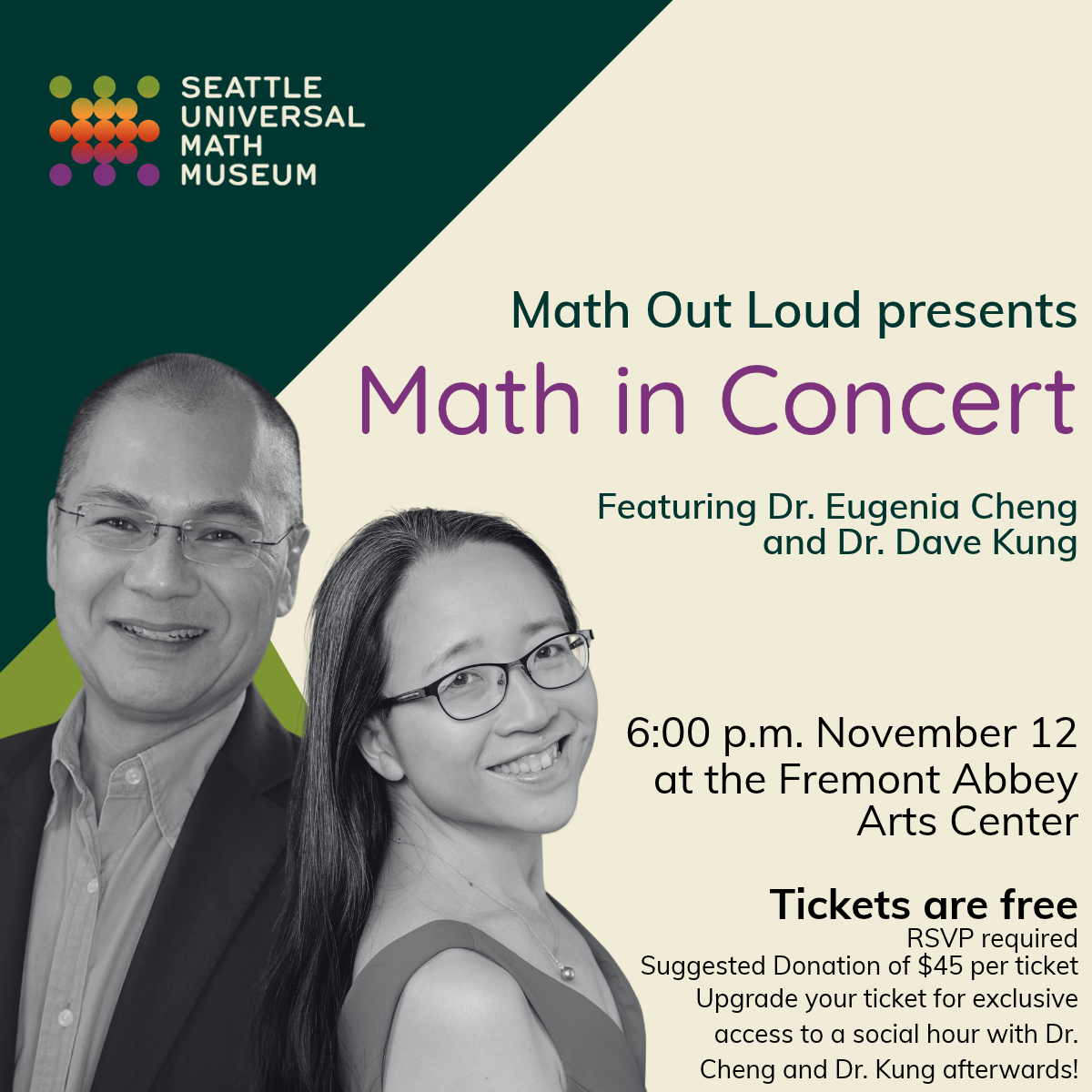
Math and music are often said to be related, but does this go any deeper than the fact that they both involve counting?
In this lively hybrid of talk and concert, mathemusicians Eugenia Cheng and Dave Kung uncover mathematical structures in some of their favorite pieces of Western classical music. Centered on the Sonata for Violin and Piano in G Major by Brahms, this presentation will be interspersed with music by Bach, Debussy, Chopin, Elgar, and Gounod. Together, we’ll explore a wide range of mathematical concepts embedded in the music, including least common multiples, fractions, the harmonic series, symmetry, self-reference, and more—and find out how a pool tube fits into it all!
Whether you're a music lover, a math enthusiast, or just curious to see how the two worlds connect, you'll leave with a fresh perspective on the hidden structures behind the sound.
Fremont Abbey Arts Center
Lecture: 6:00-7:00 PM • Free (suggested donation $45/ticket)
VIP experience available
About the Speakers
Eugenia Cheng is a mathematician, educator, author, public speaker, concert pianist, artist, and composer. She serves as Scientist in Residence at the School of the Art Institute of Chicago, holds a PhD in pure mathematics from the University of Cambridge, and won tenure in Pure Mathematics at the University of Sheffield. An early pioneer of math on YouTube, she has written nine popular math books—including Beyond Infinity (shortlisted for the Royal Society Science Book Prize), Is Math Real? (winner of the 2024 LA Times Book Prize for Science and Technology), and her latest, Unequal: The Math of When Things Do and Don't Add Up. Her work has featured on the BBC, NPR, The Late Show with Stephen Colbert, and in The Wall Street Journal, where she wrote the Everyday Math column for seven years.
Dr. Dave Kung has spent his career working at the intersection of mathematics and equity. He is the Executive Director of Transforming Post-Secondary Education in Mathematics (TPSE-Math) and a founding partner of Math 4 the Future. He previously served as Director of Policy at the UT Dana Center, directed MAA Project NExT, taught as a professor at St. Mary’s College of Maryland, and won the MAA’s highest award in college math teaching. Author of numerous books and articles as well as two Great Courses lecture series, Dr. Kung resides in the DC area where he coaches local high school teachers, plays violin, and runs.
Voices from the Series
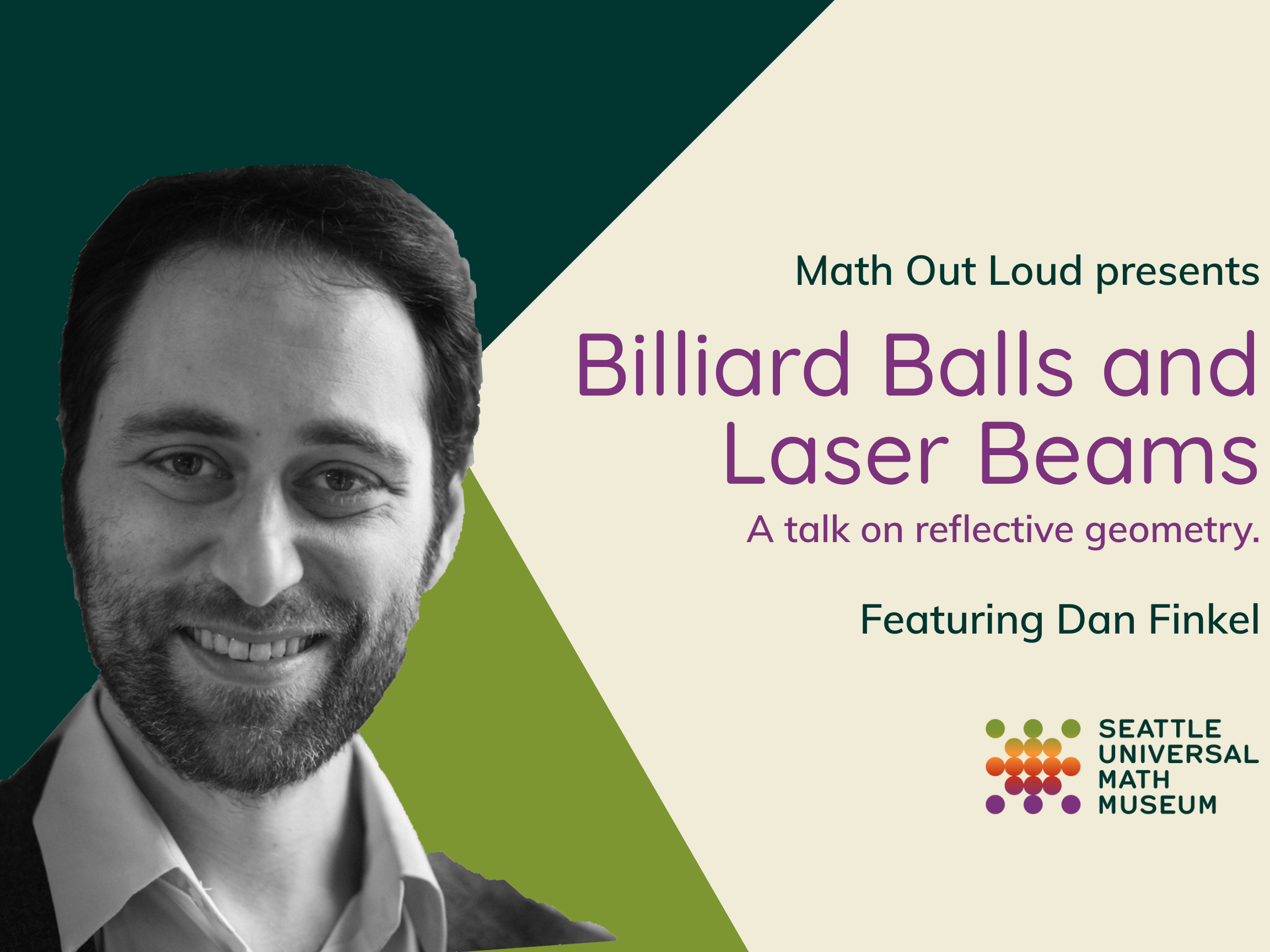
We kicked things off in April 2026 with Dan Finkel—educator, puzzle creator, and founder of Math for Love, whose work has reached millions through TED-Ed.
His talk, Billiard Balls and Laser Beams, explored a simple question: if you turned on a light in a room made entirely of mirrors, would the whole room light up… or could some parts remain in darkness?
From there, he took us into reflective geometry—connecting solar power, juggling, chaos, and even unsolved problems.
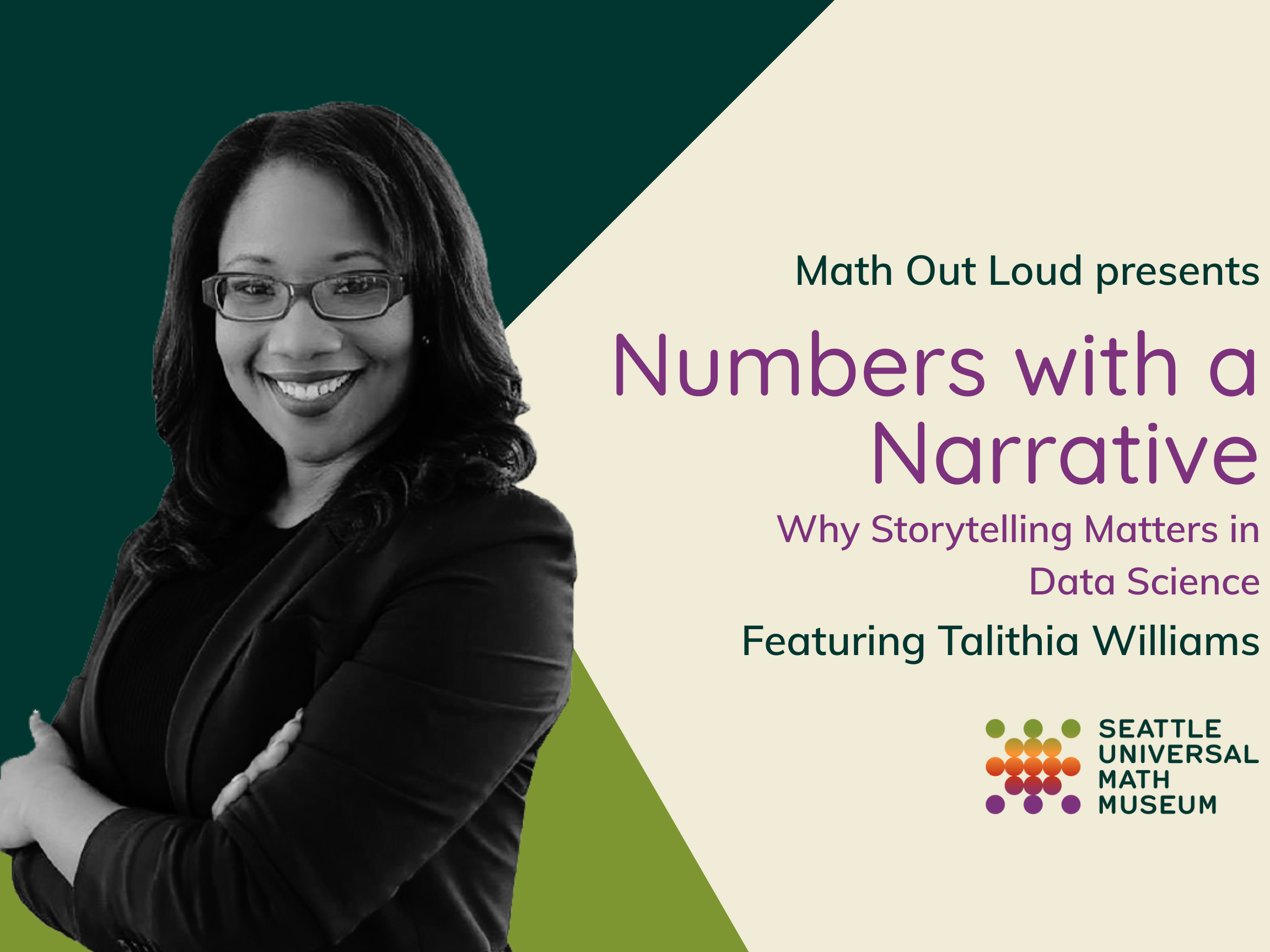
We kept the momentum going in May with Dr. Talithia Williams—statistician, Harvey Mudd College professor, and host of PBS’s NOVA Wonders.
Her talk, Numbers with a Narrative, explored how mathematics is a living language capable of shaping our world. She took us on a journey through data science and storytelling, showing how lived experiences can transform complex data into impactful narratives. By breaking down how data can challenge personal health assumptions, Dr. Williams inspired us to see how individual voices can completely redefine who does math.
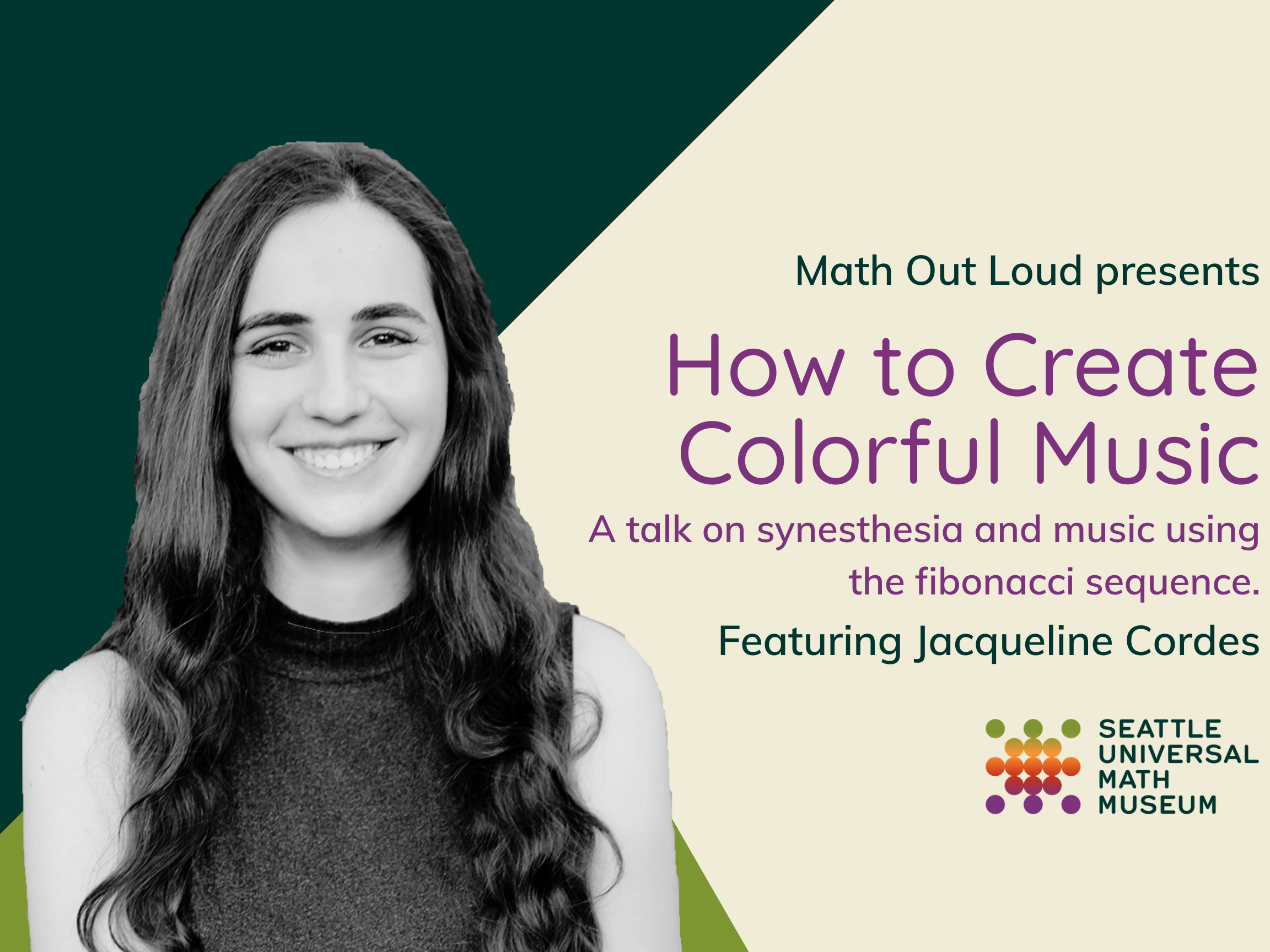
We kept the inspiration flowing in June with Jacqueline Cordes—award-winning composer, digital artist, and polyglot whose work explores the immersive worlds of "musical chromesthesia."
Her talk, How to Create Colorful Music, took us on a fascinating journey into the phenomenon of synesthesia, where senses intertwine to create extraordinary perceptual experiences. From exploring colorful alphabets to analyzing the vivid hues of Radiohead and the melodic structure of the Fibonacci sequence, she showed us how elements like tempo and mode shape the music we see.
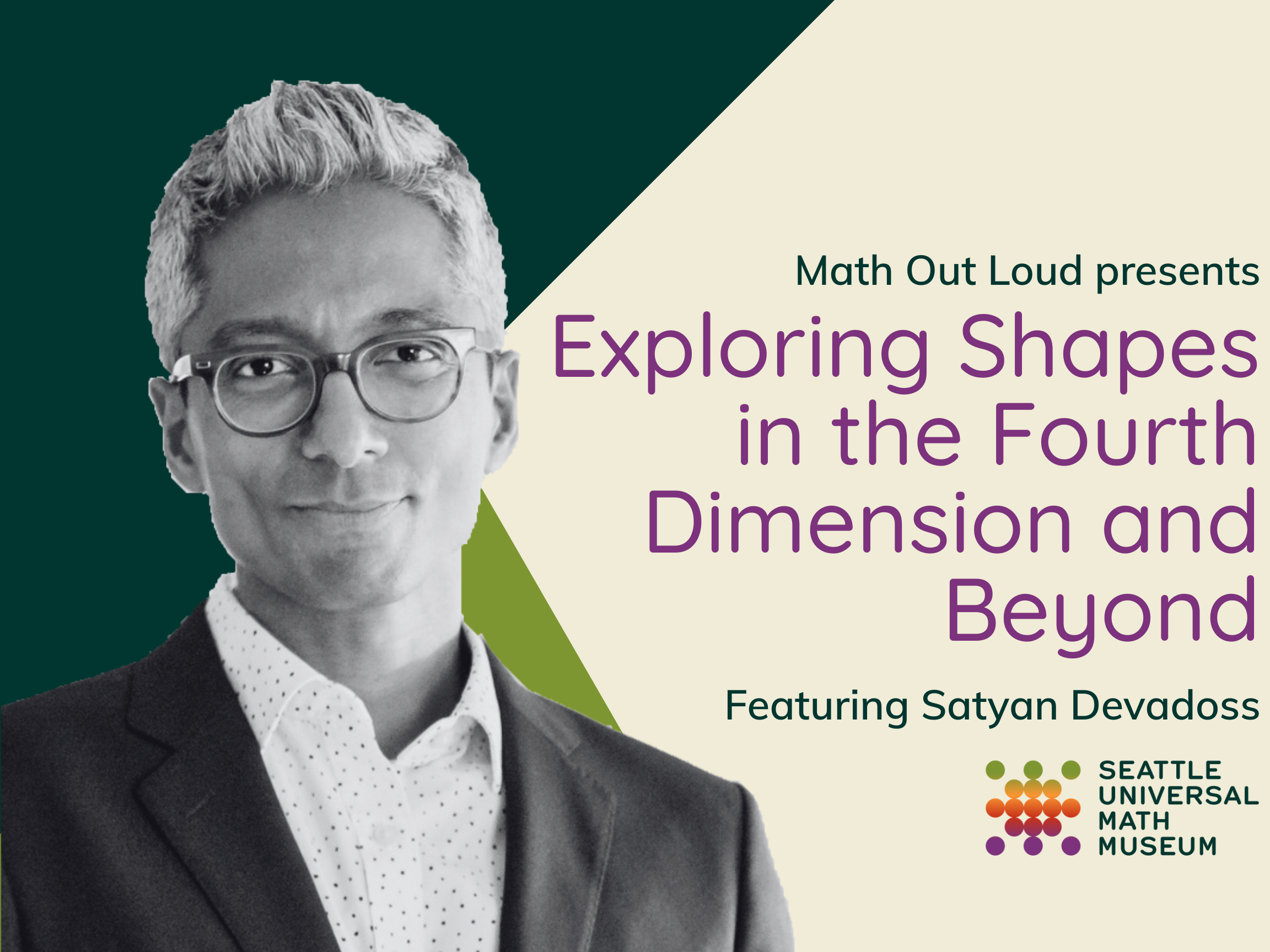
We continued our series in July with Satyan Devadoss—fellow of the American Mathematical Society, award-winning educator, and professor whose work blends mathematics, art, and design.
His talk, Exploring Shapes in the Fourth Dimension and Beyond, took us on a journey past the limits of ordinary space, inspired by the vision of artists like Marcel Duchamp and Salvador Dalí.
Through striking visual imagery and geometric exploration, he unraveled mysteries dating back to Renaissance master Albrecht Dürer, showing us how the mathematics of folding, unfolding, and higher-dimensional shapes connects to modern innovations like airbag design and the James Webb Space Telescope.
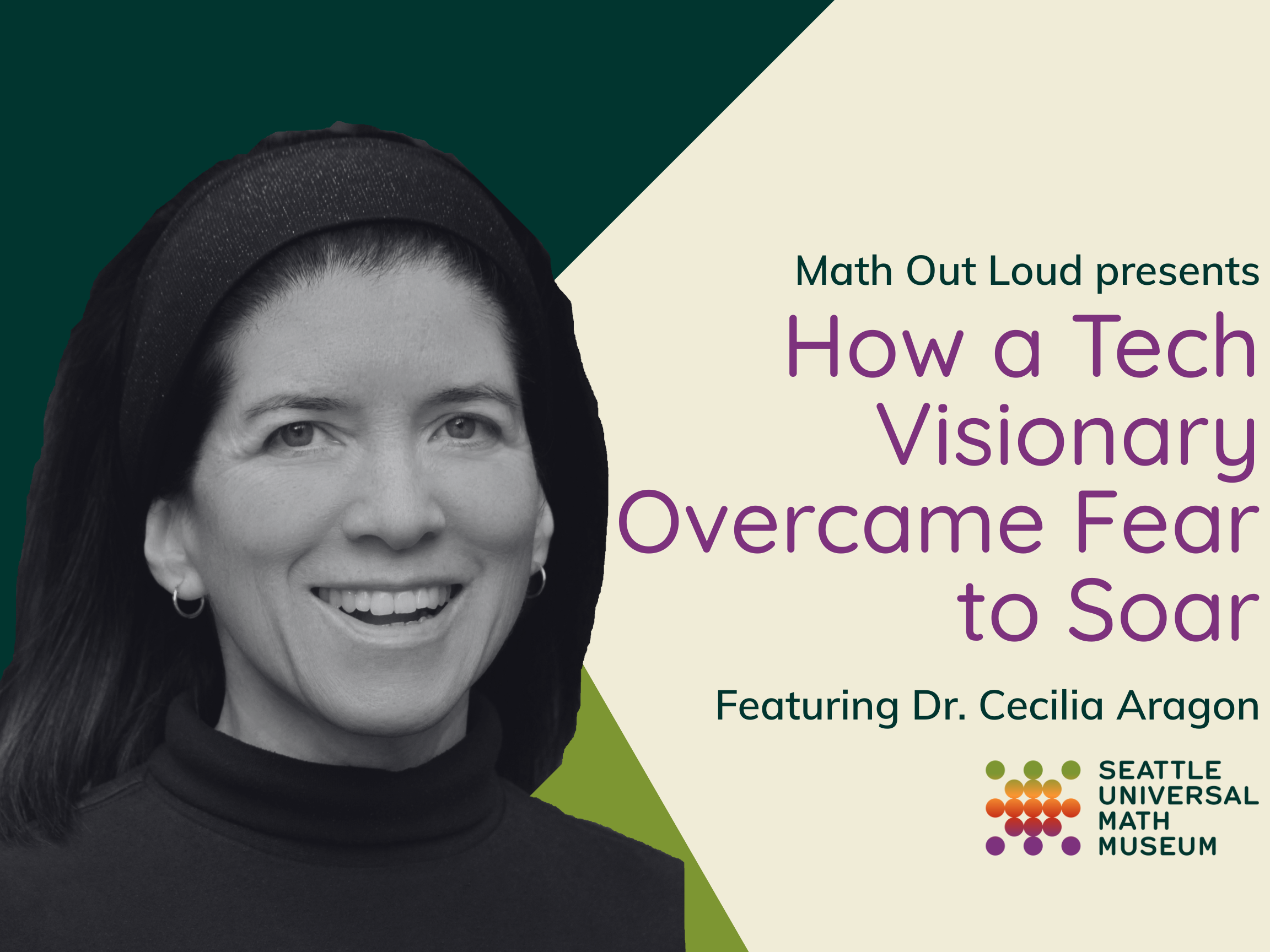
We continued our series in August with Dr. Cecilia Aragon—data scientist, award-winning author, former aerobatic pilot, and director of the Human-Centered Data Science Lab at the University of Washington.
Her talk, How a Tech Visionary Overcame Fear to Soar, explored how structural thinking, mathematics, and logic can become powerful tools for personal transformation and conquering fear. She shared her inspiring journey from deep-seated phobias to the open skies—detailing how she used math to design software for NASA, teach astronauts to fly, and co-found Latinas in Computing.
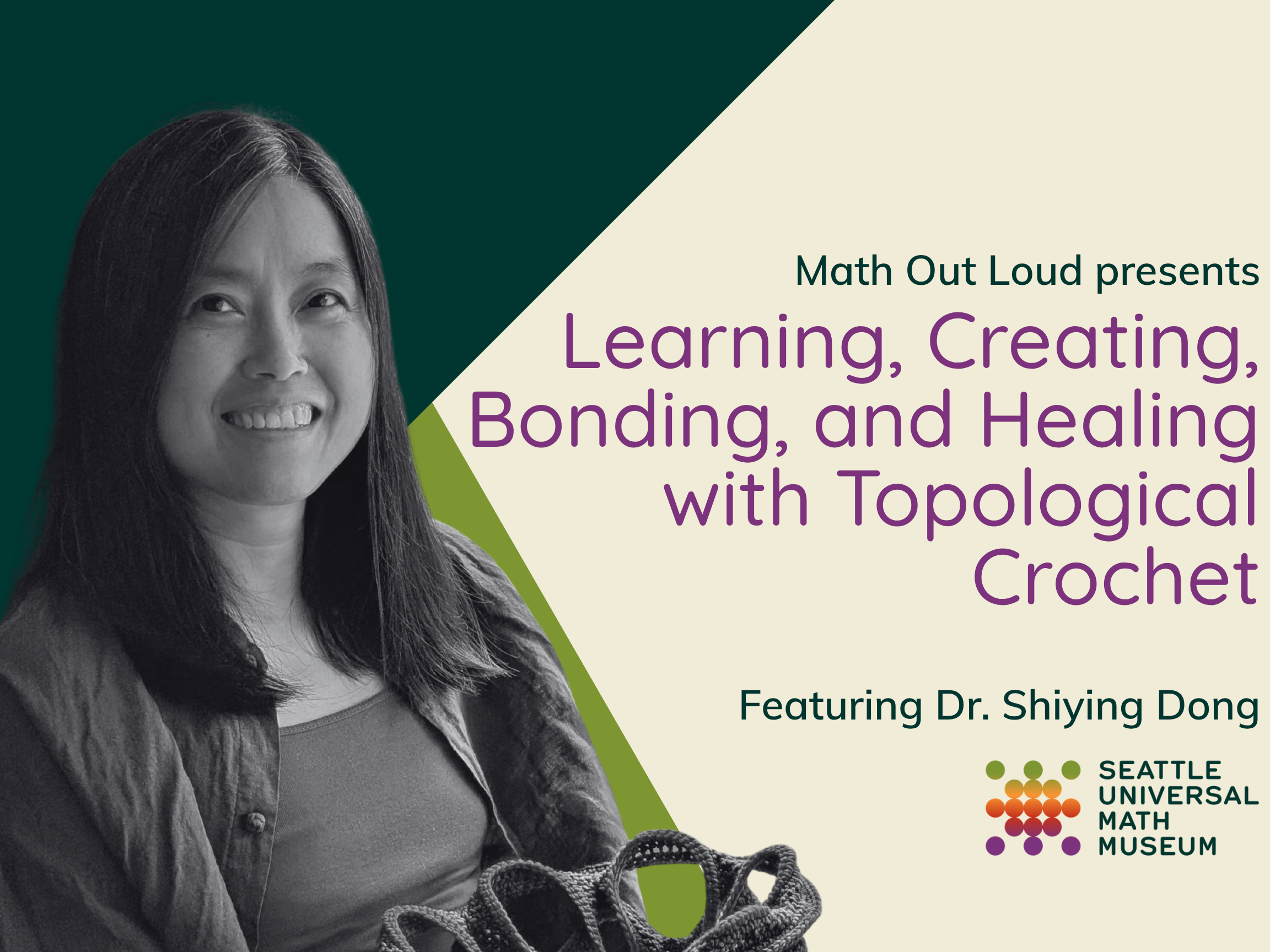
We wrapped up the summer series in September with Shiying Dong—PhD physicist, mathematician, and mathematical artist whose work with fiber art has been featured in The New York Times.
Her talk, Learning, Creating, Bonding, and Healing with Topological Crochet, introduced how fiber art can become a hands-on gateway to mathematics, creativity, and human connection. Attendees kicked off the event with an engaging hands-on craft workshop, creating an interactive environment where participants brought mathematical concepts to life before diving into the lecture. She demonstrated how algebraic topology can be made accessible without an advanced background, showing how turning abstract concepts into sculptural forms fosters community, joy, and personal healing.
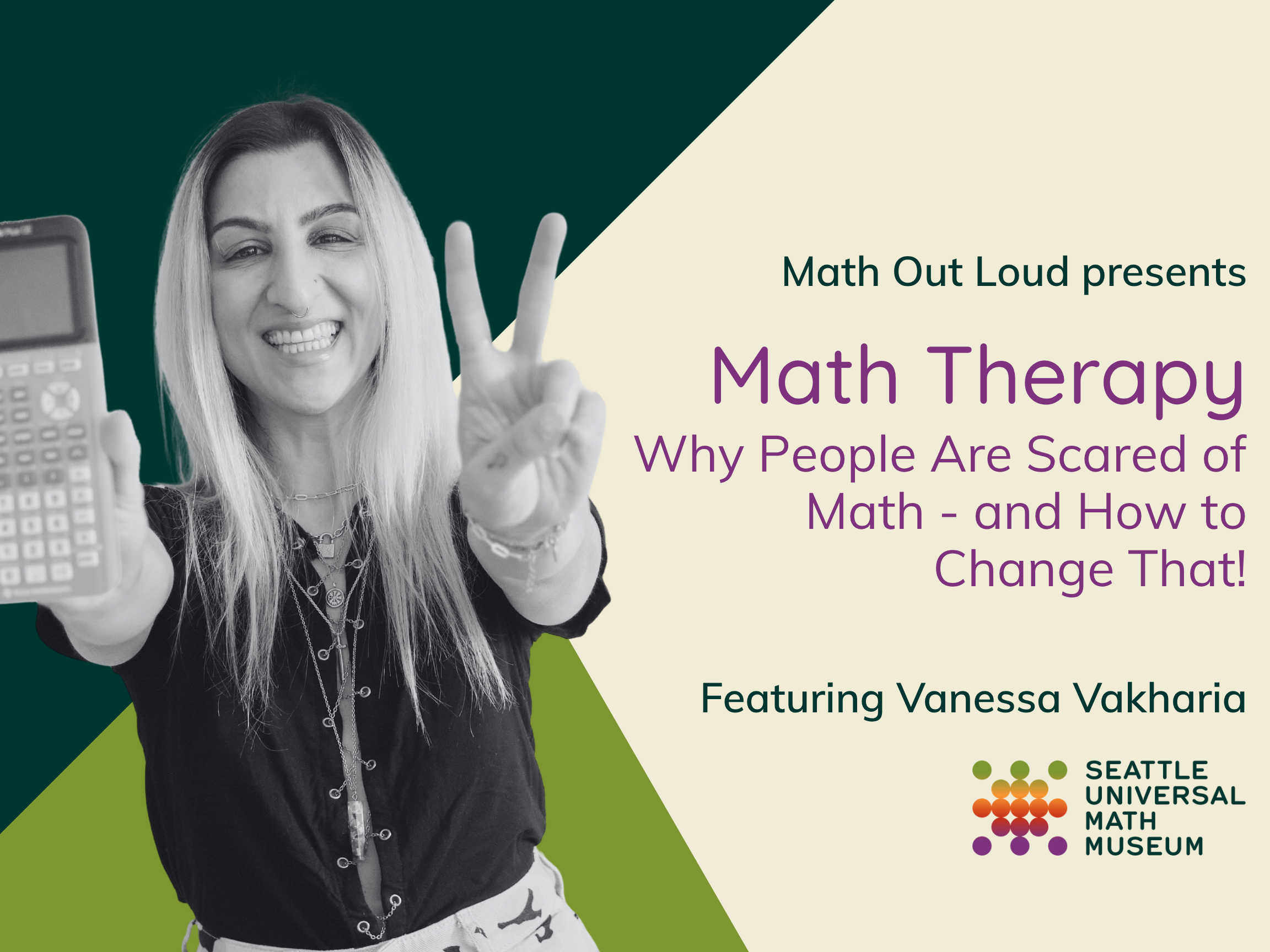
We brought the energy in October with Vanessa Vakharia, founder of The Math Guru, podcast host, author, and keytarist for Goodnight Sunrise.
Her interactive talk, Why People Are Scared of Math + How to Change It, tackled math anxiety head-on, exploring how past experiences, like timed tests and fear of failure, shape the narrative that someone is "not a math person." Vanessa unpacked what it truly means to be good at math and led the audience through practical techniques to interrupt the anxiety spiral, equipping attendees with empowering, actionable tools to completely rewrite their relationship with mathematics.