
Can you make a penguin-shaped polygon puzzle?

“Can you make a penguin-shaped polygon puzzle?” — Madeline, age 6
Fantastic question, Madeline!
The theorem behind our polygon puzzles is the Wallace–Bolyai–Gerwien theorem: if two polygons have the same area, one can be cut into pieces that can be reassembled into the other. So if there is a polygon that you think looks like a penguin, then there will be a way to cut it up and rearrange it into any other polygonal shape you like — as long as it has the same area!
How could we get a polygonal penguin? We can always create polygons from photos of animals, using line segments to approximate the outlines. Here is a penguin-to-square dissection based on this this photograph by Klajdi Cena:

I went with a relatively simple penguin outline hoping there might be a dissection with only a few pieces. Six pieces isn’t too bad! I kind of cheated by tweaking the penguin outline as I went along, changing my target shape to make things easier. This dissection also requires flipping the tail and foot pieces over between shapes.
The proof of the Wallace–Bolyai–Gerwien theorem outlines an algorithm for finding a dissection, but that particular dissection typically has way more pieces than necessary. In general, the more complicated the polygon, the more complicated we expect the dissection to be.
For something fun to try at home, one way to approach this problem is to start with some dissection of a square and see what you can make out of those pieces. For example, if we allowed ourselves 100 squares, we could make pixel art penguin or cat. These could be the bases for penguin-to-square, cat-to-square, or penguin-to-cat dissection puzzles.

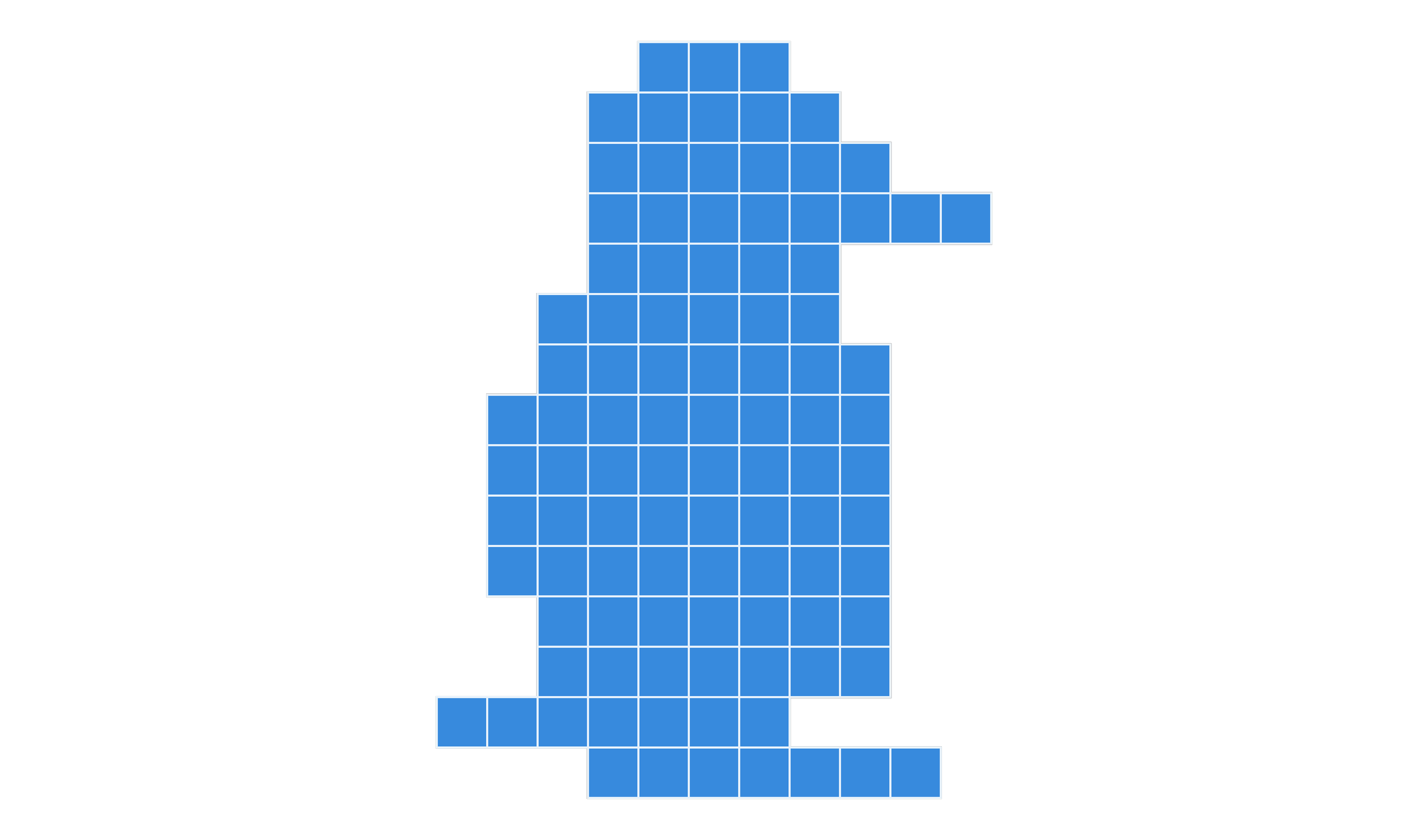
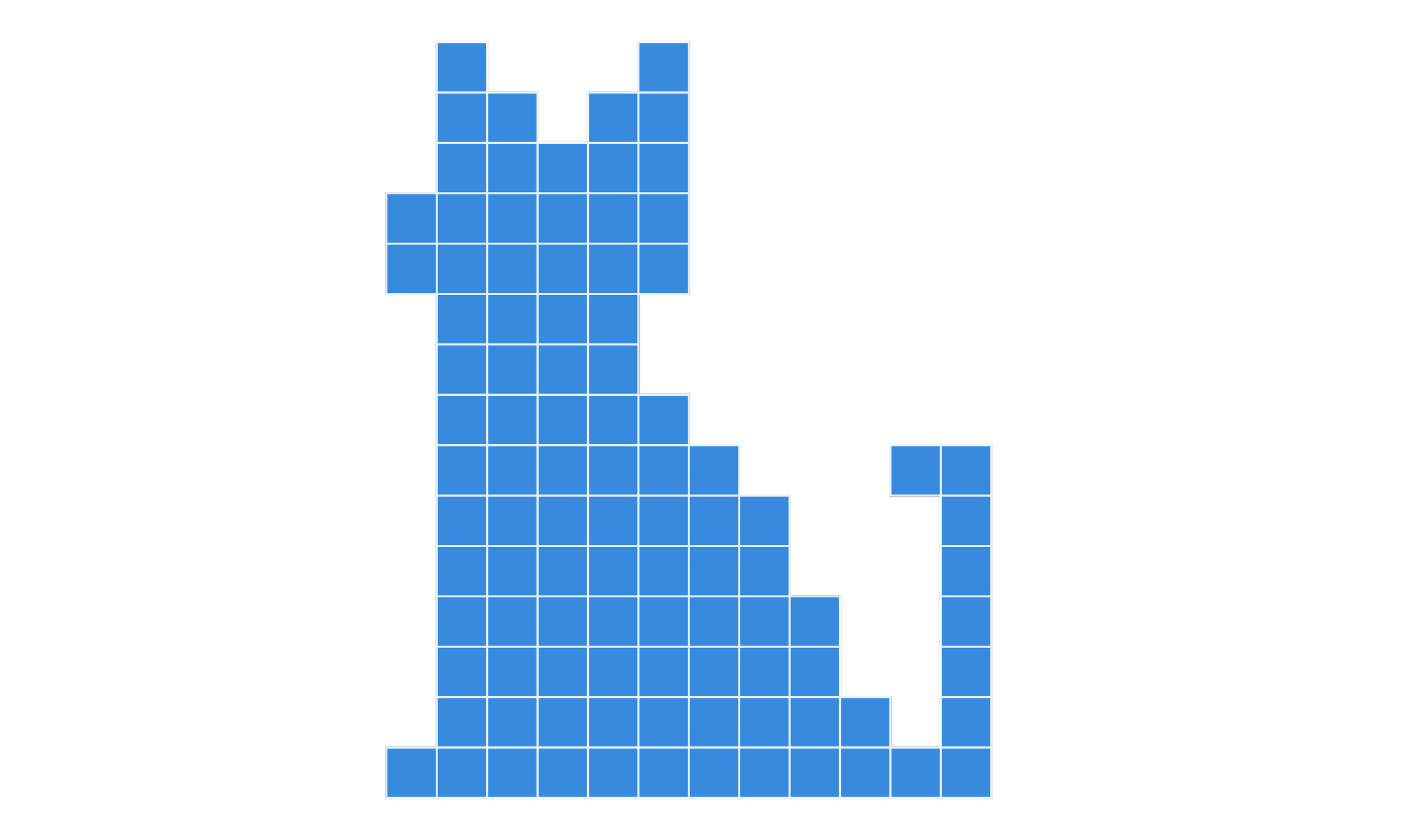
By using more squares or cutting the squares into isosceles right triangles, we could increase the resolution and make things that look less blocky. We could also find “continents” of squares that we can leave together as larger pieces. 100 pieces is probably already way too many pieces and having all identical pieces can make a puzzle boring.
A nice example of a simple square dissection with relatively few pieces that can be turned into lots of interesting shapes is the standard tangram.
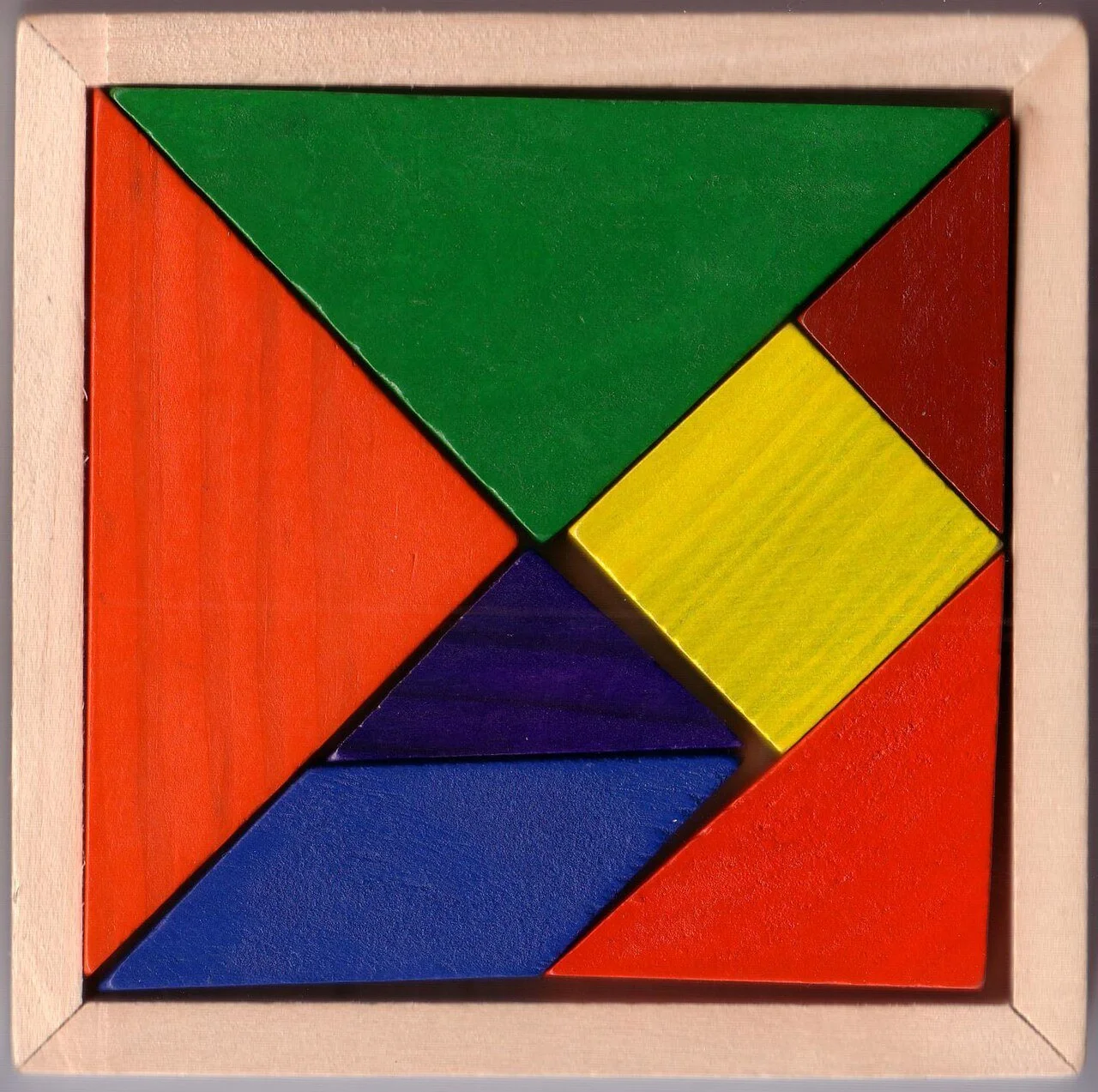
Tangram set. (Source: Nevit Dilmen, via Wikimedia.)
Tangram puzzle sets with exactly these pieces are widely available, but you can also virtually try your hand at some classic animal tangram puzzles with the app below, one of which asks you to make a penguin:

