
Math in… Gerrymandering
The United States is a representative democracy. Instead of directly voting on most issues, we elect people to govern and legislate on our behalf.
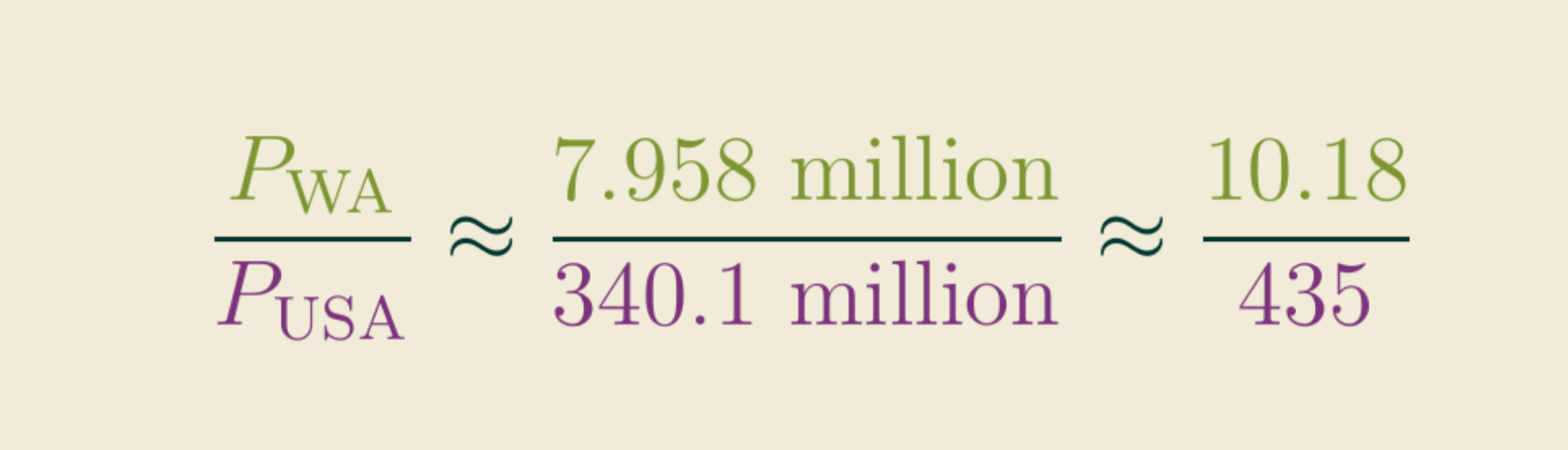
The United States House of Representatives has 435 voting congresspeople, representing all 50 states. States have a number of representatives proportional to their populations.
District lines can be drawn in unintuitive ways. For example, you might expect Tacoma to be in District 10 based on geography, but most of Tacoma is actually in District 6.
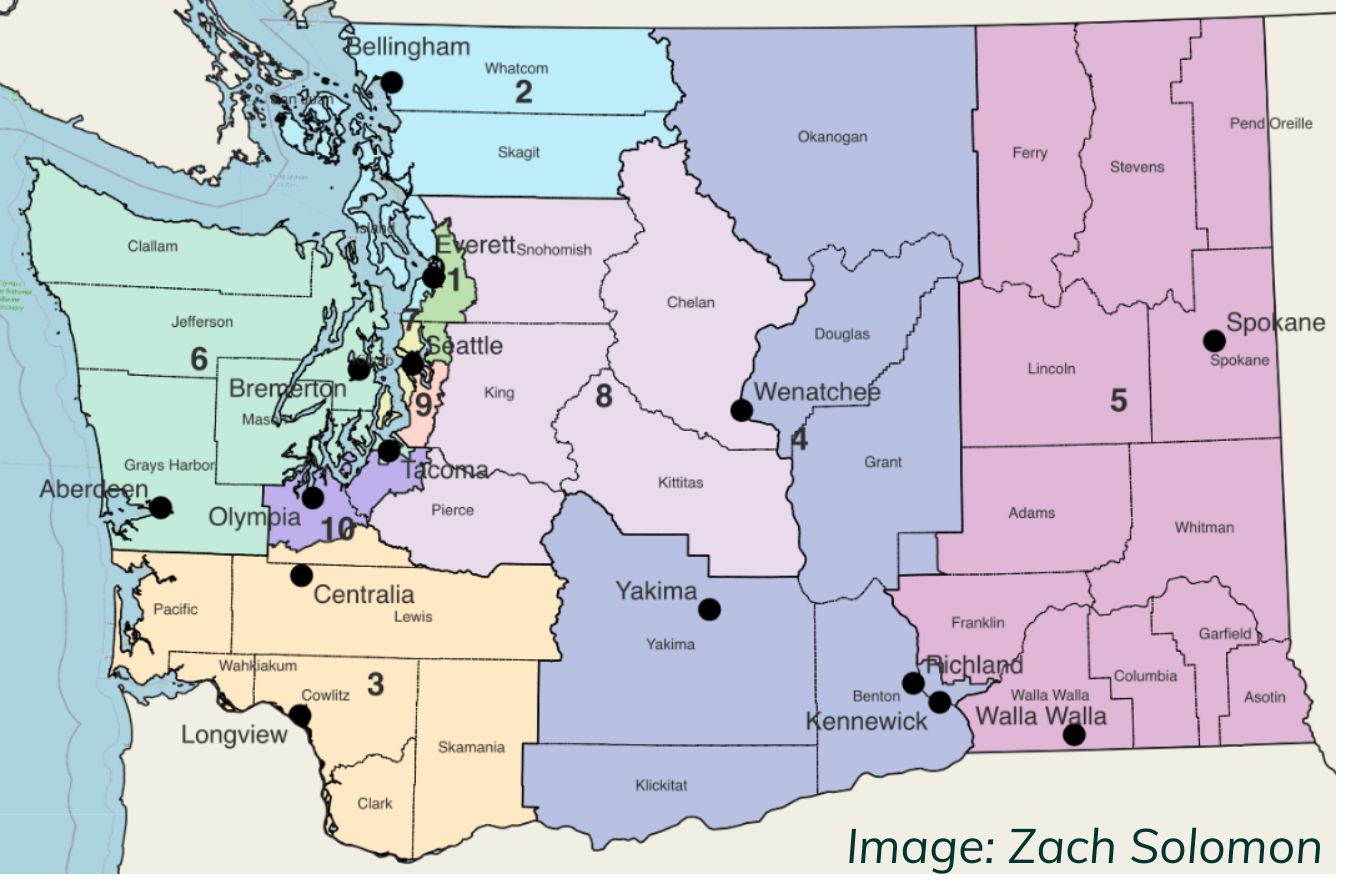
There can be good reasons for these quirks. A denser population might be paired with a sparser population to keep districts about equally sized. Or regions might have similar needs that make sharing a representative in their best interest.
Sometimes districts are drawn to help specific politicians get elected, however. This is called gerrymandering.
To see how this might work suppose some friends want to order pizza. To help decide, they split into groups and each group votes on a pizza. Then those pizzas are ordered. Is this fair?

The system itself isn’t fair or unfair, but bad grouping can make it unfair. If everyone wants either veggie or pepperoni, how the friends are grouped can tilt the order one way or another.

With enough friends and extra, extra large pizzas, it’s possible to engineer the groups so that all pizzas ordered are pepperoni, even if almost half the friends are vegetarians!
Political parties try to gerrymander so that more of their candidates are elected. Sometimes you can tell where they’ve succeeded just by looking at the districts!
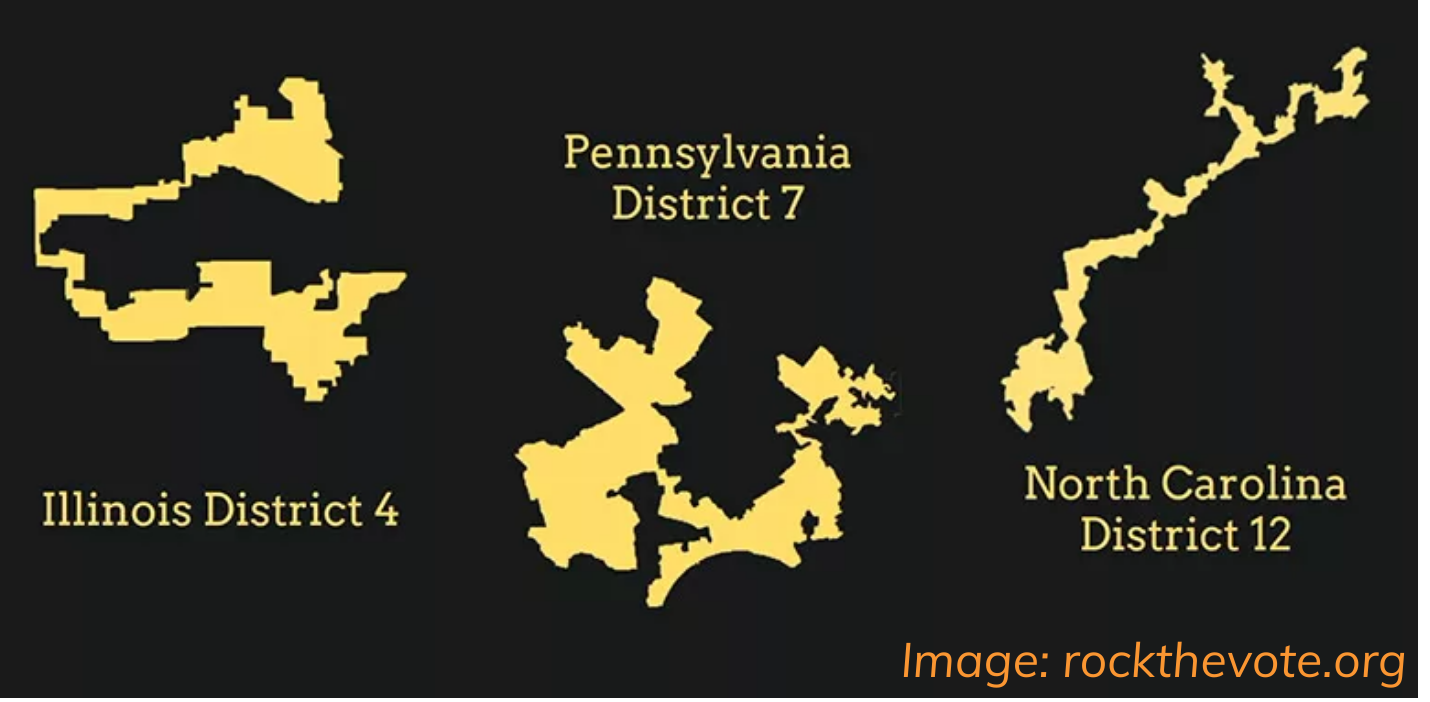
If the districts don’t have goofy shapes, it can be a lot harder to tell.
Mathematicians develop tools to detect gerrymandering. One approach is to randomly generate many potential district maps. The actual map can then be compared to them. If the actual map favors one political party over another in a way that is not typical for the other maps, chances are someone engineered it to do so.
Washington’s districts are drawn by an independent commission, but most states are districted by their legislatures. In those states, the party in power can redistrict their state to grow their power locally and nationally.
Right now Texas is in a push to redistrict in a way that favors one party while California is threatening to redistrict in a way that favors the other.
Would either outcome be fair? How could math help decide?