
Math in… Campfires
When sitting by a campfire feels a little too toasty, scooting back helps you get back to a comfortable temperature.
While you’re pretty used to the fact that distance from something can make it seem weaker, how much weaker does it get?

Many things that radiate heat, sound, odors, and other phenomena do it radially.
The sun radiates photons in all directions. A campfire radiates heat in all directions, but we mostly feel the hemisphere above ground.
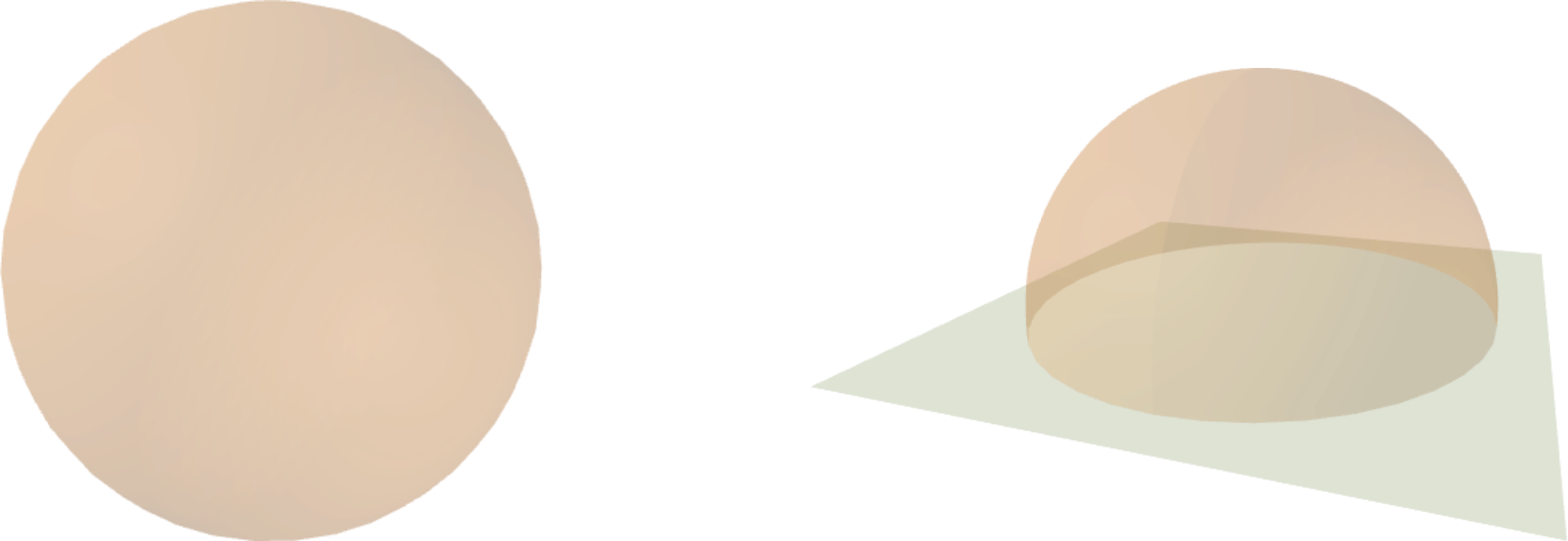
The thermal radiation that the sun and campfires release comes in the form of photons. As the photons in a wavefront get further from the source, they thin out.

Since the surface area of a sphere of radius r is

This means that if there are N photons in a wavefront, the photon per area density in a wavefront distance r from the source is
Since there is a factor of r^2 in the denominator, we say that this follows an inverse-square law.
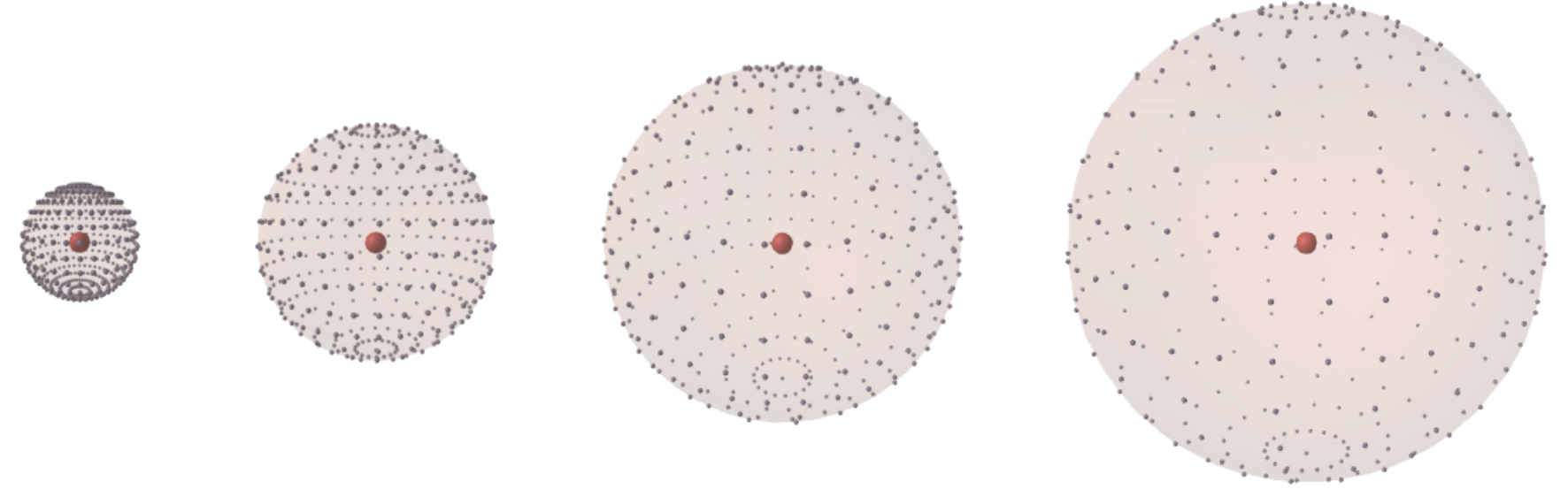

As far as campfires go, this means that doubling your distance from the campfire doesn’t drop the heat intensity to a half — it drops it to a quarter!
What else have you seen that might follow an inverse-square law?