
Math in… Credit Card Interest
When you make purchases with credit, whether using a credit card at the store or securing a loan to purchase a home or attend college, your debt accrues interest, meaning it will steadily grow by some percentage over time.



If a debt is held for a long time, the things you used it to purchase can end up costing you quite a bit more than their sticker prices. If you pay it off quickly, on the other hand, you can end up accruing little or no interest.

Most interest is described via an annual percentage rate (APR). Many credit cards have APRs around 24%, while a home mortgage’s APR might be closer to 6%.
While these percentages might seem pretty simple, the way they get used in calculations can be complicated!
Interest on a home mortgage, for example, is given as an annual rate, but it is typically compounded monthly to line up with monthly payments.
If the annual interest rate is 6%, then 1/12 of that (i.e., 0.5%) is applied every month.
To compare, suppose you have a new $300,000 mortgage and don’t make any payments for a year.
If interest is compounded annually, your balance will be
$300,000 × (1 + ⁶/₁₀₀) = $318,000
with $18,000 of accrued interest.
On the other hand, if interest is compounded monthly, your balance will be
$300,000 × (1 + ¹/₂₀₀)¹² = $318,503.34
with $18,503.34 of accrued interest, which is actually closer to 6.17% of $300,000. This 6.17% is the effective interest rate, while 6% is the nominal interest rate.
Mortgages are structured with a monthly payment that ensures the debt, including all interest accrued, will be paid off in a set time period.
If you paid C dollars every month for N months on a $300,000 mortgage at a 6% nominal annual interest rate, your balance would be
When deciding how much a mortgage payment should be, a lender and lendee will together decide how many months (N) the mortgage should last. Then the lender will solve for the monthly payment (C) that results in zero balance in the expression above.

For a 15-year mortgage, the monthly payment would be $2531.57 for $455,683 total in payments, $155,683 of which is interest. That’s a little over half the amount of the loan.
For a 30-year mortgage, it would be $1798.65 for $647,515 total in payments, $347,515 of it being interest. That’s more than the original loan, just in interest!
While mortgages can rack up a lot of interest, they have relatively modest interest rates and come with payment plans structured so that a home buyer can pay them off within an agreed upon period of time.
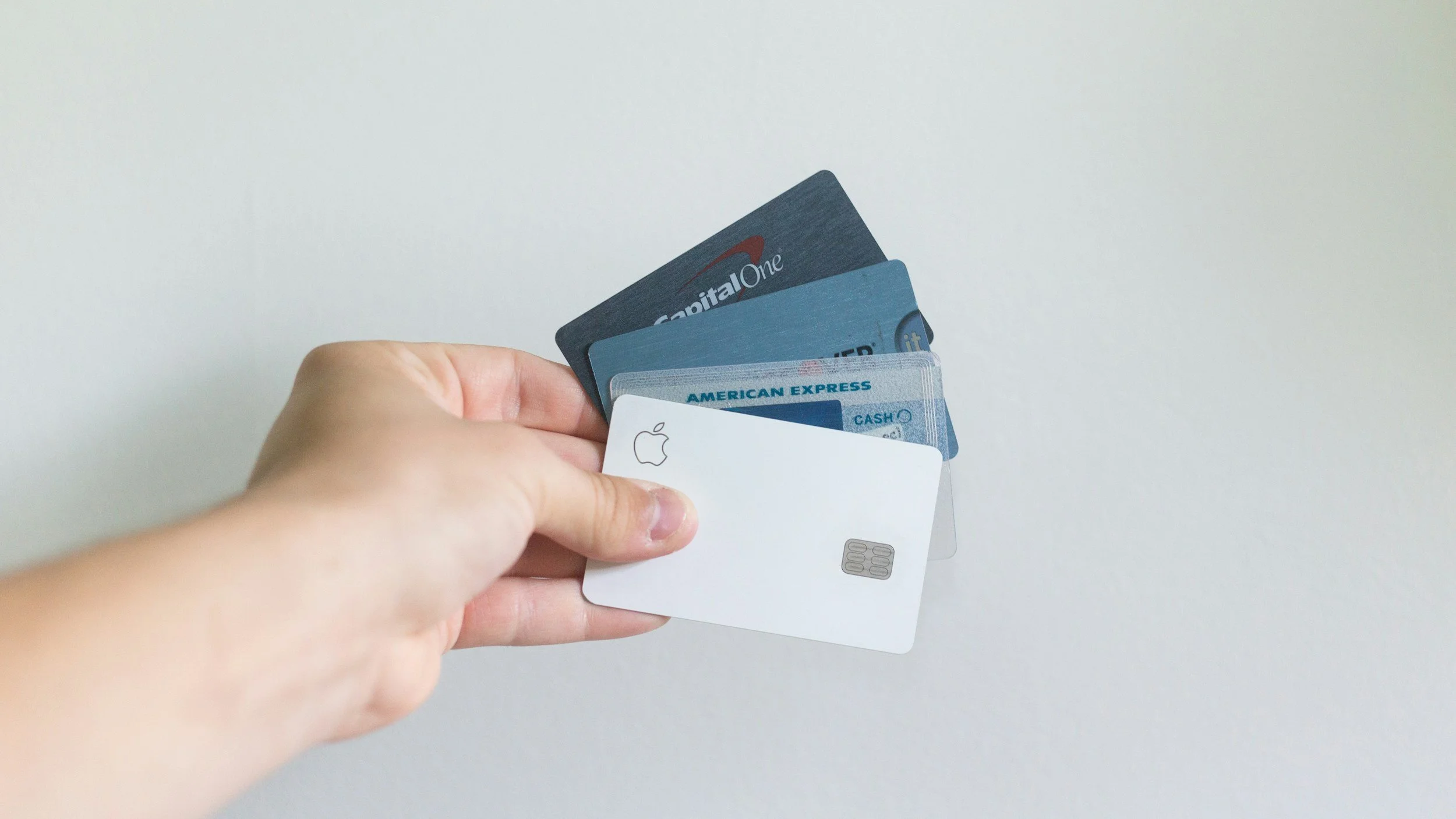
Credit cards, on the other hand, have much higher interest rates and minimum payment structures that tend to be well below what are necessary to pay the balance in a reasonable amount of time for the amounts involved.
Suppose you have a balance of $1000 on a credit card with a 24% nominal interest rate, compounded monthly. If you make only the $25 minimum payment each month, you would finally pay down the balance after 6 years and 10 months, and the total amount paid would be about $2031.90. Most credit cards compound interest daily, not monthly like in this example, so the debt would typically be higher.
Large interest rates combined with low minimum payments can create debt that is extremely difficult to pay off. Interest can be avoided by paying the complete balance each billing cycle, however. This can allow responsible users to get the perks of a credit card (fraud protection, insurance, frequent flier miles, discounts on groceries, etc.) without falling into a debt trap.
