

Education Zone
Octet Lattice
You can tile the plane with a grid of squares or a honeycomb of hexagons. Most people are probably also comfortable with the fact that you can tile 3D space with cubes by stacking boxes. There are actually many other shapes that tile space! We saw some examples of tessellating withing a space lattice last month while recalling our constructions with truncated octahedra, which fill space on their own, and bilunabirotundas, which fill space together with cubes and regular dodecahedra.
While the cube is the only platonic solid that tiles space on its own, there is a pretty useful way to tile space using two of them: the octet lattice. The octet lattice takes its name from the two shapes in the tiling: regular octahedra and regular tetrahedra.
Octet Building System
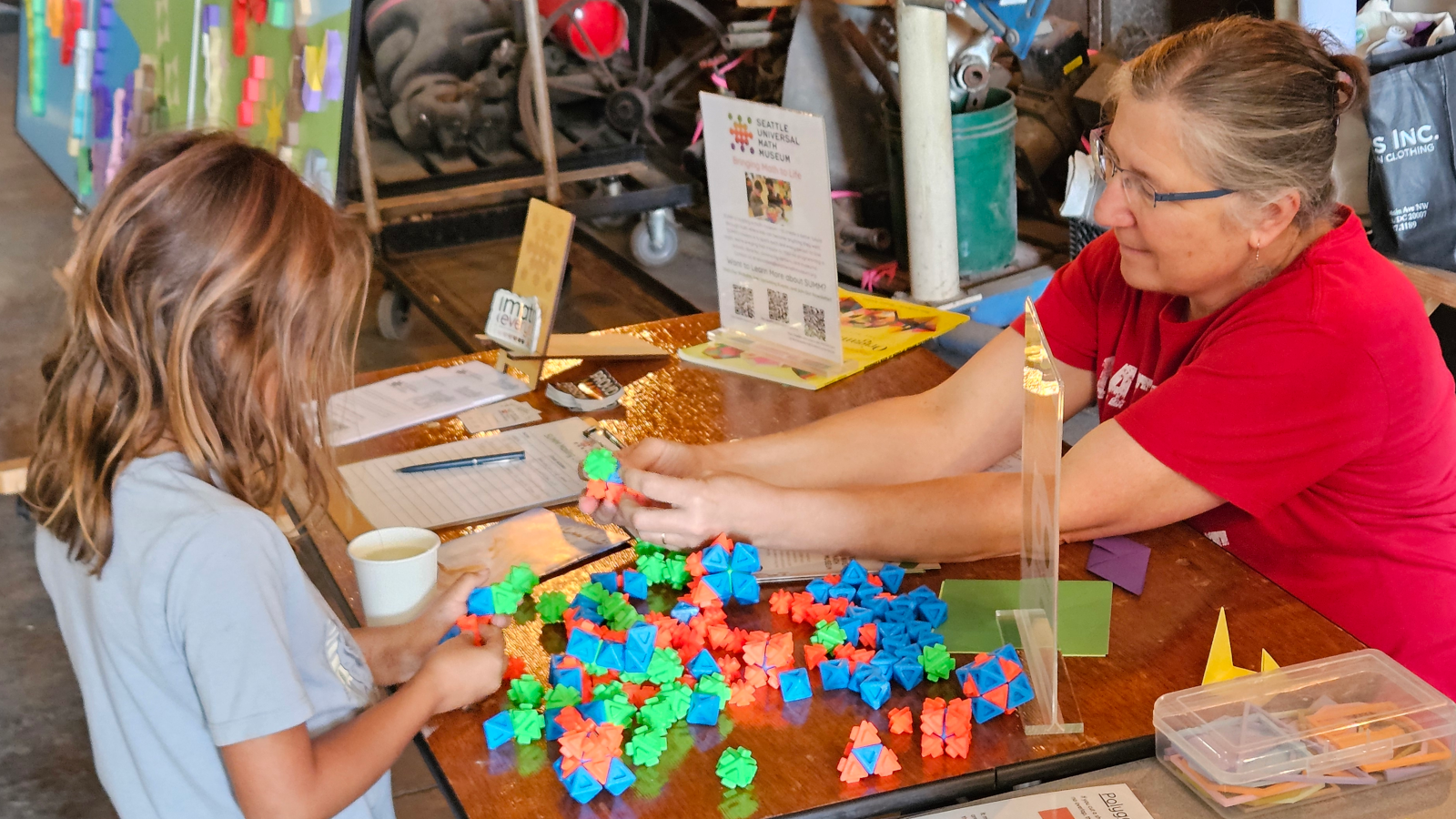
With a new school year starting, SUMM has been looking back at the past year. One of the toys we’ve introduced at events this year is actually based on the octet lattice. Perhaps you’ve seen it!
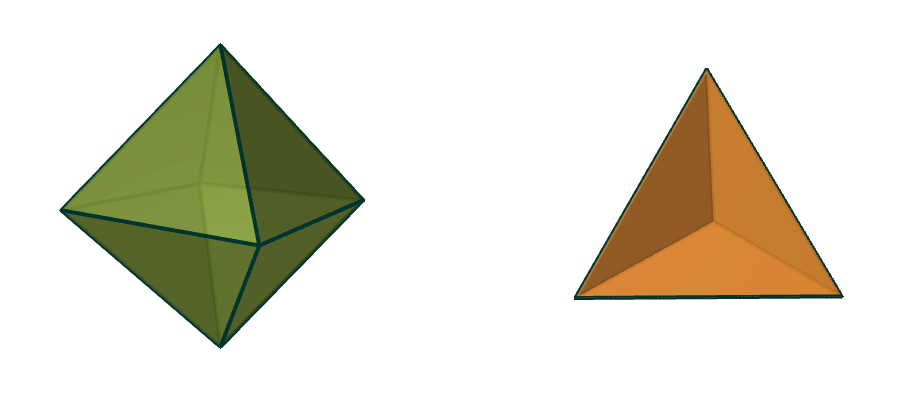
The way the tiling works is simple: each of the four triangular faces of a tetrahedron meets one of the eight triangular faces of an octahedron and vice versa.
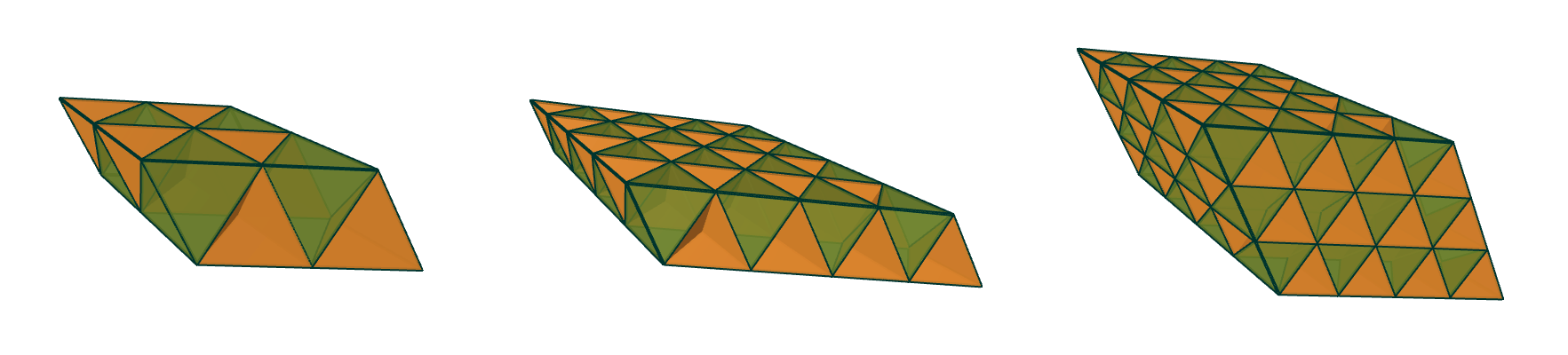
It’s a particularly nice arrangement because every face is a triangle and triangular frames are rigid. This means that if we build such lattice structures using only rods for the polyhedral edges, it will be far more structurally sound than structures with rectangular frames.
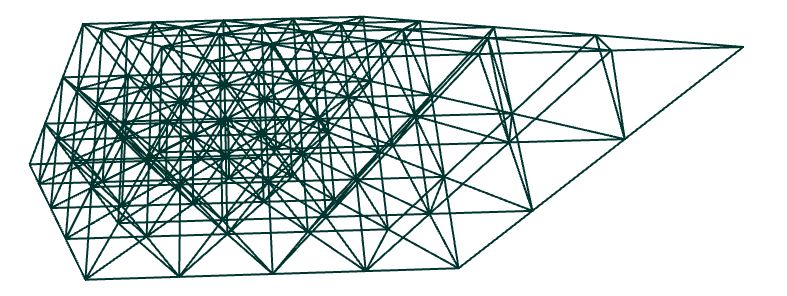
If you’ve ever build towers or bridges with toothpicks using marshmallows or gumdrops for joints, chances are you’ve accidentally created bits of the octet lattice, since it’s a basic rigid structure where all struts have the same length!
Since octahedra and tetrahedra alternate in the octet lattice, the idea with these blocks is that the blue octahedra have holes and the red tetrahedra have pegs, guiding people to build structures with them that conform to this lattice.
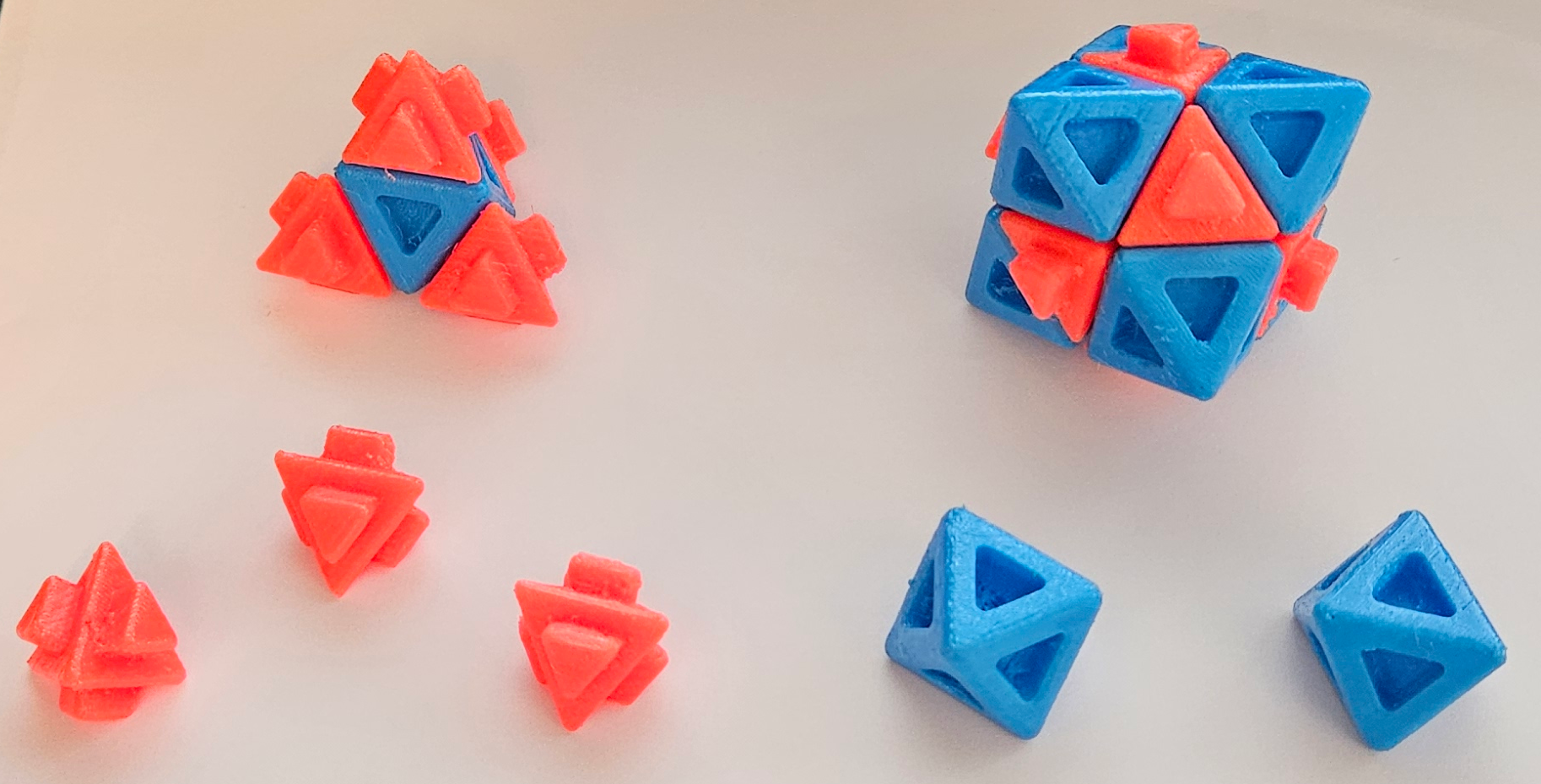
Just to spice things up, some of our kits also feature green pegged octahedra. While building with them sends you outside the structure of the octet lattice, there are definitely some interesting things that they allow you to create.
People of all ages have found these blocks fun to build with, but we were delighted to find that it has been very popular with our visitors who are Kindergarten-aged and younger.
If you want to make this toy for your home or classroom, we recently put together a 3D Printables page that will direct you where to download STL print files for these and more. For the time being, it’s a link to our shop where you will be emailed a download link after submitting your name and email address. While downloads are completely free, donations are very much appreciated — they help us run programs and offer fun resources like these!