
3D Printables
Tensegrity Building System
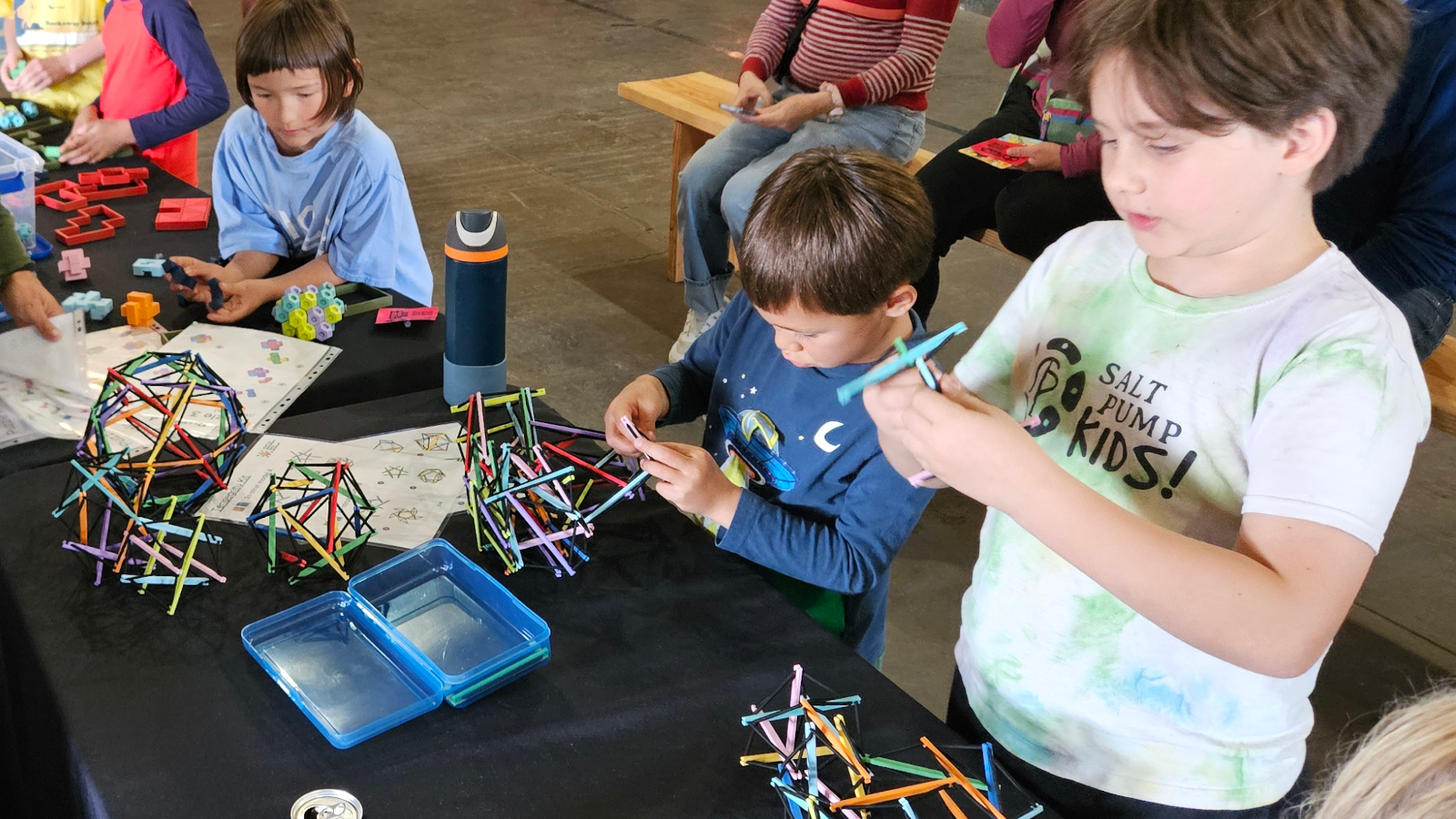
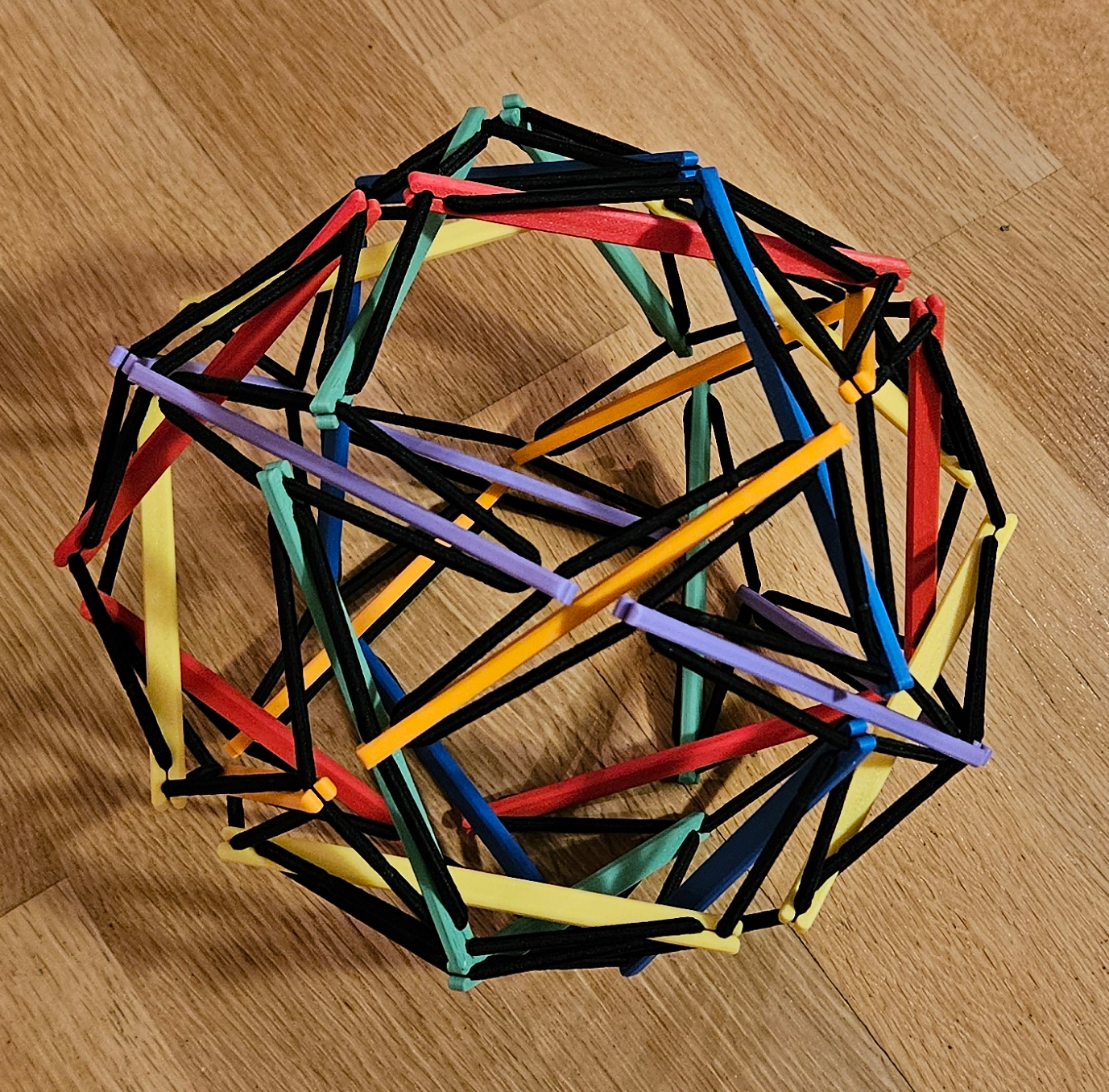
Tensegrity is a system of balancing tension and compression forces to create architectural pieces that appear to “float.” This toy will allow you to experiment with this design principle by crafting your own sculptures or building examples inspired by polyhedra.
Components
There are two pieces you'll need: the printable strut and the band.
Struts
There is only one print file you'll need, but I'm providing three versions of it. Two feature the text "SUMM" along a flat side or two. If you want to support the Seattle Universal Math Museum, consider including some with SUMM on them for a conversation starter. They do take longer to print and use more plastic, though.
I tend to print 20-25 at a time and have found printing text-side-down works better than text-side-up.
Bands
I've been using these hair bands, which come in packs of 250 for about $10. Purchasing through this link helps support our nonprofit mission at no extra cost to you! As an Amazon Associate, I earn from qualifying purchases.
They work well enough, but there's a point of failure where the band is glued. I've only seen them break when kids are super rough with them, but you might want to keep some spare bands.
The printable struts were designed to work with the dimensions of this band (2 in. loop diameter, 1/8" cross-section diameter), so if you deviate from this band, pick something with very similar dimensions.
Assembly
At each end of the strut, the space between the prongs connects to an inner hole via a slit. The band should be passed through the slit until it rests in the inner hole. (There'll be some resistance, so I do this part against a pillow in my lap!)
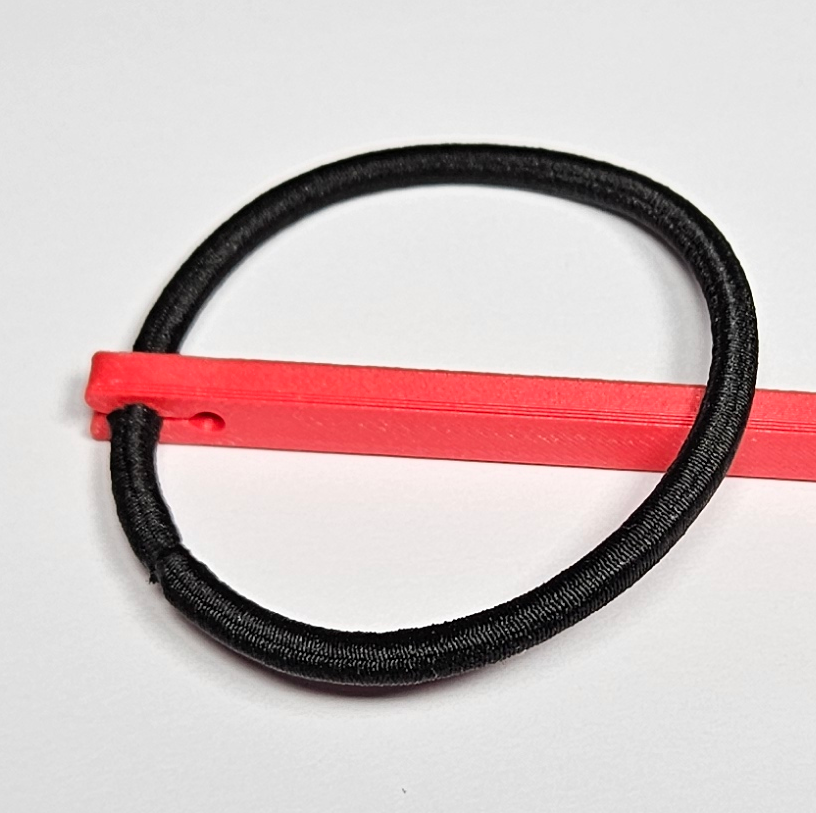
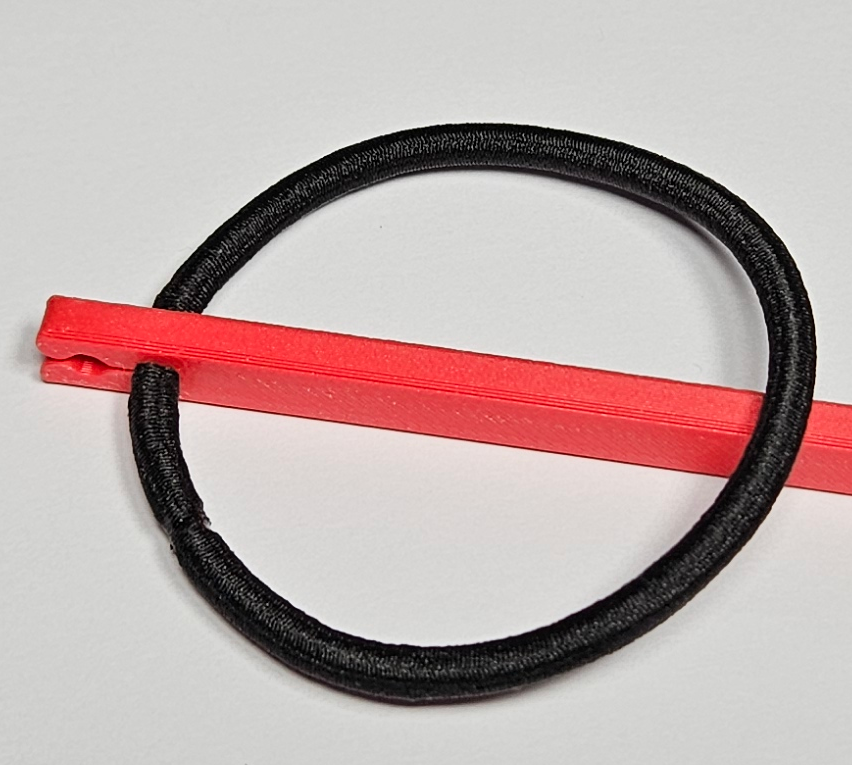
After you do this on one end, pass the band through the slit on the other end.
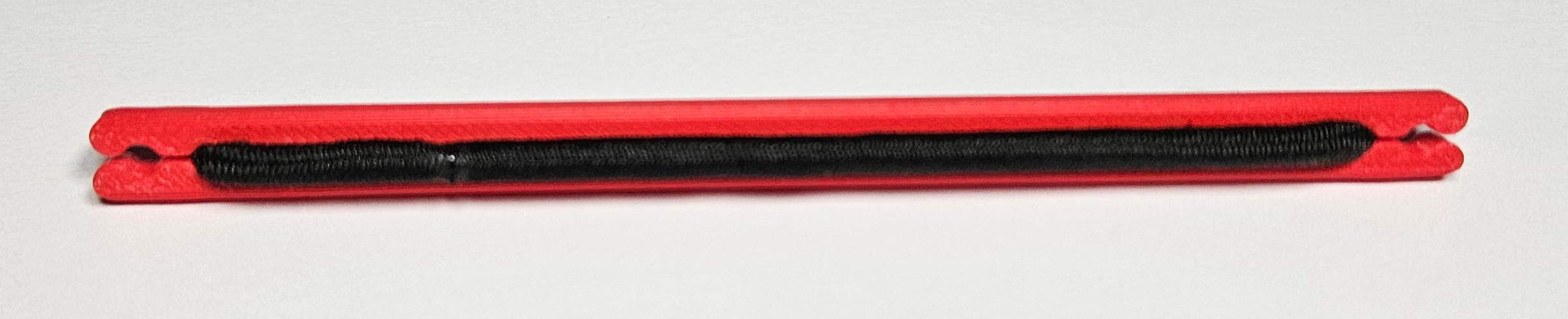
Since the glued bit of the band doesn't play nicely with the prongs, I try to keep it about a quarter down the band length so it is unlikely to get grabbed by the prong of another module.
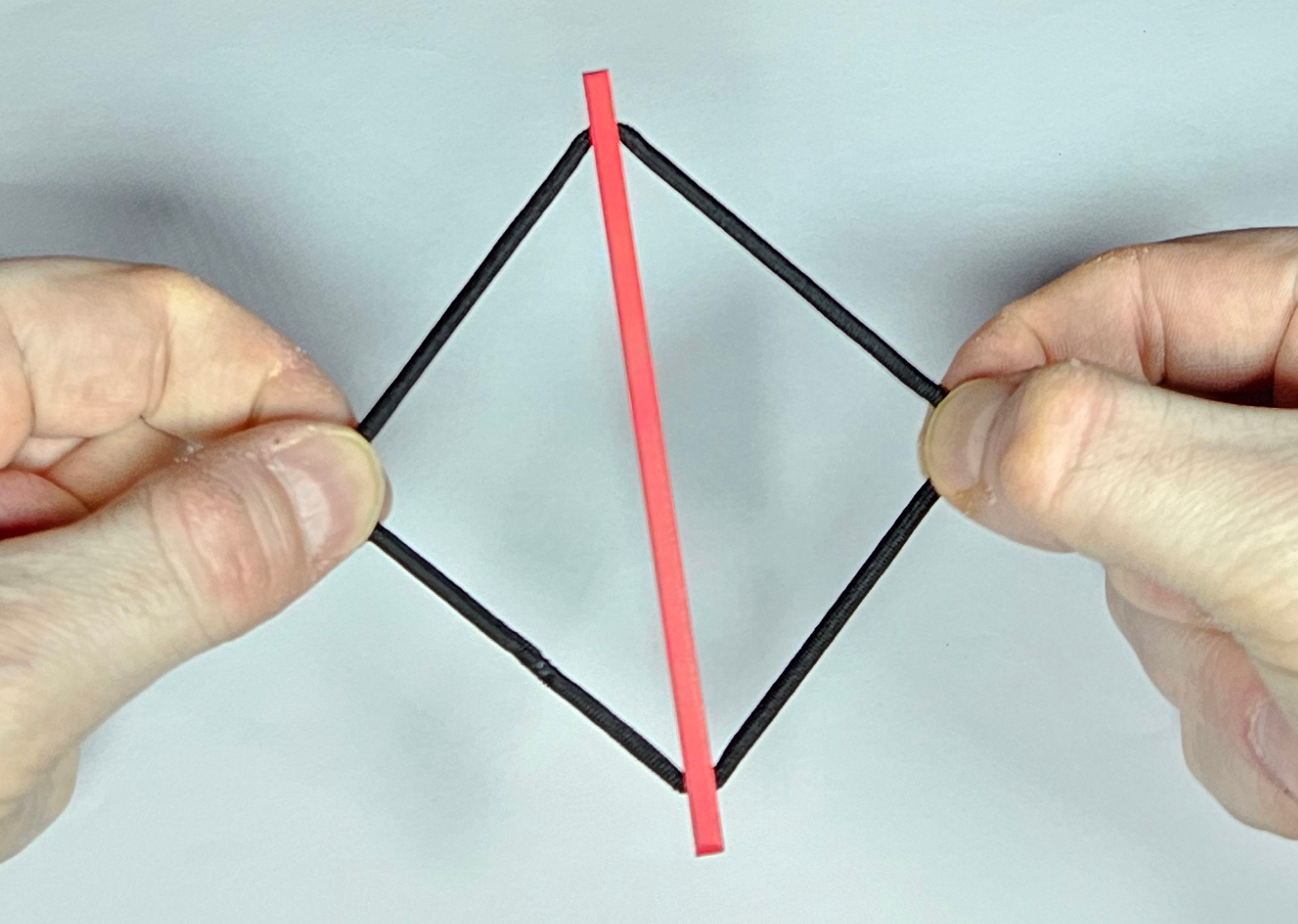
Try to get about the same amount of slack on both sides. You can test this by grabbing each length of band in the middle and stretching it open.
Example Models
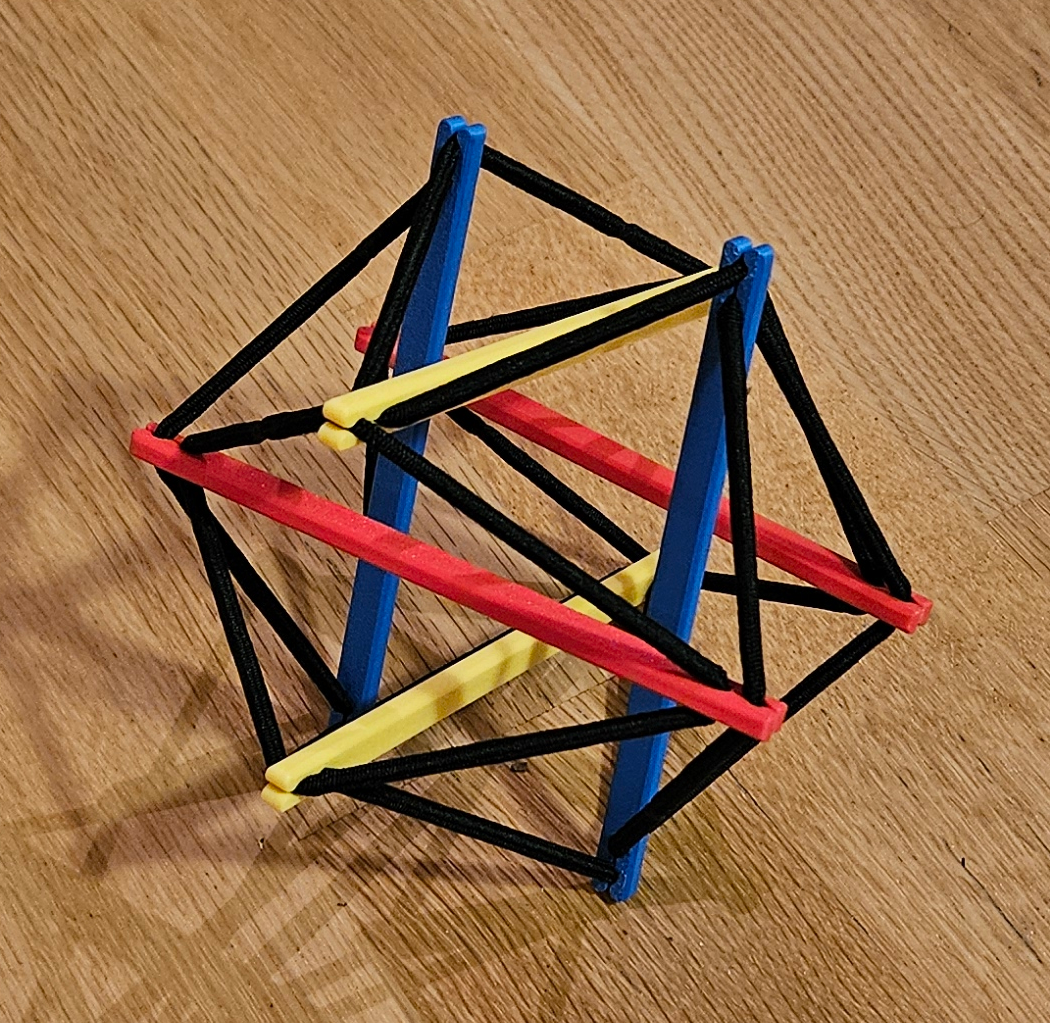
To give you a sense of what builds look like with these, here are some example models. All of them can be made with 30 or fewer modules. I try to use colors to highlight features of the polyhedra I model these on and have found that six colors suffice for most things. A nice starter kit could be 30 struts, 6 colors, 5 of each.
Octahedron (6 modules)
Pentagonal Antiprism (10 modules)
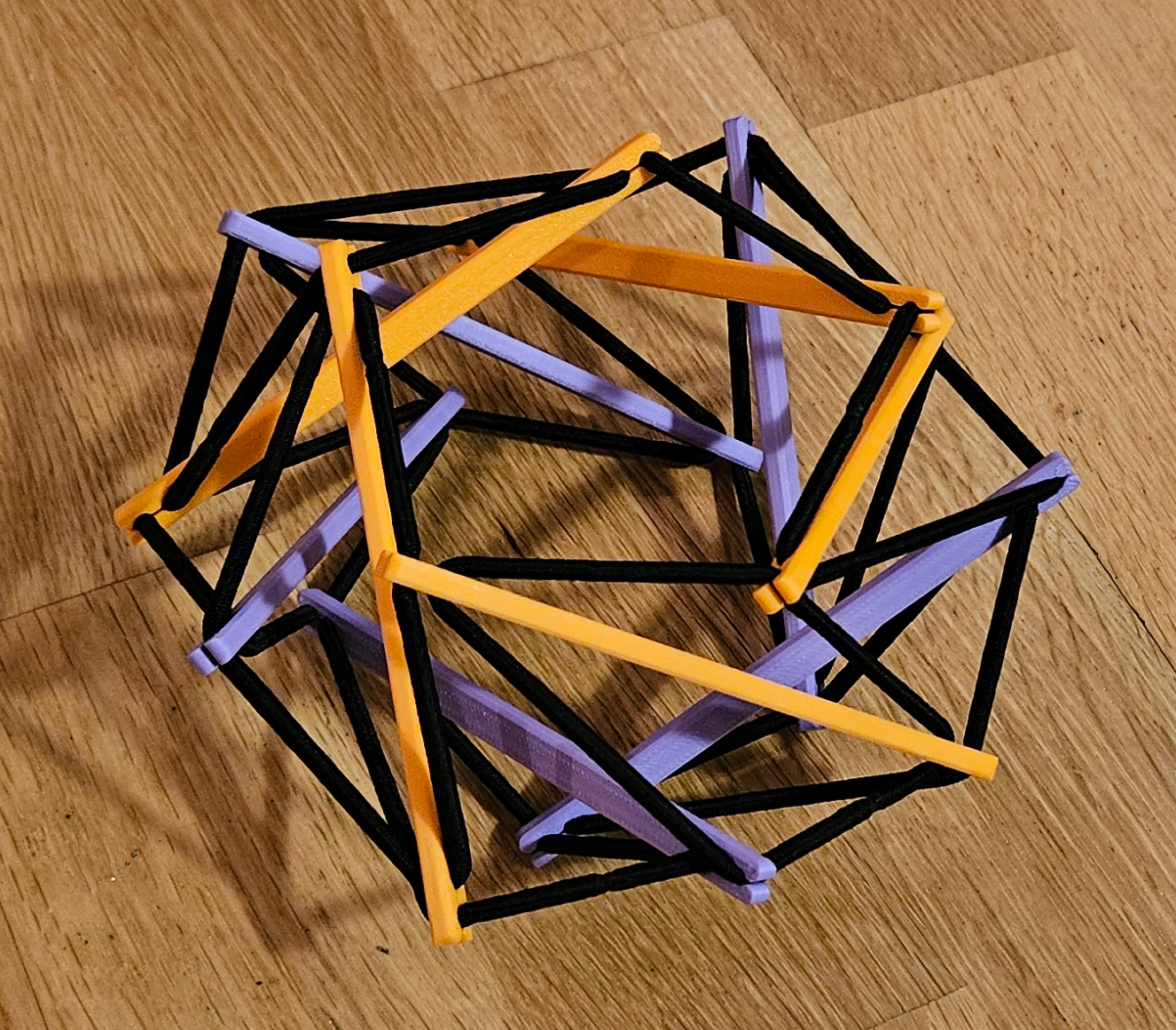
Elongated Square Bipyramid (10 modules)
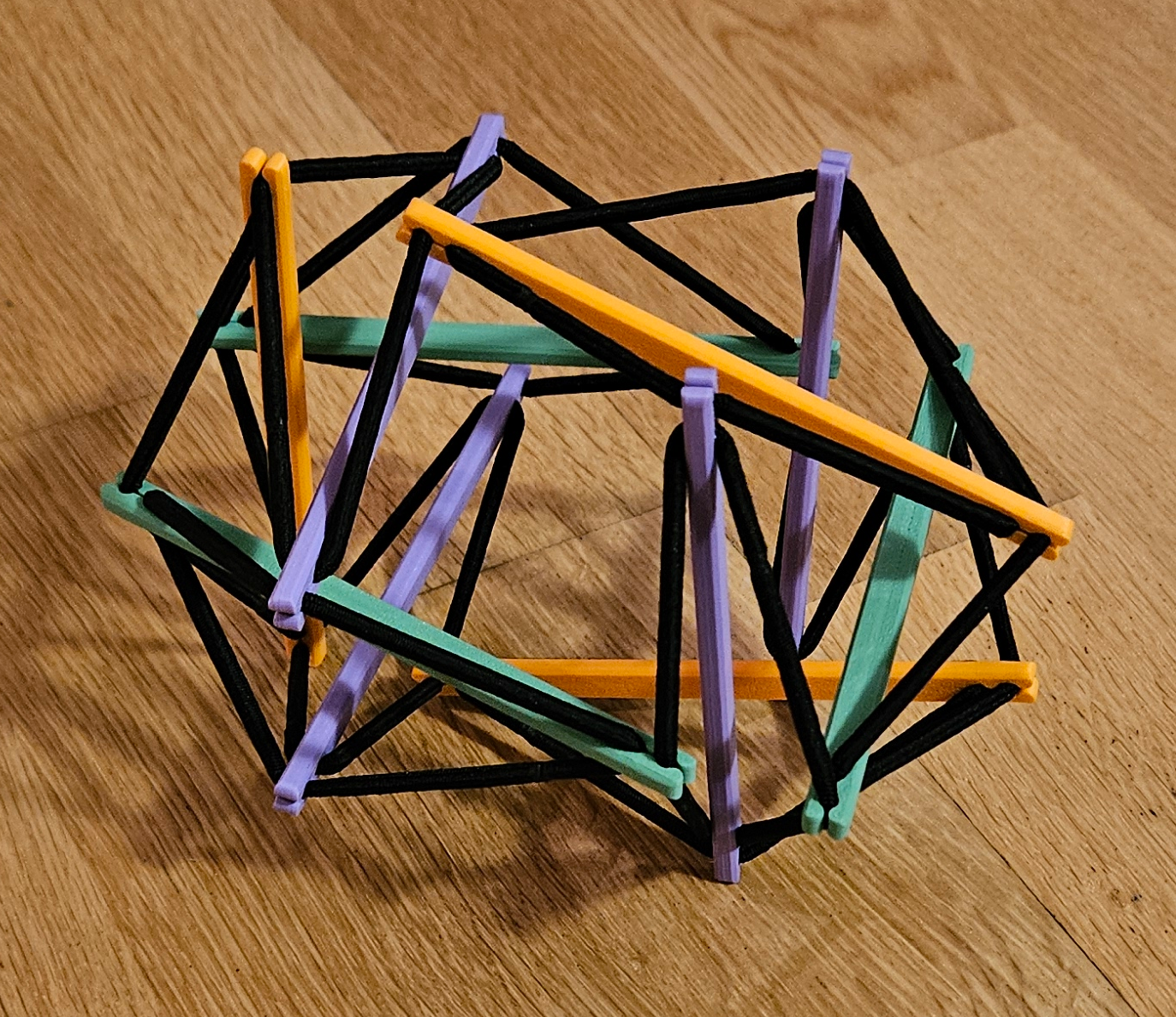
Cuboctahedron (12 modules)
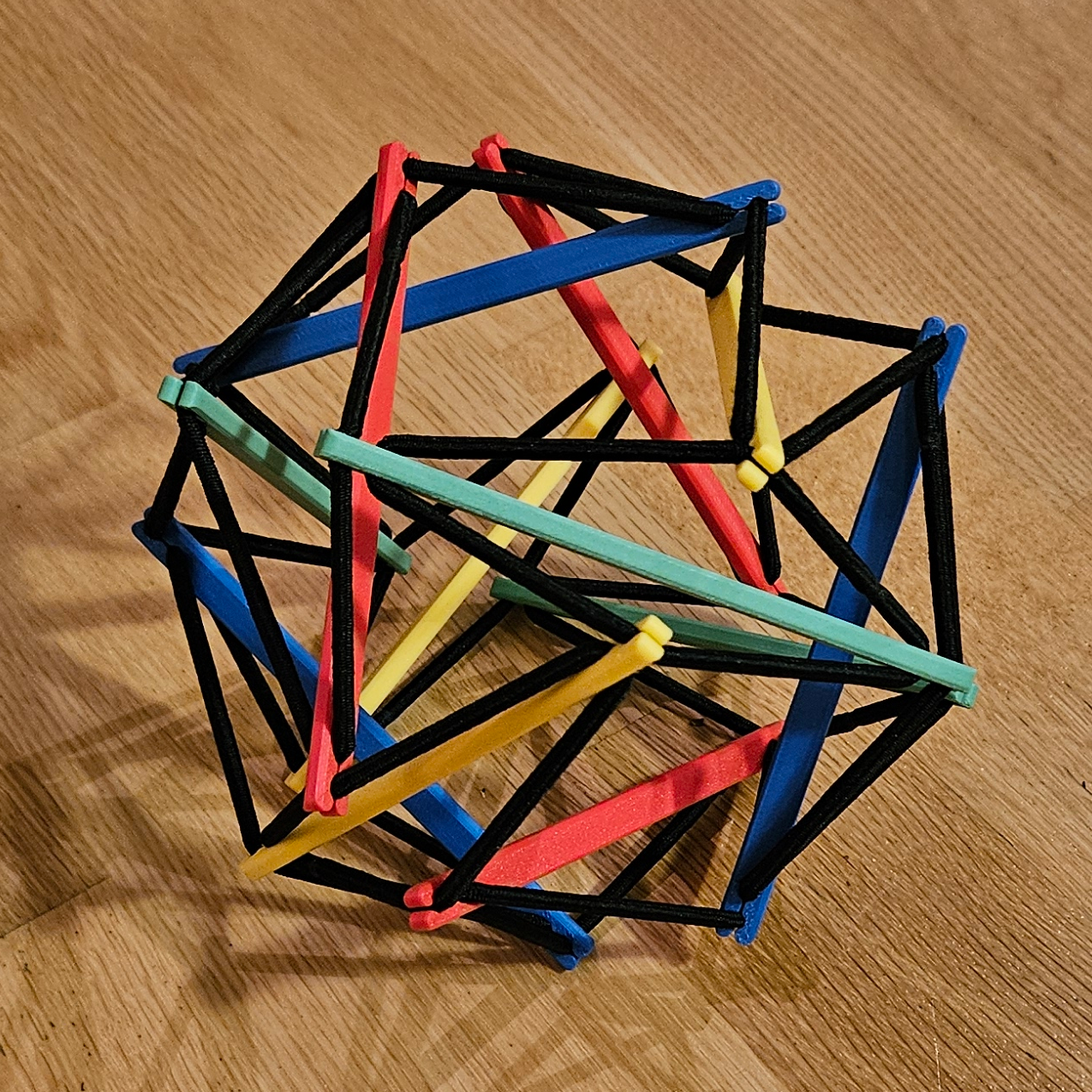
Rhombicuboctahedron (24 modules)
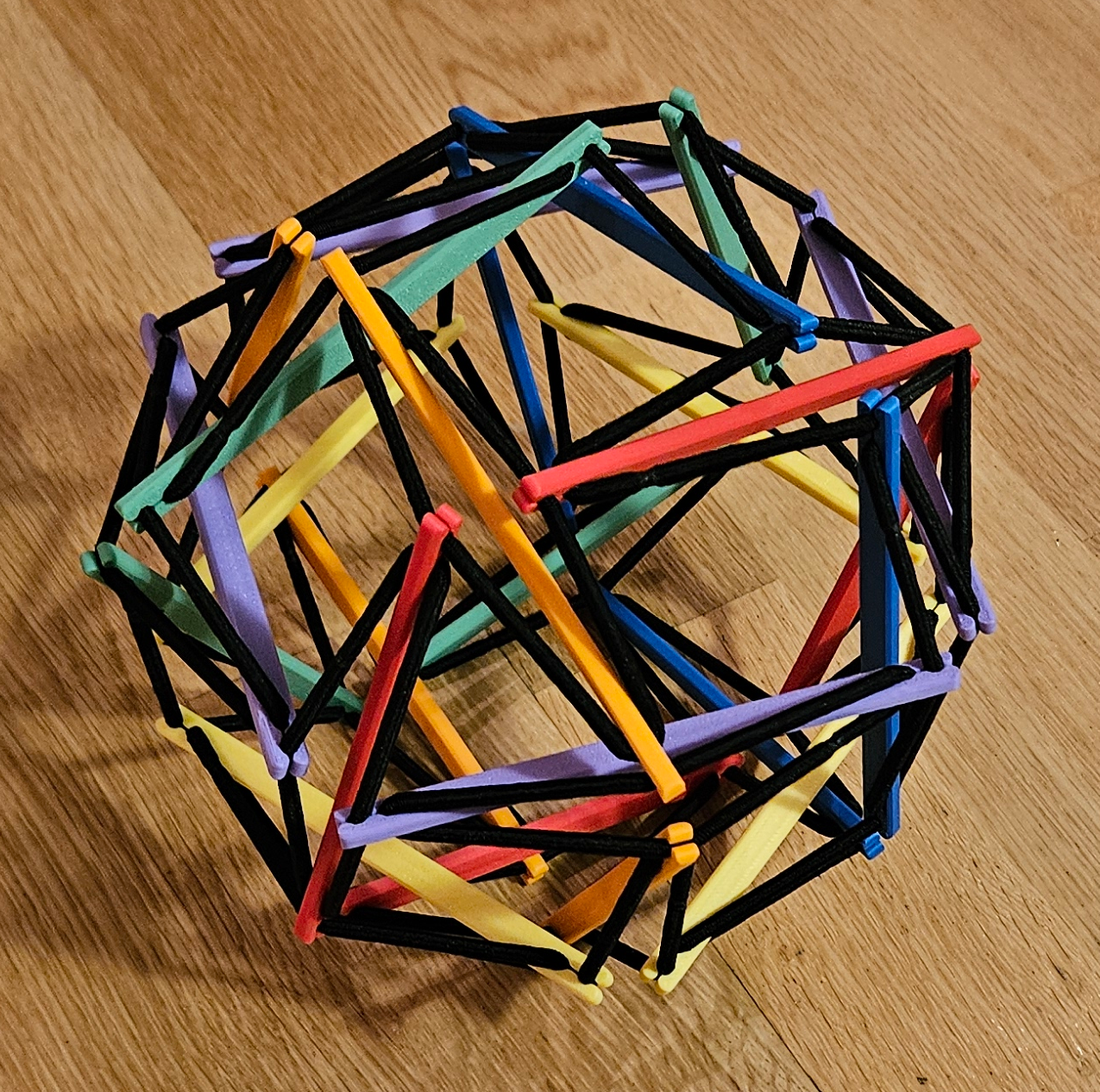
Icosidodecahedron (30 modules)