Once Upon a Number: Preschool Math Books We Love
Reading to your child is important. But you already know that.
Reading together builds literacy skills, strengthens familial bonds, and teaches important social functions. There are provable scientific benefits to reading—a 2000 study from NCES found that kids who are frequently read to are more likely to be able to count to 20 or higher than those who were not (60% vs. 44%), read or pretend to read (77% vs. 57%), and write their own names (54% vs. 40%).
But at SUMM, we also recognize that some families don’t have ready access to age-appropriate books or time to read with their kids. We’re proud to team up with the King County Library System to provide drop-in math play and build math confidence. We also provide free math books to families who attend our Family Math Fun events. These are just a few examples of what SUMM does in the Seattle area, and we’re working to provide even more resources to families in the coming school year.
For this week’s Talking Math, we gathered some of our favorite math books for preschool and pre-kindergarten age kids. Below each book is a link to rent it from KCLS, and a link to buy it on Bookshop through one of our favorite local bookstores. This is not an exhaustive list, so look out for more book recommendations from us in coming weeks!
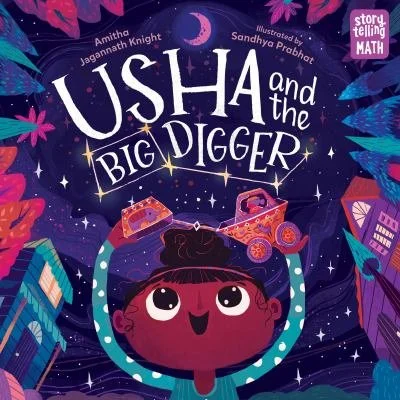
Usha and the Big Digger
written by Amitha Jagannath Knight
illustrated by Sandhya Prabhat
“When sisters Usha and Aarti look up at the stars, they see different things. Aarti sees the Big Dipper, but Usha sees the Big DIGGER. And cousin Gloria sees the Big Kite! Could they all be right? A playful introduction to geometry and spatial relationships, featuring Indian American characters and a note about cultures and constellations.”
What it teaches: spatial relationships, shape identification, orientation, number sense
Why we love it: As a former space-kid-turned-planetarium-operator, this book sent me over the moon (pun intended). Sandhya Prabhat’s illustrations make this one of the cutest books I’ve ever read. This book and Christopher Danielson’s Which One Doesn’t Belong? both teach an important lesson: that many answers can be “the right one”, and everyone’s perspective equally matters.
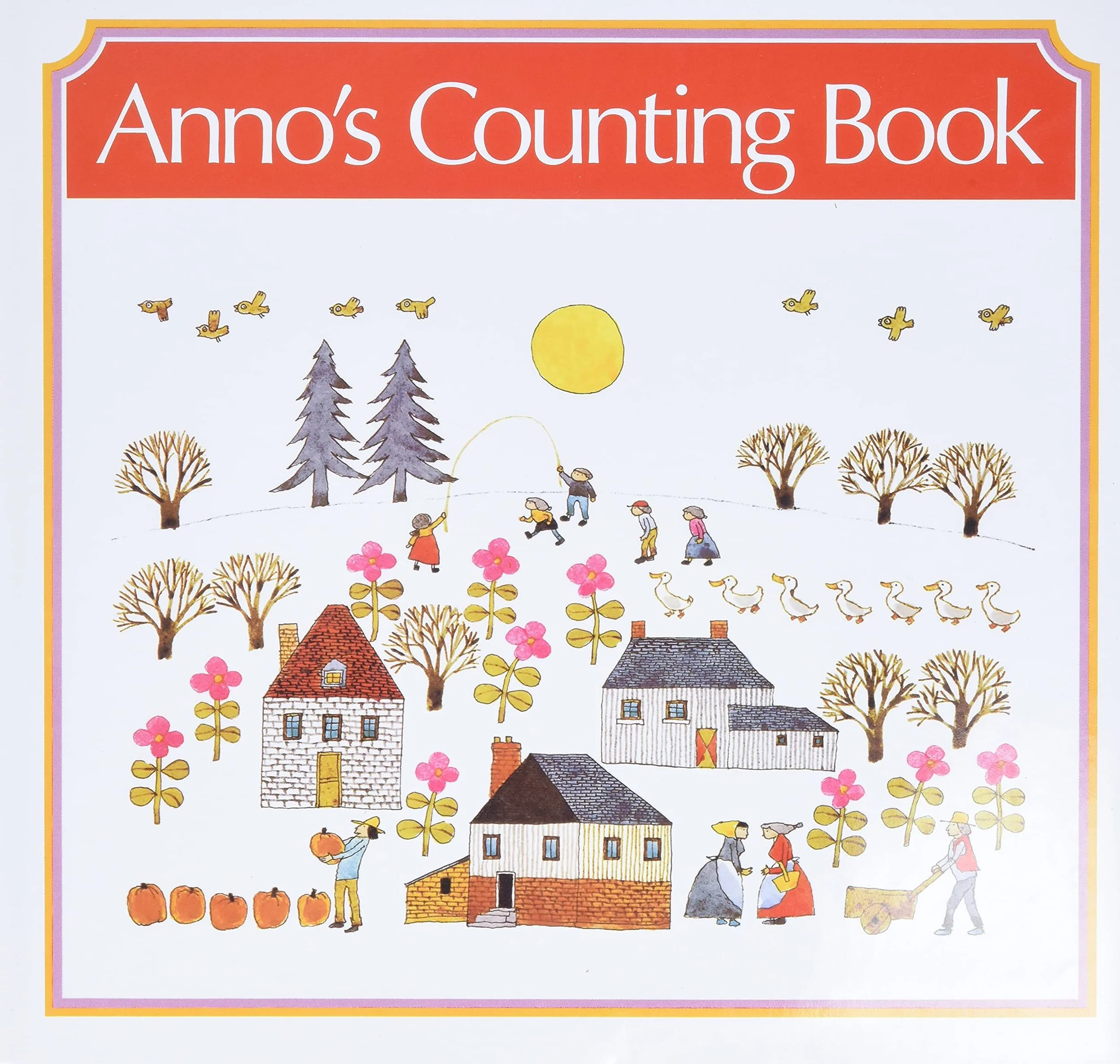
Anno’s Counting Book
by Mitsumasa Anno
“With Anno's Counting Book, the creator of the brilliantly inventive Anno's Alphabet invites young readers on another stimulating adventure of the imagination—this time into the world of numbers and counting.
Gentle watercolor pictures show a landscape changing through the various times of day and the turning seasons, months and years, and the activities of the people and animals who come to live there. But the seemingly simple plan of the book is deceptive: look more carefully and you will see one-to-one correspondences; groups and sets; scales and tabulations; changes over time periods; and many other mathematical relationships as they occur in natural, everyday living. The reader is subtly led to see and understand the real meaning of numbers.”
What it teaches: counting, shape identification
Why we love it: After reading this book, it’s clear why Mitsumasa Anno won the international Hans Christian Andersen Medal for his illustrations. The ink and watercolor images are beautiful. Despite having no words, Anno conveys so many mathematical topics, and leaves lots of room for you and your child to interpret the scenes together. This is a good one for kids who are not quite to reading-age, and a good one for you if you need a break from doing lots of silly voices during reading time.
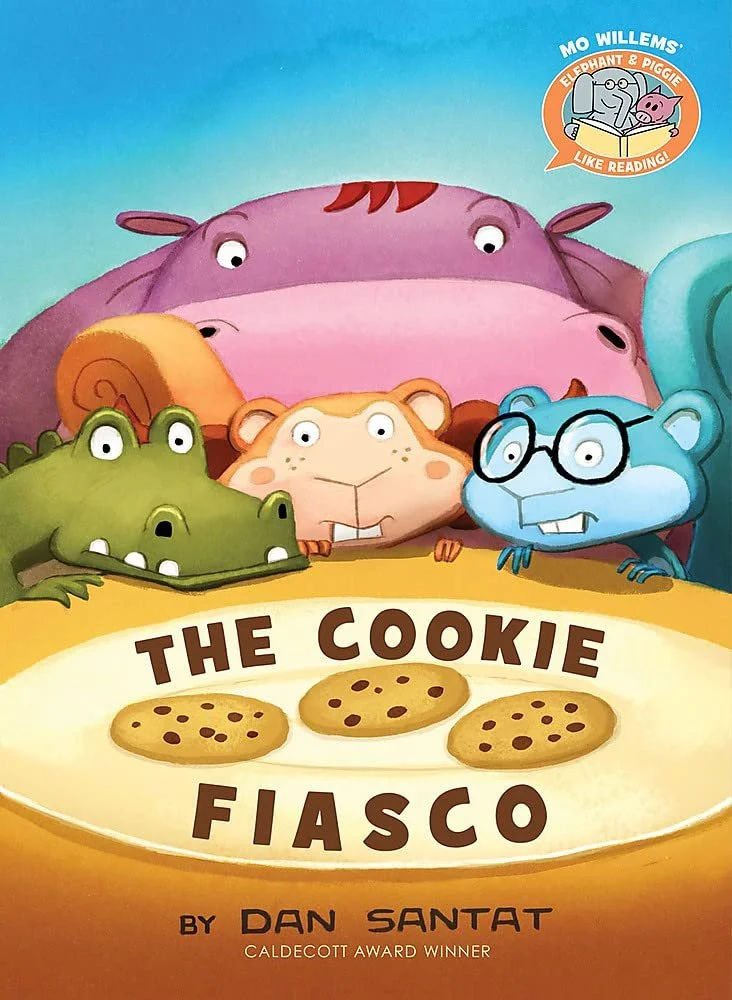
The Cookie Fiasco
by Dan Santat
“Four friends. Three cookies. One problem. Hippo, Croc, and the Squirrels are determined to have equal cookies for all! But how? There are only three cookies . . . and four of them! They need to act fast before nervous Hippo breaks all the cookies into crumbs!”
What it teaches: fractions, sharing, equal and unequal, division
Why we love it: On the other hand, if you prefer doing silly voices while reading with your child, this book may be up your alley. Fractions are a difficult concept to teach to a preschool age, but Dan Santat is able to apply it to a “real-life” scenario that makes it easily comprehensible. This book is also part of the Elephant & Piggie Like Reading! series, so if your kid likes Knuffle Bunny or Don’t Let the Pigeon Drive the Bus!, they might like this one too.
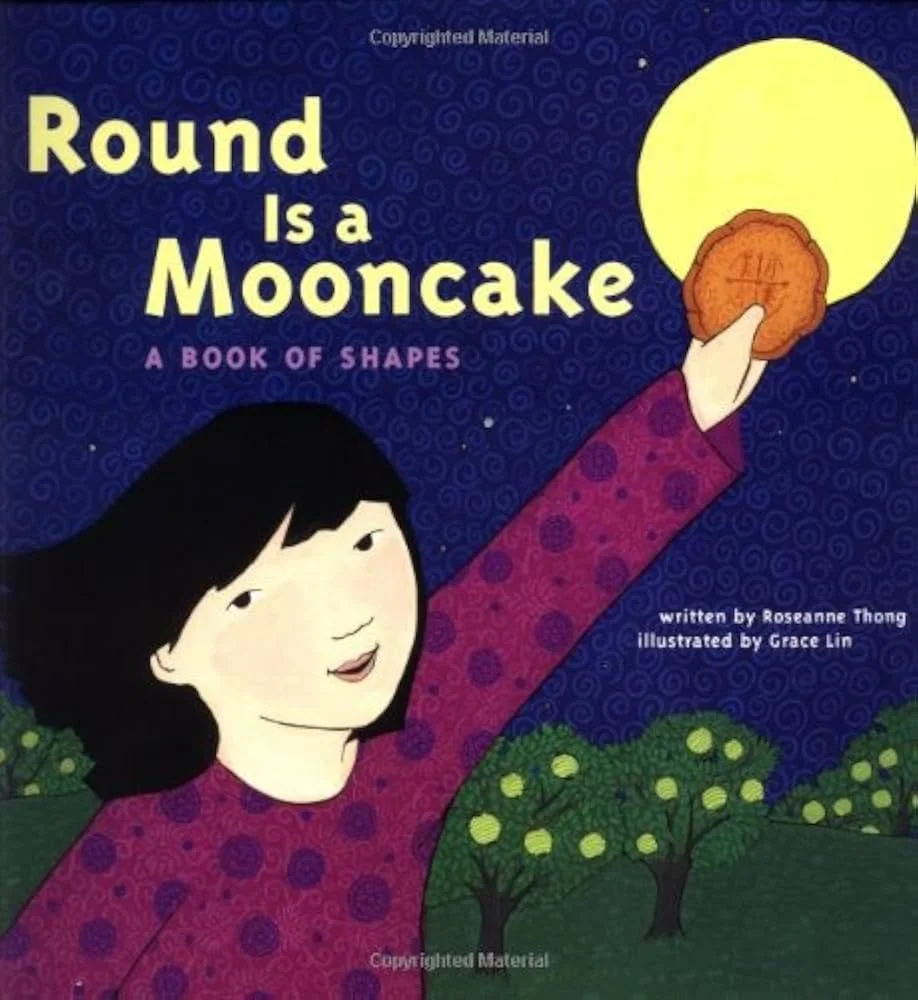
Round is a Mooncake
by Roseanne Thong
illustrated by Grace Lin
“A little girl's urban neighborhood becomes a discovery ground for all things round, square, and rectangular in this lyrical picture book. Most items are Asian in origin, others universal: round rice bowls and a found pebble, square dim sum and the boxes that the pizzas come in, rectangular Chinese lace and a very special pencil case. Bright, whimsical art accompanies the narrative rhyme, and a short glossary adds cultural significance to the objects featured in the book. Perfect for read-alouds or one-on-one sharing.”
What it teaches: shape concepts, number sense
Why we love it: Grace Lin’s colorful gouache paintings emphasize the different shapes kids are learning. Thong includes many sight words that are perfect for kids who are learning to read. The open-ended nature of the book leaves room for you to explore shapes with your child after reading. If you enjoy this book, you may also like the two others in this series: Red is a Dragon: a Book of Colors and One is a Drummer: a Book of Numbers.
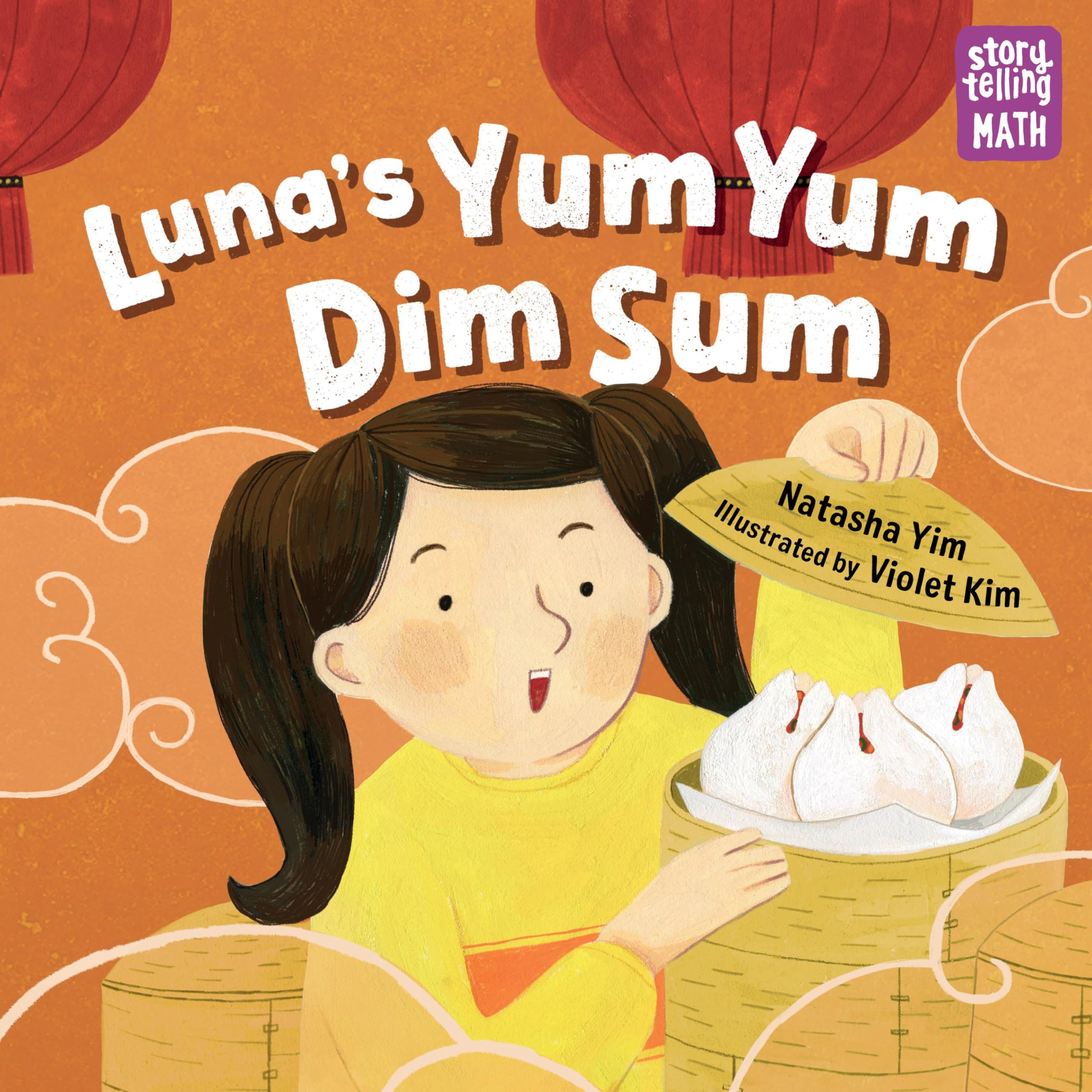
Luna’s Yum Yum Dim Sum
by Natasha Yim
illustrated by Violet Kim
“On Luna's birthday, the whole family goes out for dim sum--but Luna and her brothers can't agree on how to share their pork buns fairly. How can three people divide up five buns? Should some siblings get more than others? Or should they cut the buns into smaller and smaller pieces so everyone gets the same amount? A playful exploration of division and fractions, featuring Chinese American characters and a cultural note.”
What it teaches: division, fractions, counting, addition, problem-solving
Why we love it: This is another book with words that compliment its visuals perfectly. The way Luna solves the unequal bun problem reminds me of Atinuke’s Catch that Chicken!, another SUMM favorite. The dialogue between Luna and her siblings feels so realistic, and reminded me of how my own sibling and I would squabble over everything. And most importantly, the food looks delicious. Now I want dumplings…
If you’re feeling generous, SUMM is looking to expand our own library! You can find our book wishlist through Bookshop, an organization that connects readers with the booksellers near them by donating to local sellers.
We work with Ada’s Technical Books and Café, a bookstore in the Capitol Hill neighborhood that specializes in STEM-focused and technical books. We encourage interested families to stop by in person!