
Math in… Wallpaper Patterns
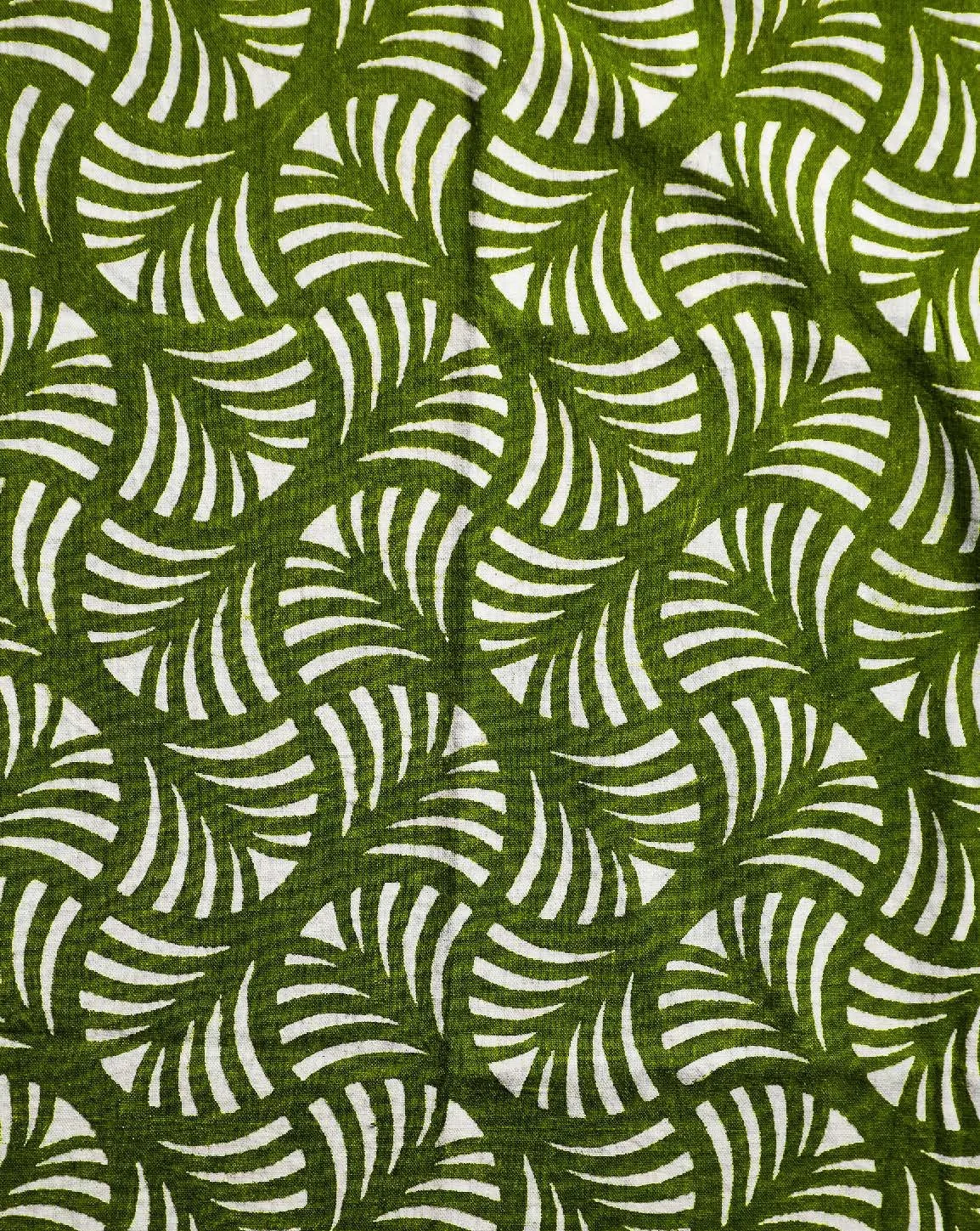
When designing wrapping paper or wallpaper, artists typically don't know the exact size of the box or wall that will be covered.
By making patterns that repeat in a two-dimensional way, artists create designs that are both interesting and able to fit any needed area.
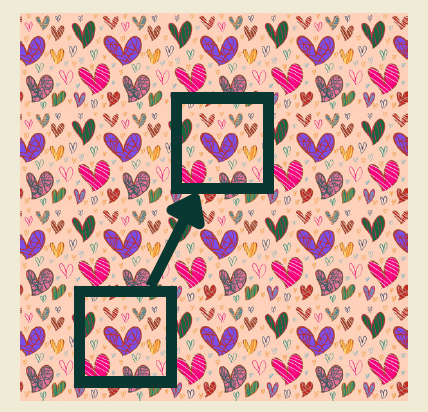
When we say a pattern repeats, we usually mean that we see parts of it appearing somewhere else via a translation.
Translational symmetries can be discrete, with fixed increments of distance for translations, or continuous, with a smooth spectrum of distances.
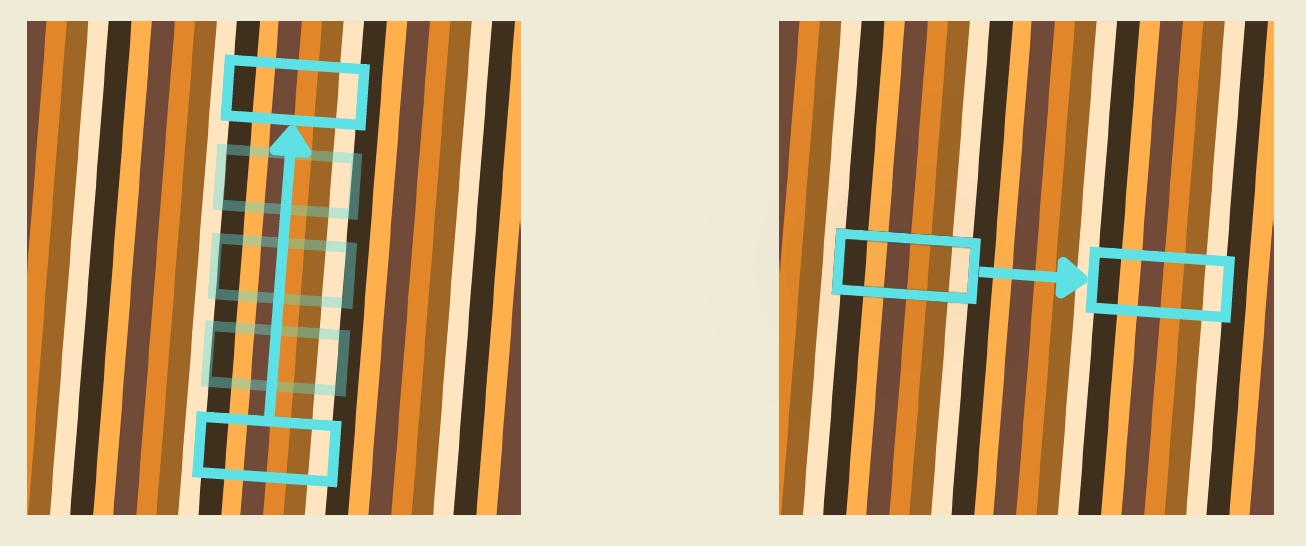
In the pattern above, translational symmetry along the vertical-ish axis is continuous, since the box could be moved any distance along the axis and contain an identical image. Translational symmetry along the horizontal-ish axis is discrete, because having dark brown in the left side of the box and beige in the right side only occurs for specific distances of translation.
A wallpaper group is a mathematical object that encodes the symmetry of a pattern assuming that it has translational symmetry in two nonparallel directions and has no continuous translational symmetries.
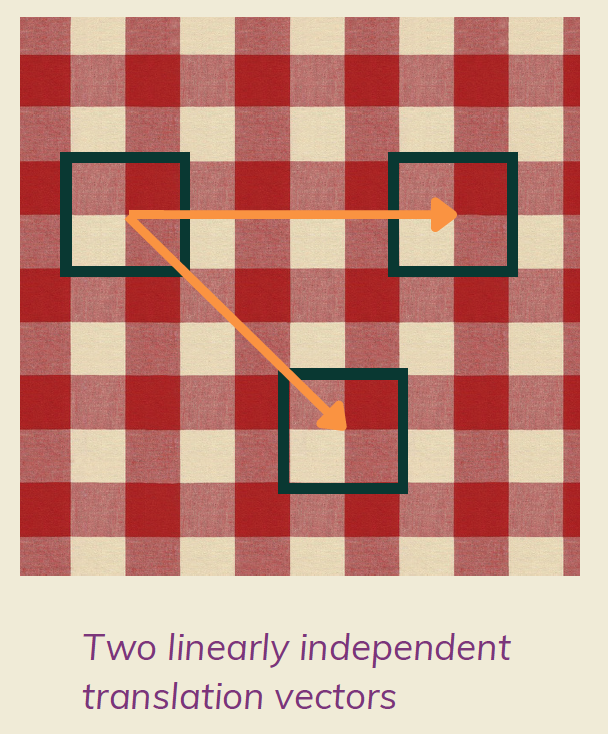
We can use the linearly independent translation vectors to help find basic patches of our pattern. A smallest patch that can (with its mirror) tile the pattern is a fundamental domain.
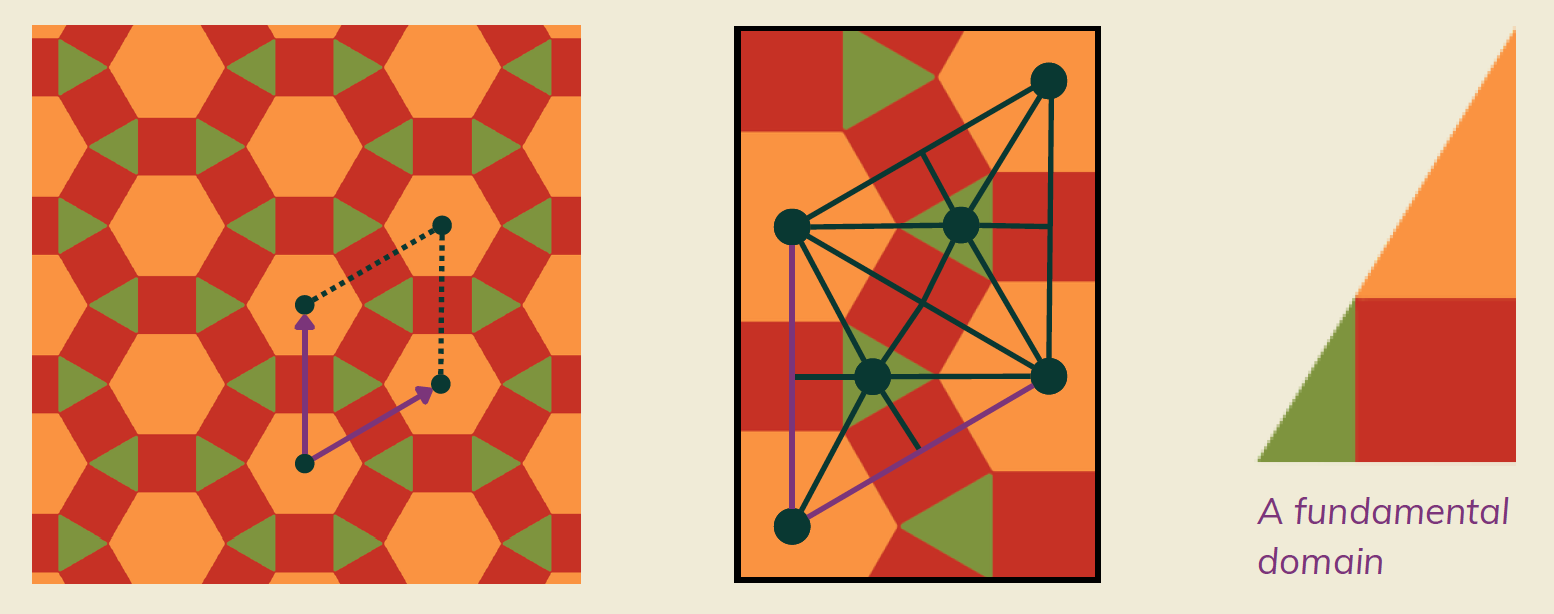
Can you see how the triangle on the right and its reflection could build out the pattern on the left?
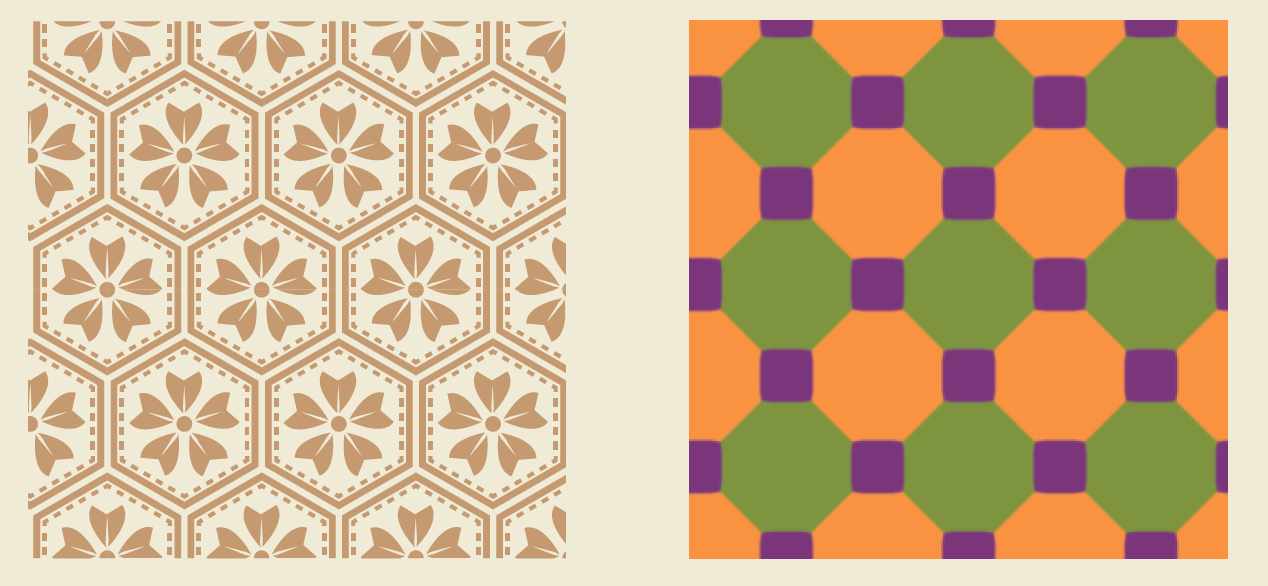
Wallpaper group symmetry is pretty restrictive. For example, there can be shapes that have 5-fold or 8-fold rotational symmetry in a pattern, but there cannot be a 5-fold or 8-fold rotational symmetry for the entire pattern.
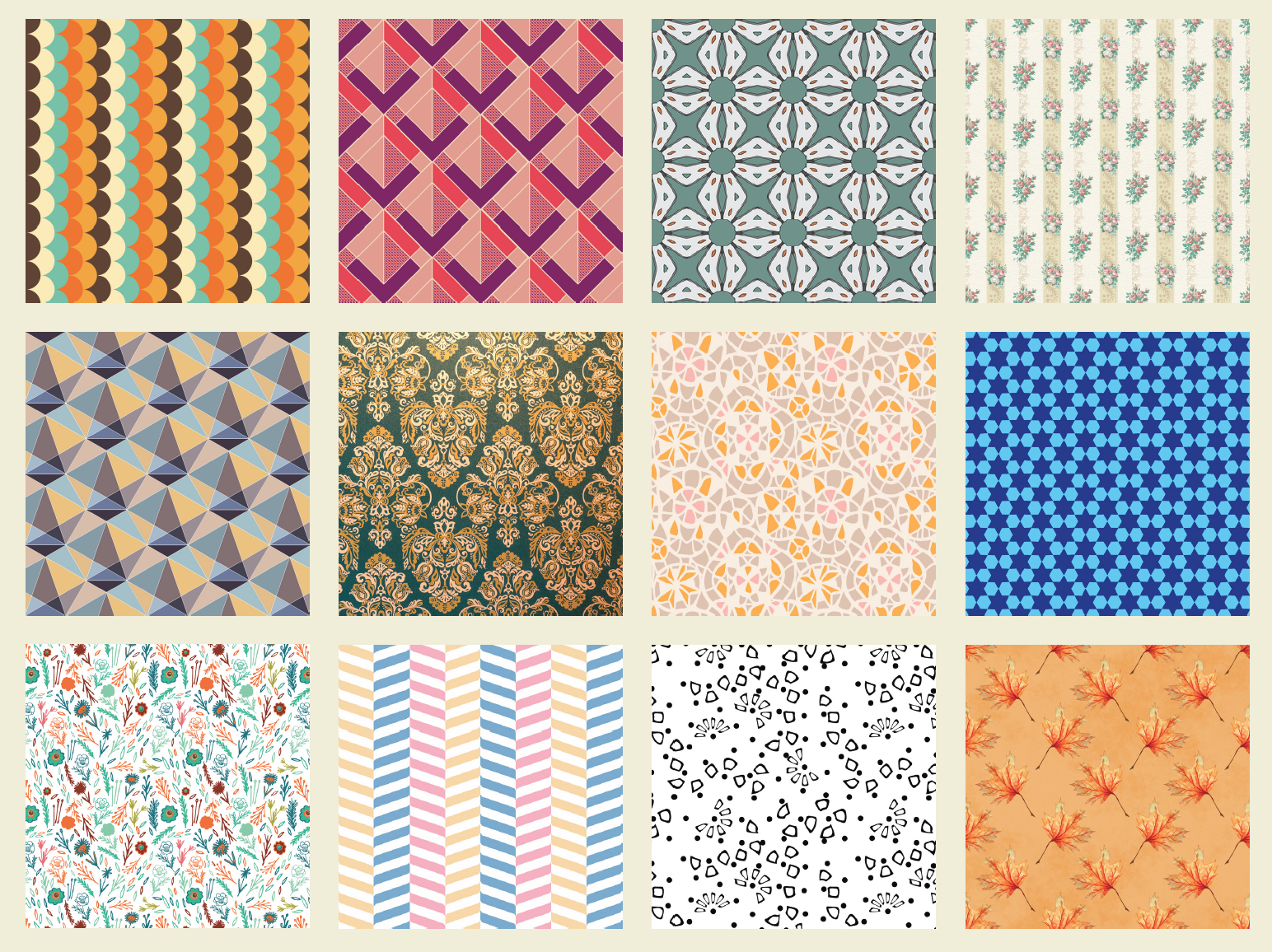
These symmetries are so restrictive that there are only 17 wallpaper groups! That might seem like too few, but very different looking patterns can have the same symmetry group, like these pairs:
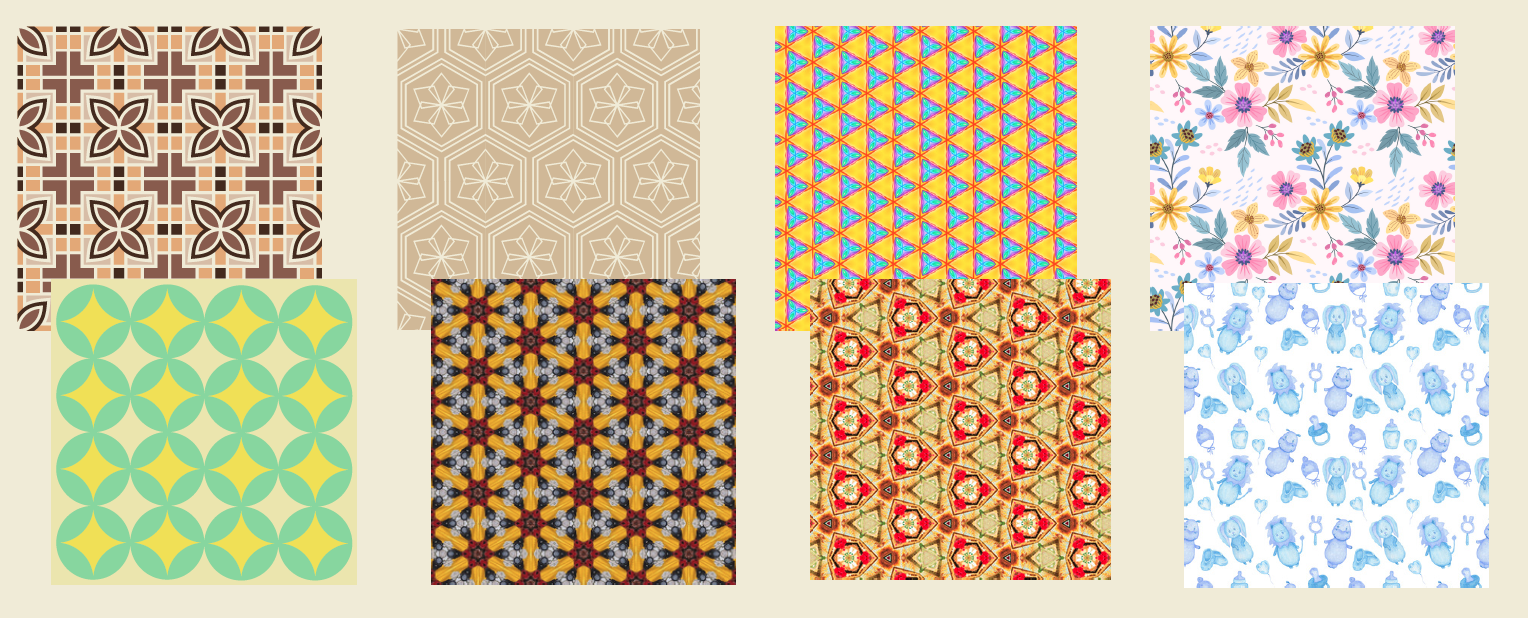
To tell whether two patterns have the same symmetry group, we can look for key features:
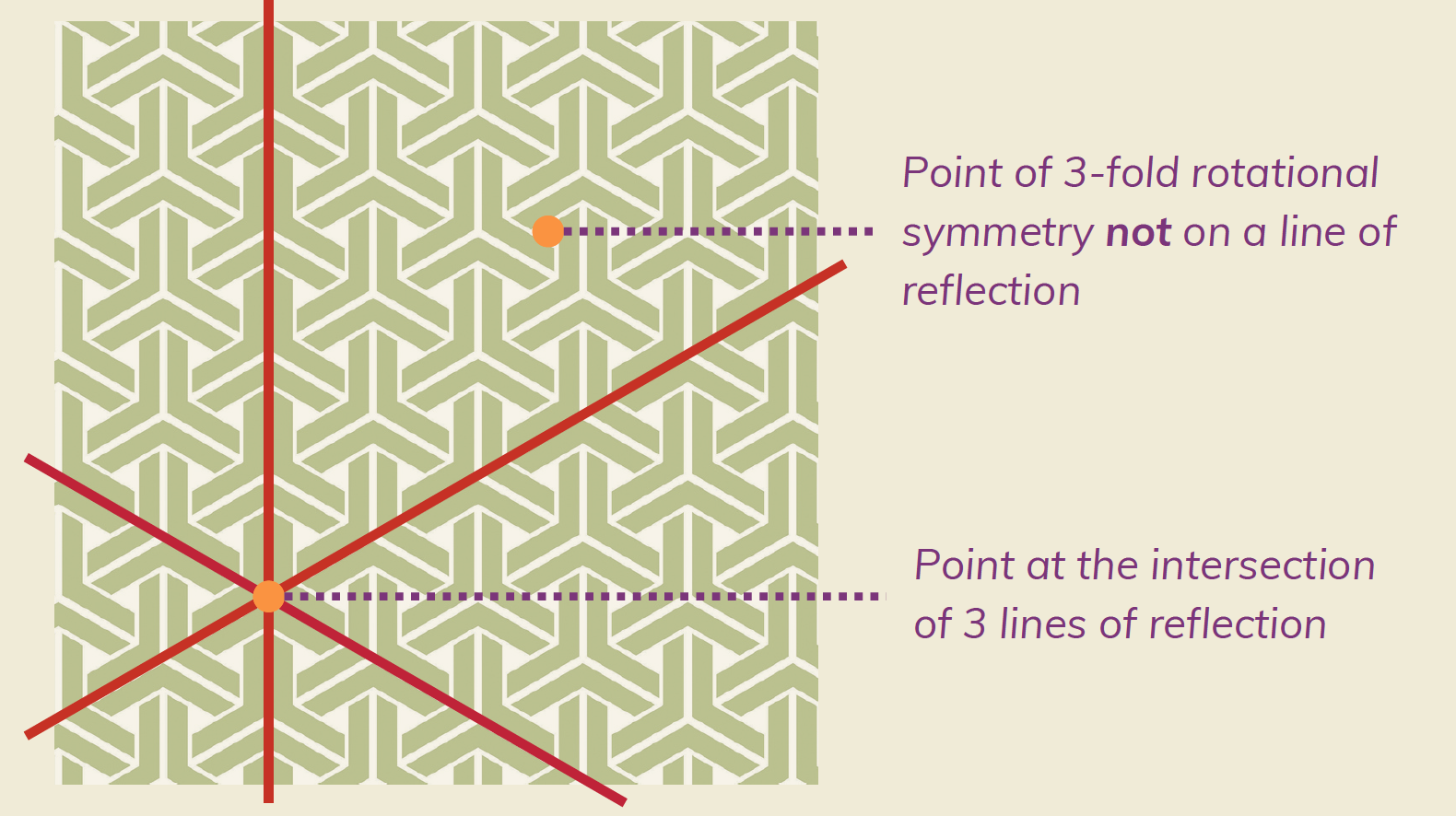
If we count (but don't double-count!) features like lines of reflection, points on multiple lines of reflection, points of rotational symmetry not on lines of reflection, and glide reflections, we can decide if two patterns have the same symmetry.
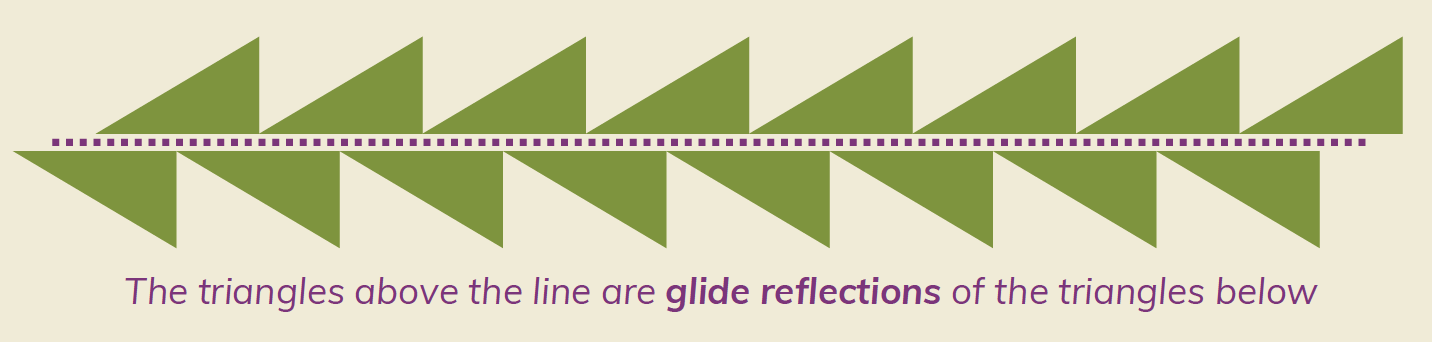
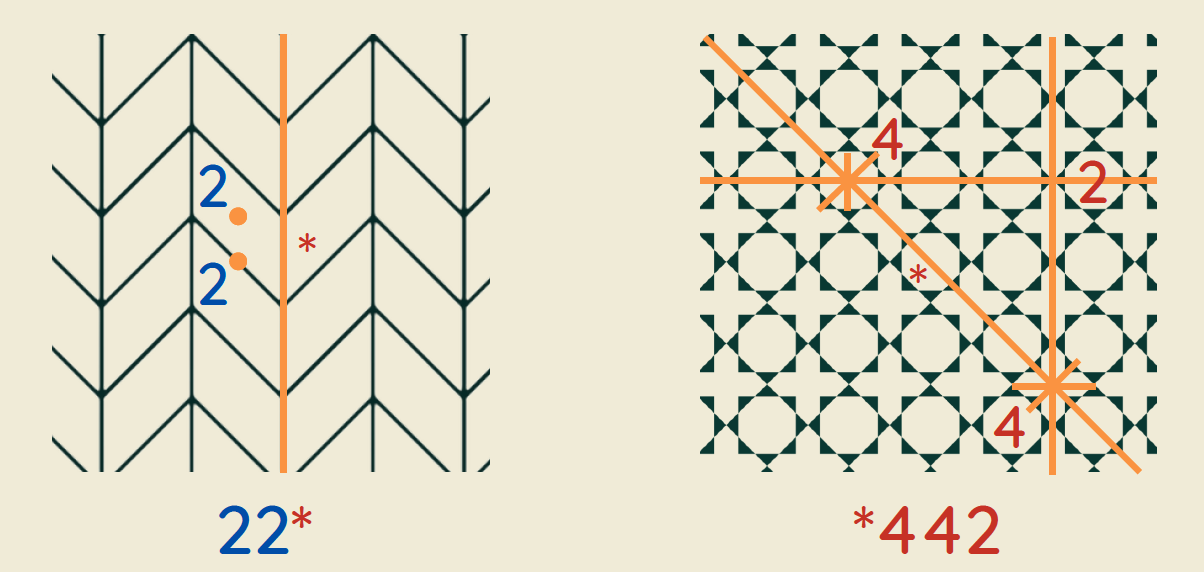
Using orbifold notation, you would end with one of these 17 counts:

Perhaps you can guess what red and blue numbers mean from these examples:
For more on symmetry and this sort of counting, we recommend The Magic Theorem by John H. Conway, Heidi Burgiel, and Chaim Goodman-Strauss.