
Math in… Dice
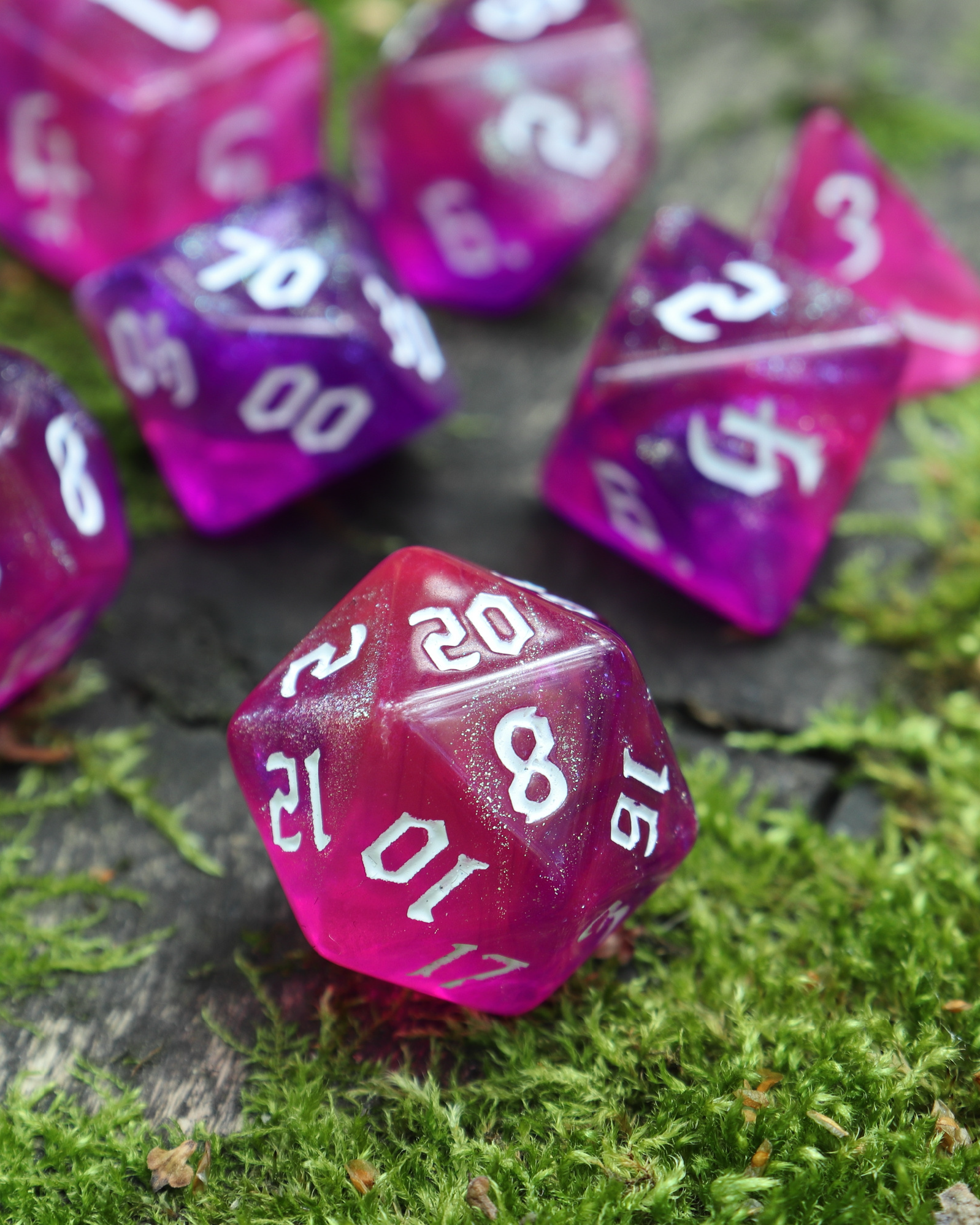
While standard dice have six sides, you may have seen dice with other numbers of sides.
Mathemagical World, a popular game at SUMM events, contains both 6-sided and 10-sided dice.
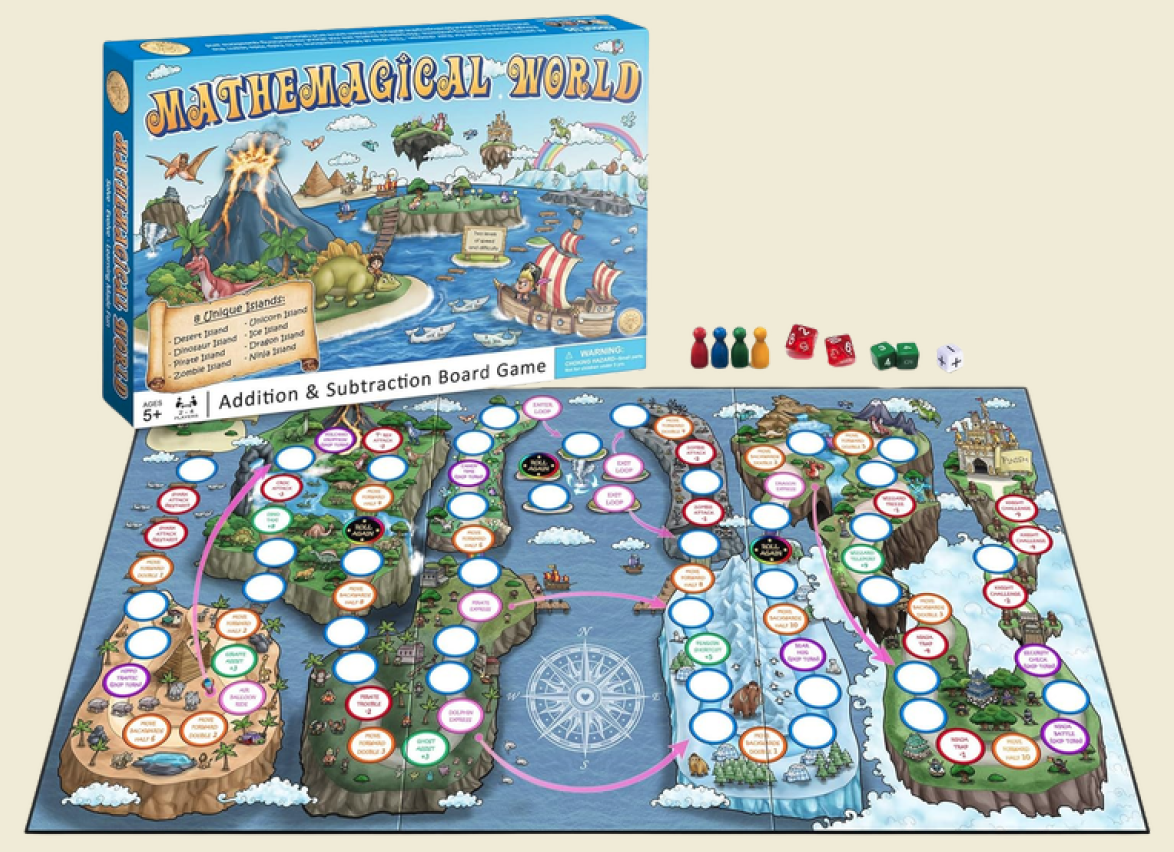
Mathemagical World (Source: amazon.com)
Tabletop role-playing games like Dungeons and Dragons typically use a standard set of dice with 4, 6, 8, 10, 12, and 20 sides.
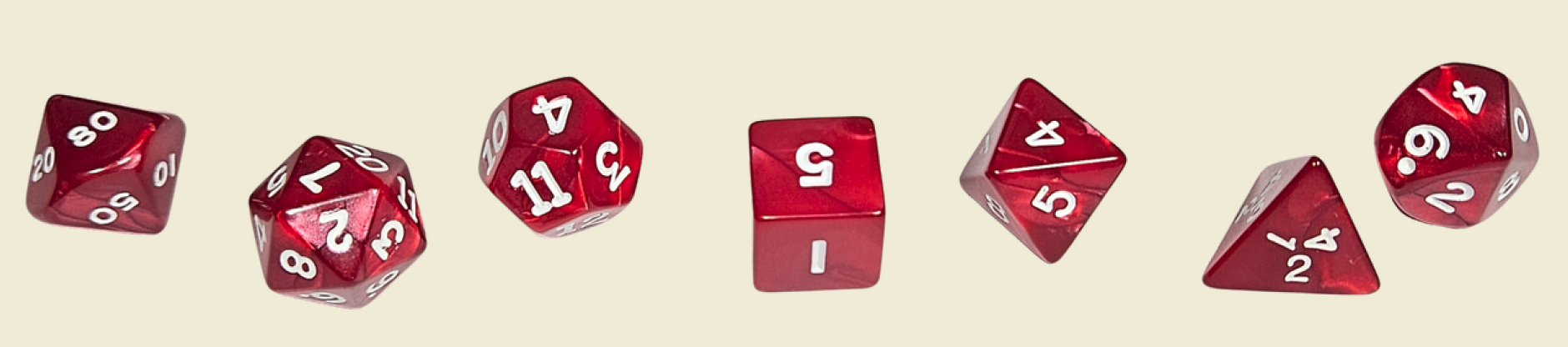
What makes for a good die? And why are these numbers of sides so standard?
When designing a die, we usually want it to be fair, in the sense that every value to has an equal probability of rolling. One way to accomplish this is by using a shape with a lot of symmetry.
In isohedra, not only does every face have the same shape, but each face can take the position of any other face in a symmetry-preserving way via a rotation about the solid's center.
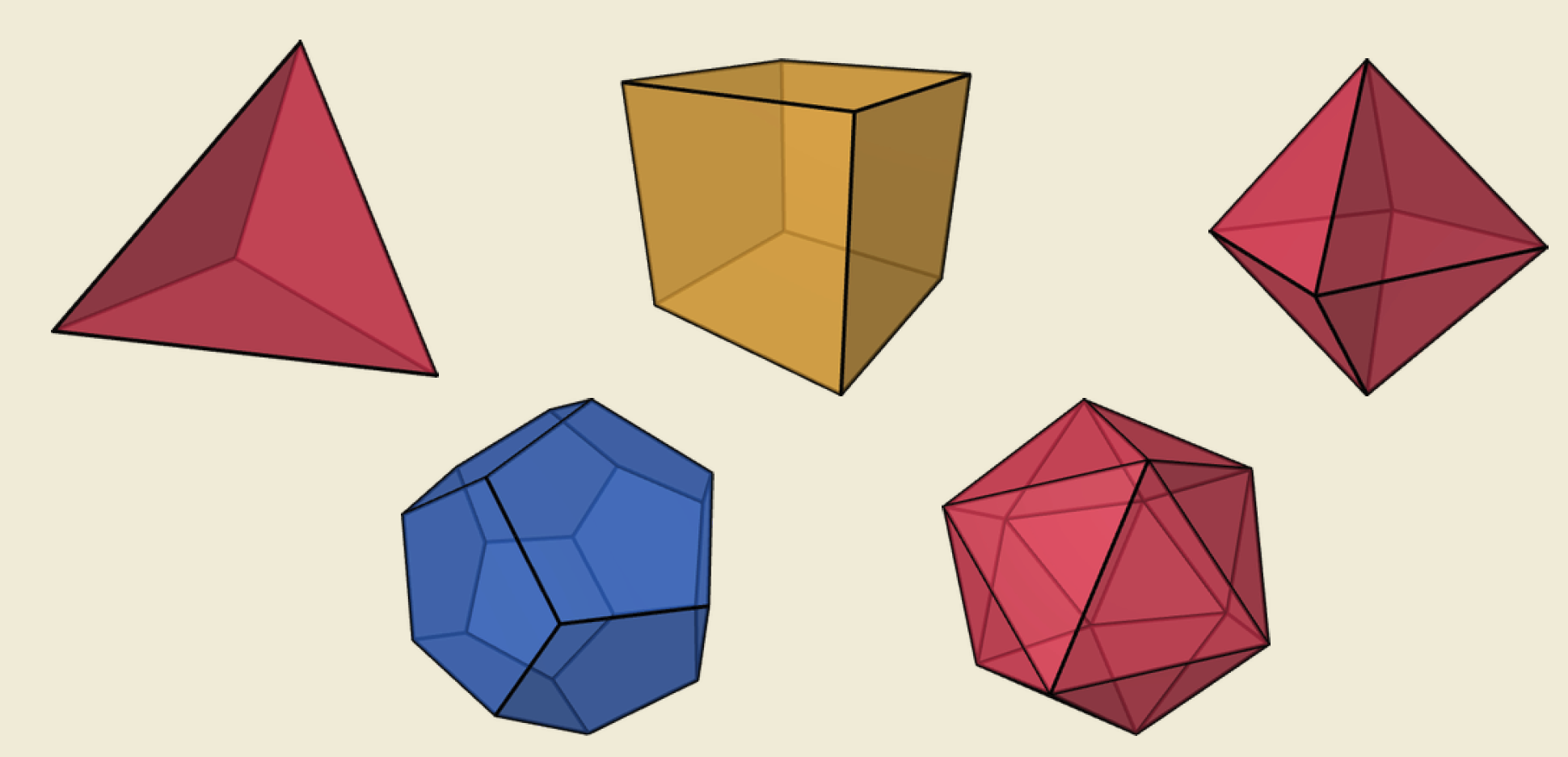
The five Platonic solids
The most well-known isohedra are the Platonic solids, which lend their shapes to the standard set of 4-, 6-, 8-, 12-, and 20-sided dice.
The tetrahedron doesn't have pairs of parallel opposite faces, so there is no "upward" face associated to a roll. This means that dice designers have to creatively number 4-sided dice:
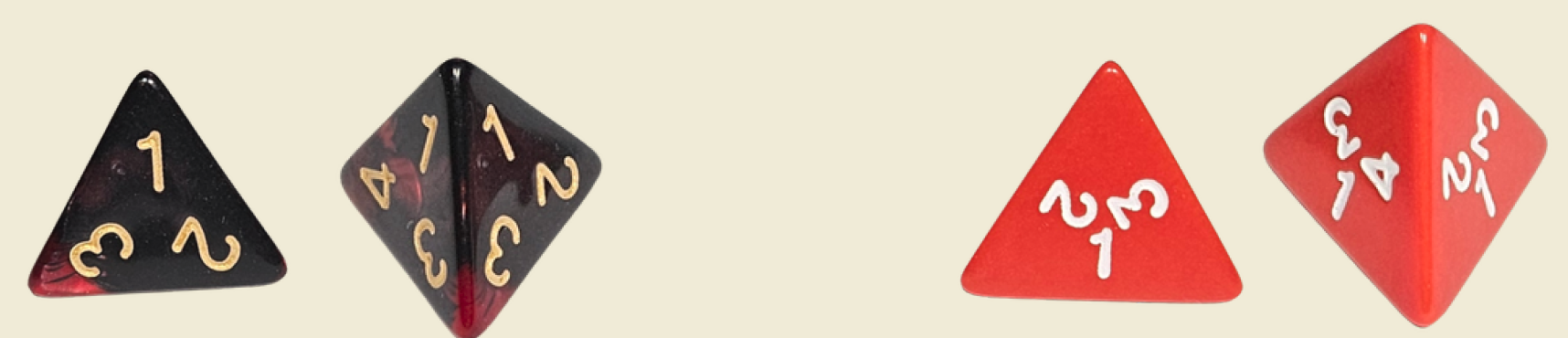
Two ways to number a 4-sided dice, with a 1 rolled on each.
Bipyramids and trapezohedra are also isohedra.
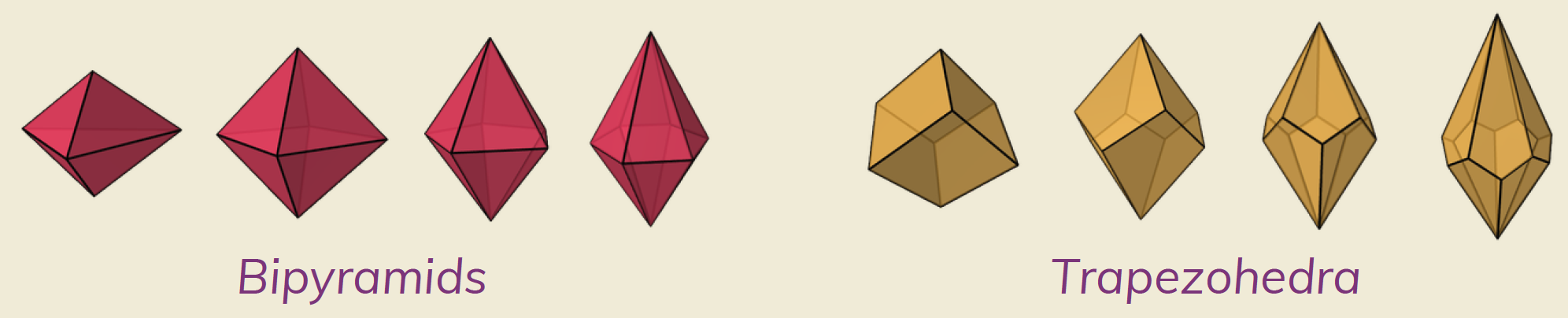
The bipyramids with parallel opposite faces have 8, 12, 16, 20, ... faces while the trapezohedra with parallel opposite faces have 6, 10, 14, 18, ... faces, so we can alternate solids from these sets to get sequence of dice with any even number of faces:
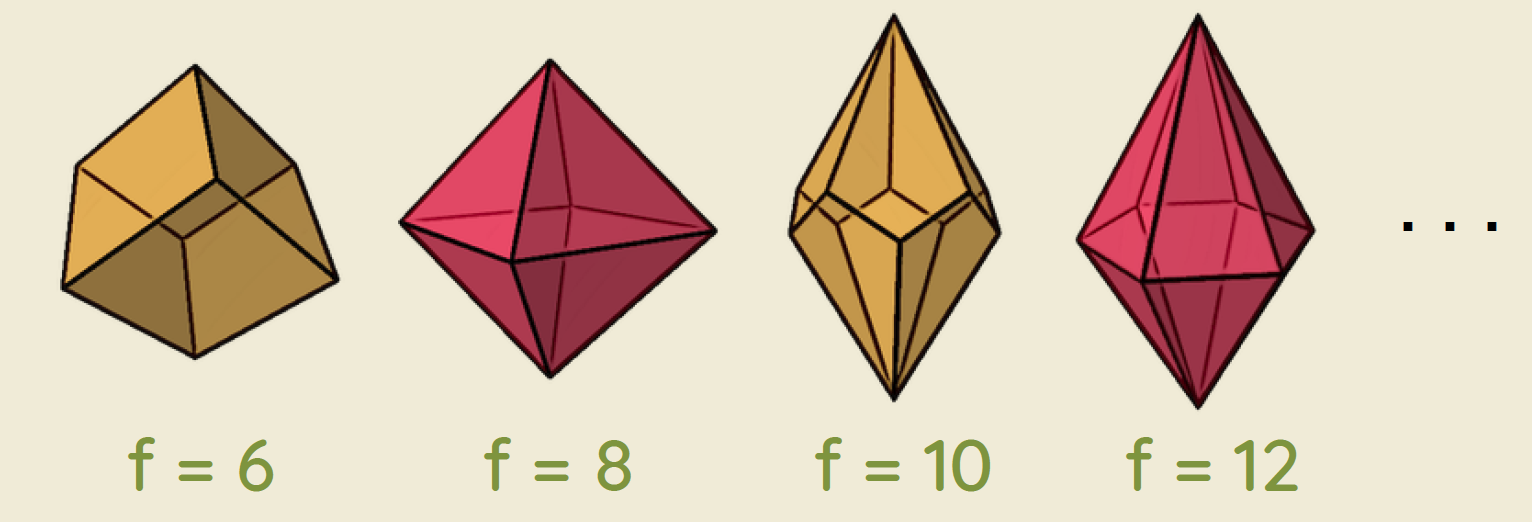
The 6-sided and 8-sided dice in this family coincide with our Platonic solid dice, up to stretching, but the pentagonal trapezohedron is what a standard 10-sided die is based on.
While we could use bipyramids for 12- and 20-sided dice, there's something more satisfying about rolling the "rounder" dice we get from regular dodecahedra and icosahedra.
The Catalan solids are a family of 13 isohedra:
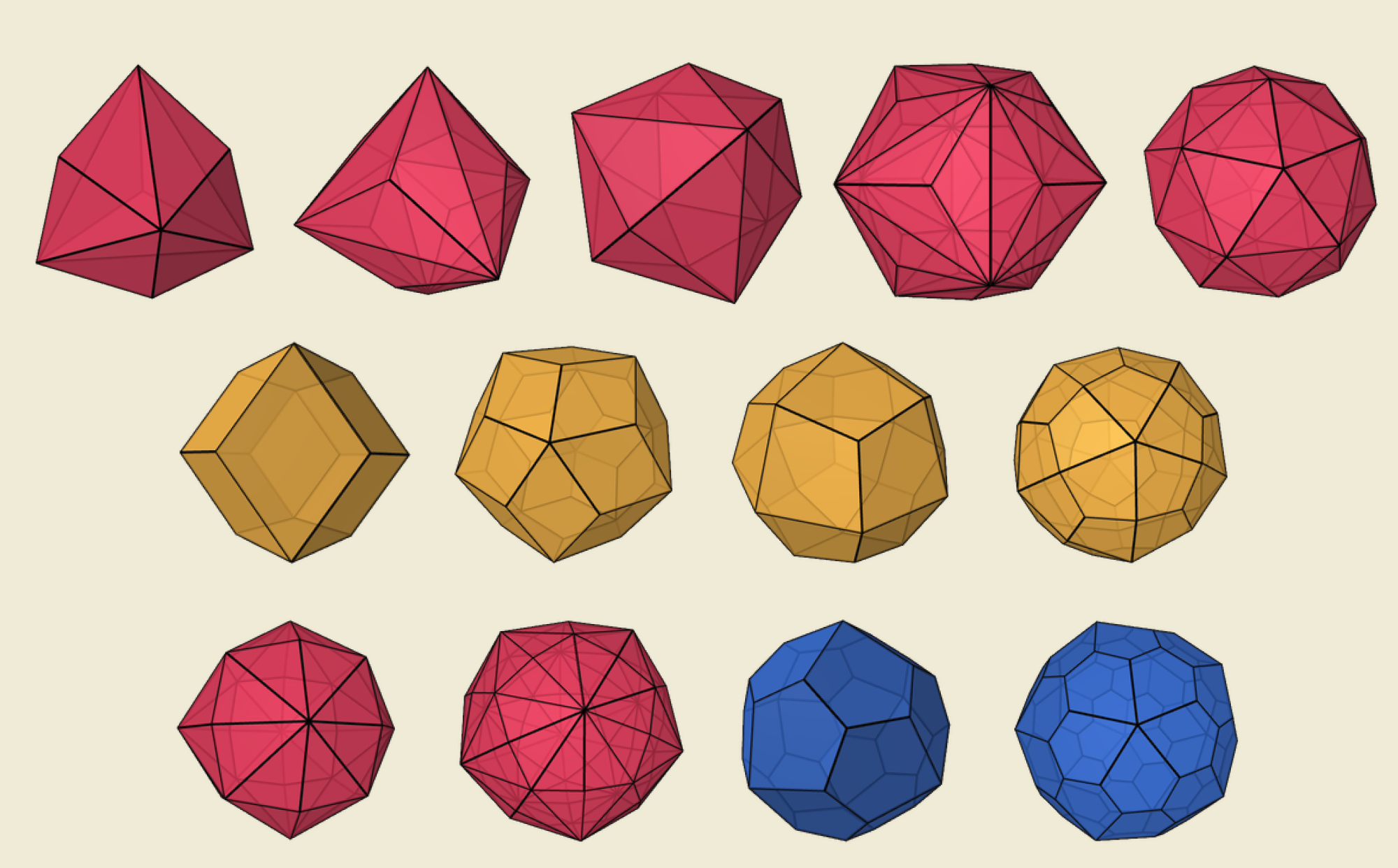
Those give new options for dice shapes!
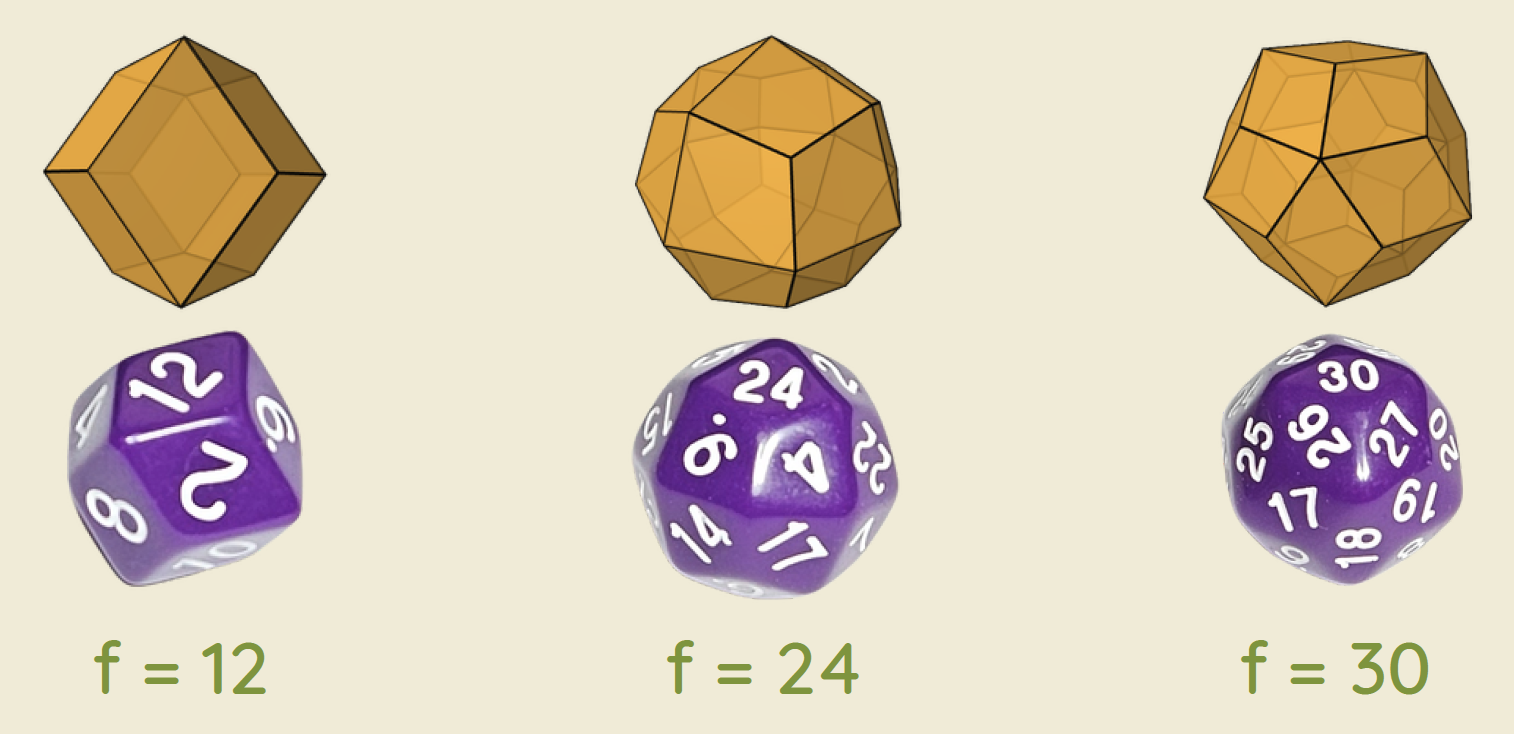
There other kinds of dice, of course. You're probably familiar with a standard 2-sided die: a coin.
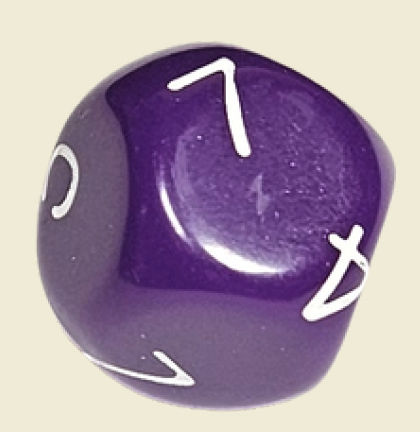
There are also irregular shapes, like 7-sided dice. Dice like these need to be designed far more thoughtfully for fairness, since we can't just rely on symmetry!
What's the strangest shaped die that you've seen?
