Math in… Viral Capsids
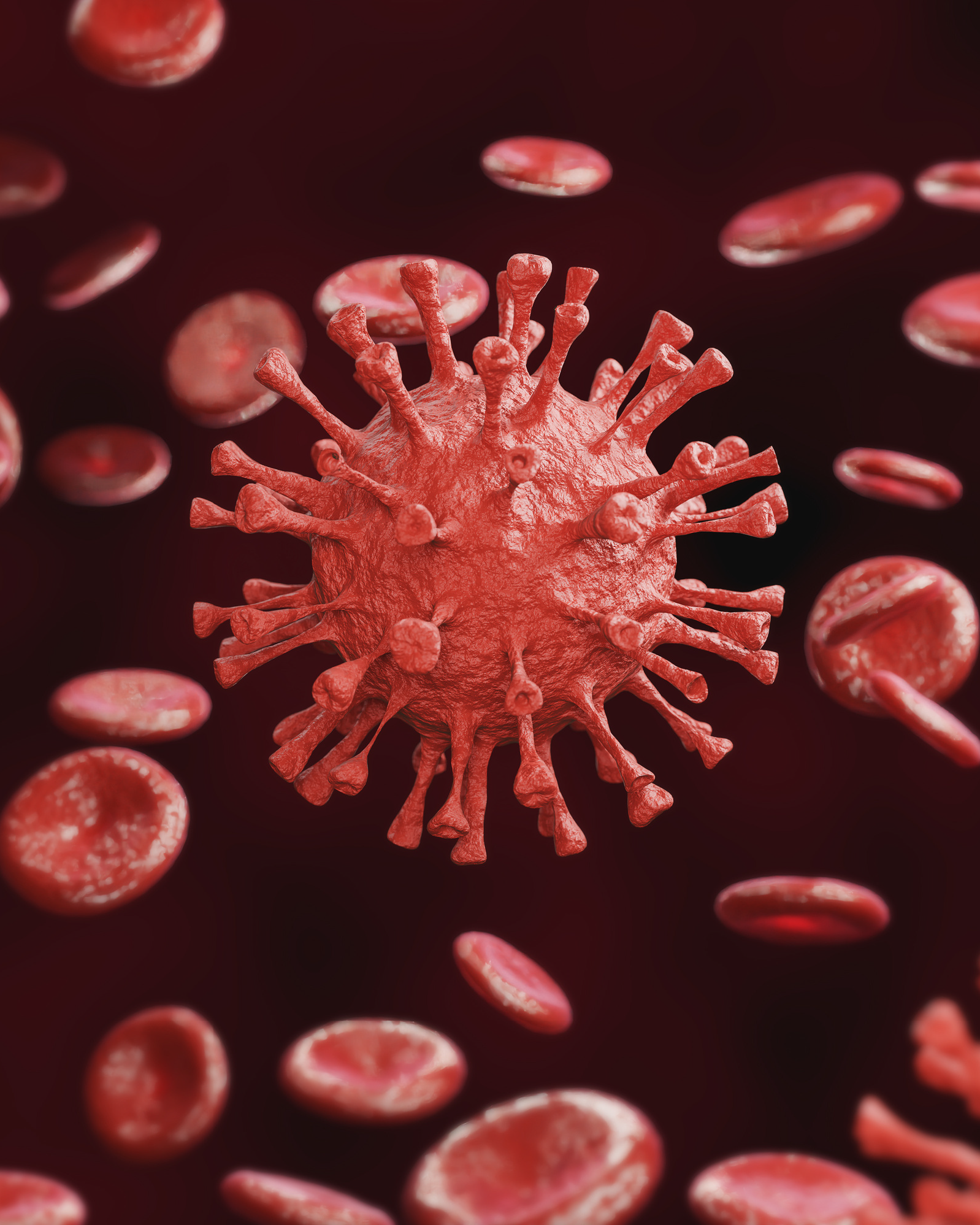
If you've seen a diagram of a virion, you might have spotted an icosahedron, like this:
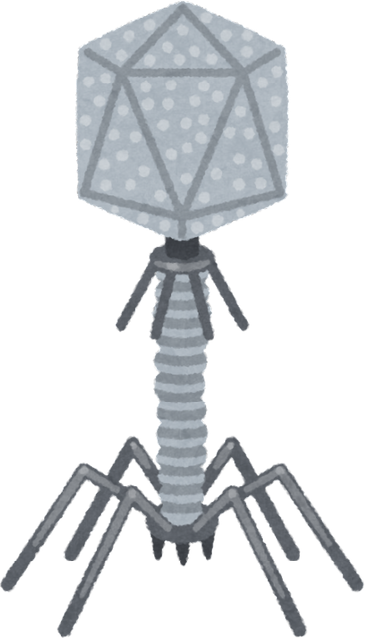
The genetic material (DNA or RNA) of a virion is enclosed in a protein shell called a capsid. Capsids come in different shapes, but the most common are:
Icosahedral
Prolate (elongated icosahedral)
Helical (corkscrew)
While capsids are often depicted as literal icosahedra, typically there is some other polyhedron with icosahedral symmetry that better describes the arrangement of proteins.
What would it mean for something that's not an icosahedron to have icosahedral symmetry?
Roughly, the symmetries of an object are the ways that it can be repositioned so that, if your eyes were closed while it was moved, you couldn't tell that anything had happened.
Could you tell if an icosahedron were rotated so that a different triangle faced you? Only if we somehow marked it, like by coloring a face:
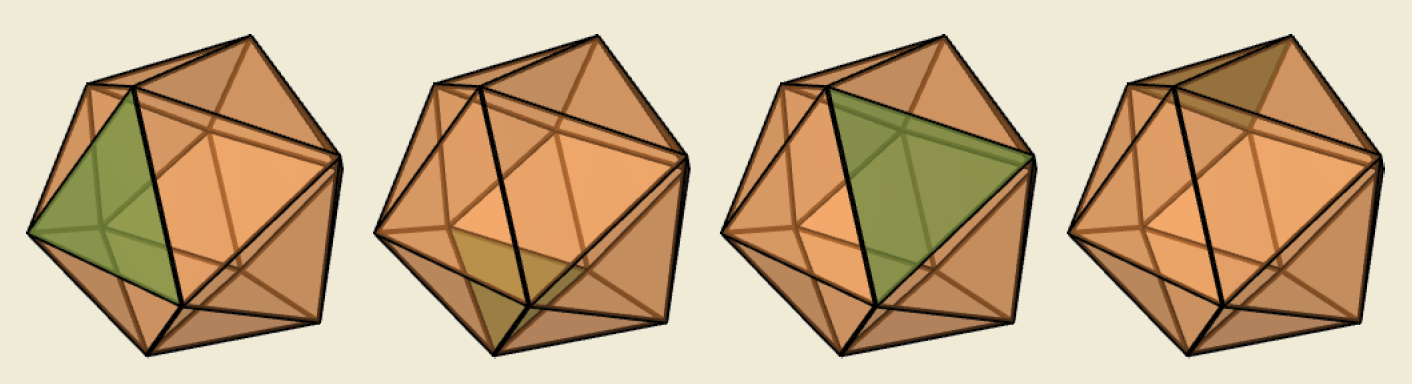
You also couldn't tell if it has been rotated so the same triangle faces you, but differently:
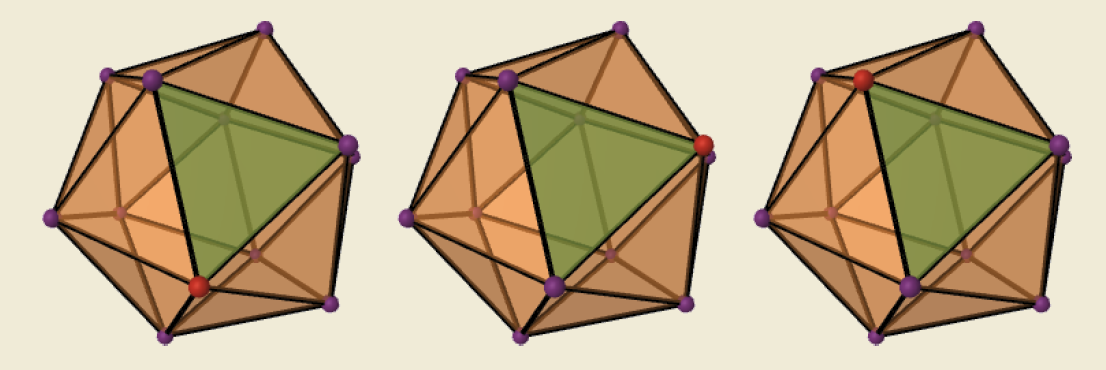
With its 20 faces, each with 3 possible orientations, there are 60 different positions an icosahedron could end up in after rotation that all look like its starting position.
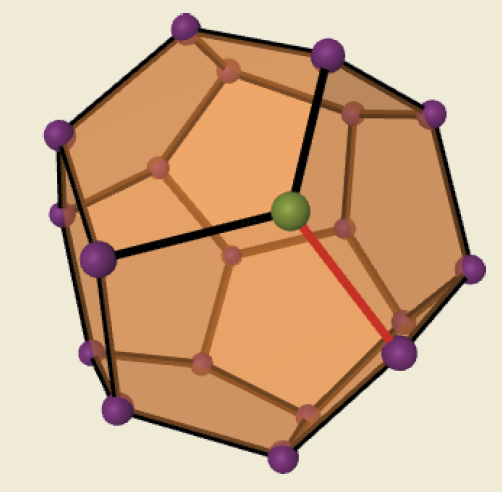
Tracking the 20 vertices of a dodecahedron, we would find that it has the same symmetries under rotation. Can you see why?
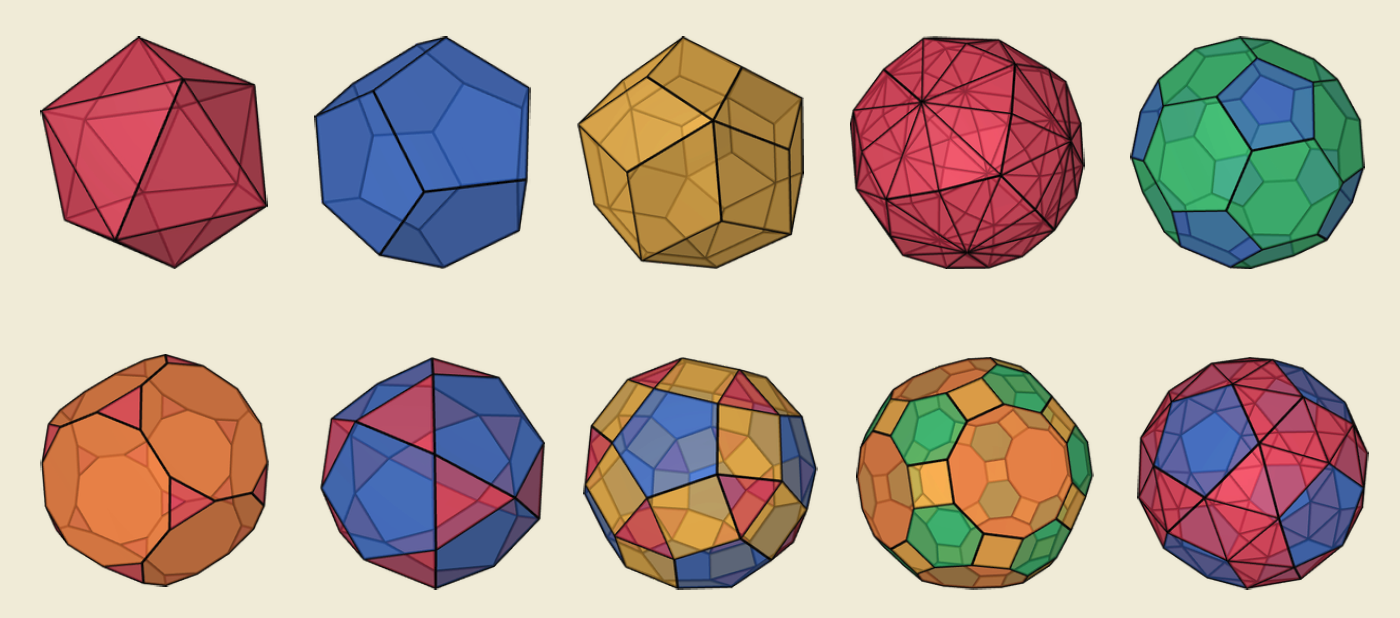
Many polyhedra have this same rotational symmetry group. All of the examples below, except for the last one, additionally have the same reflectional symmetries as an icosahedron.
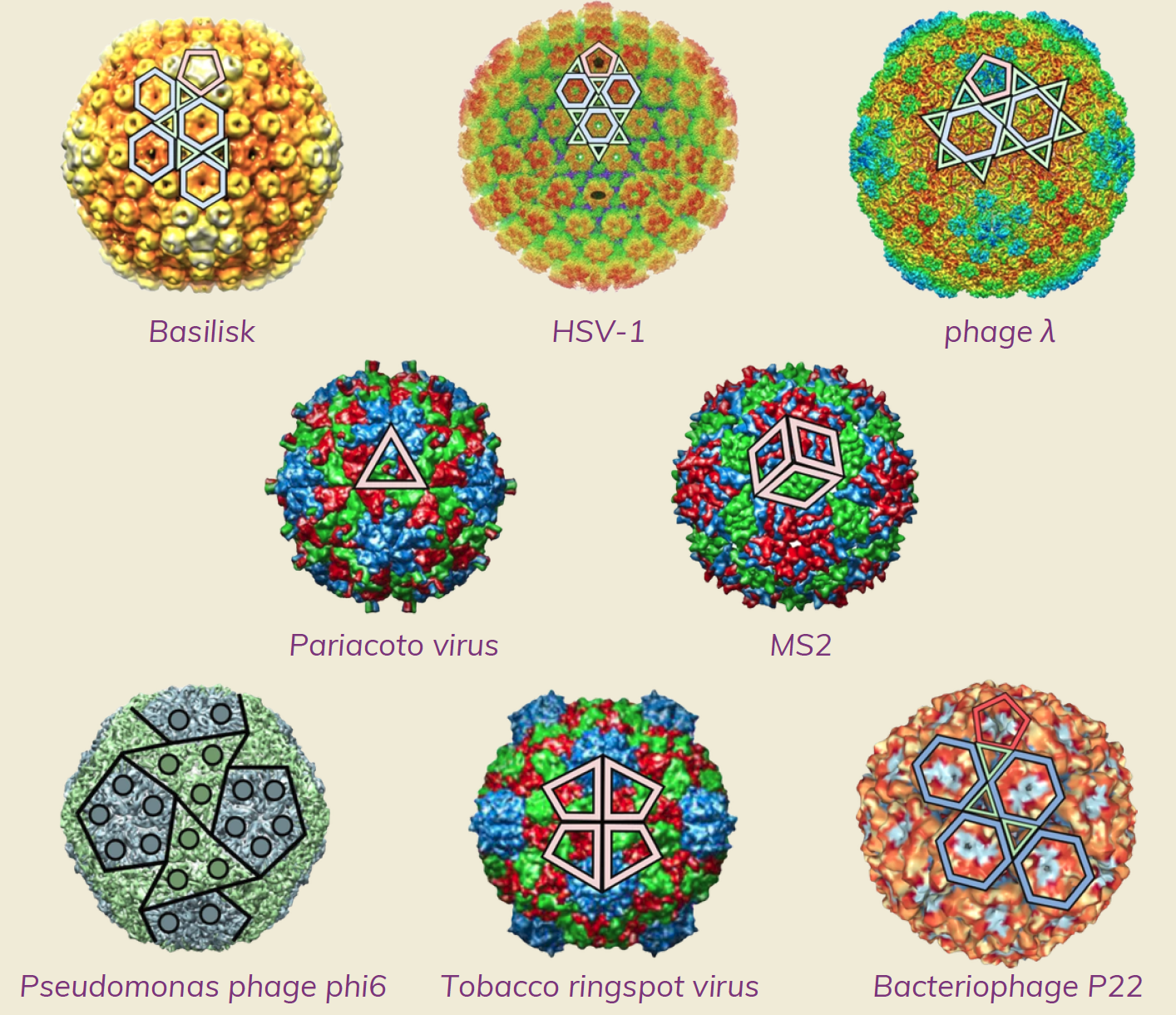
In their 2019 Nature article, Structural puzzles in virology solved with an overarching icosahedral design principle, biologists Reidun Twarock and Antoni Luque looked at a variety of capsids, highlighting repeating structures that can be thought of as polygonal faces in a polyhedron with icosahedral symmetry. Here are their examples:
Symmetries make it easier for viruses to efficiently encode sophisticated geometry in small genomes. Here's the complete genome for Porcine circovirus 2 strain MLP-22, from ncbi.nlm.nih.gov:
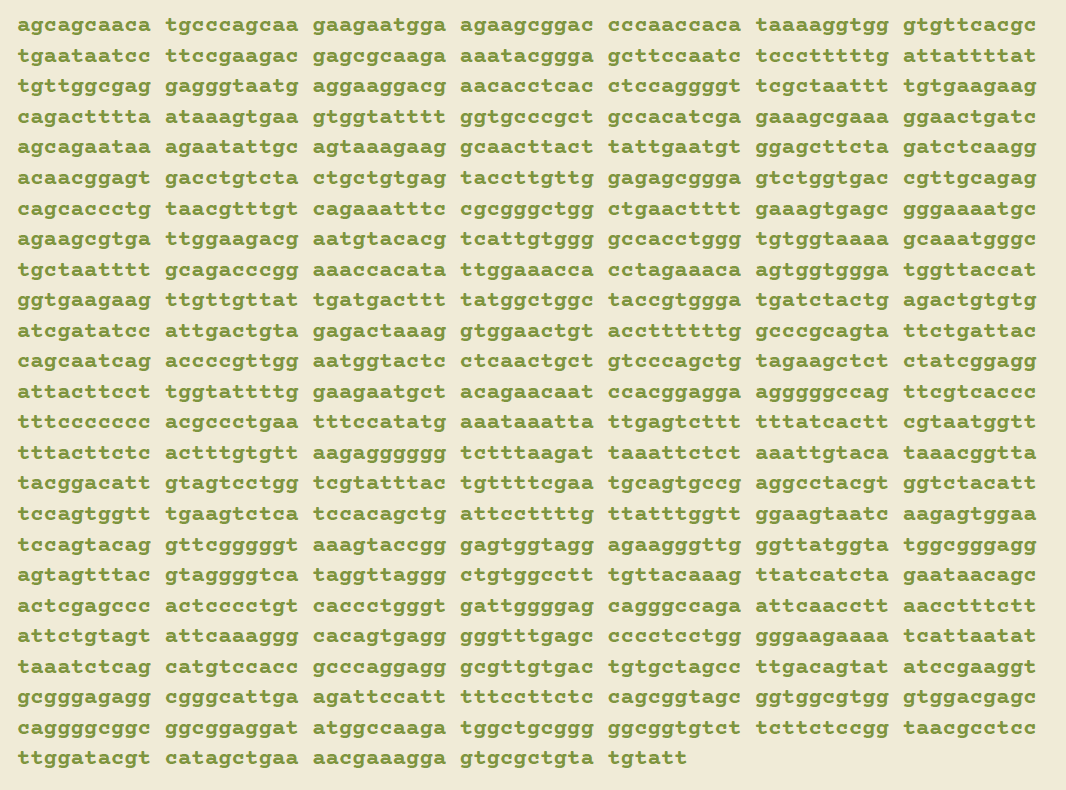
Tiny, considering those 1726 base pairs blueprint all of its structure and behavior!
Where else do you see polyhedra in nature?
