Math in… April Fools
At the heart of the math community is discovery and sharing knowledge. That doesn't mean we're above pranking, however!
With April 1st around the corner, we thought we'd look at some favorite mathematical April Fools' jokes from years past.
In 1976, Kenneth Appel and Wolfgang Haken announced their proof of the four color theorem, which guaranteed that maps where each territory is a contiguous region can always be colored with four or fewer colors so that neighboring territories do not share colors.
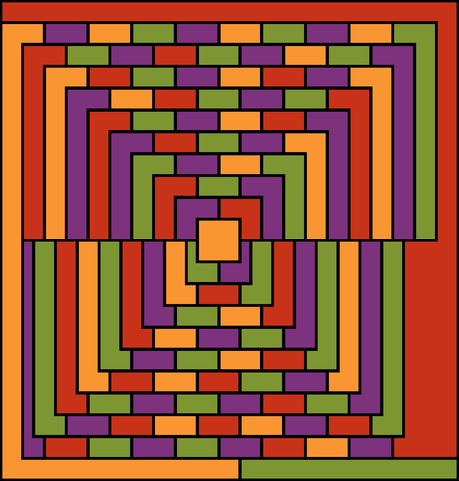
In 1975, when counterexamples were still plausible, Martin Gardner published a map by William McGregor, claiming it required at least five colors.
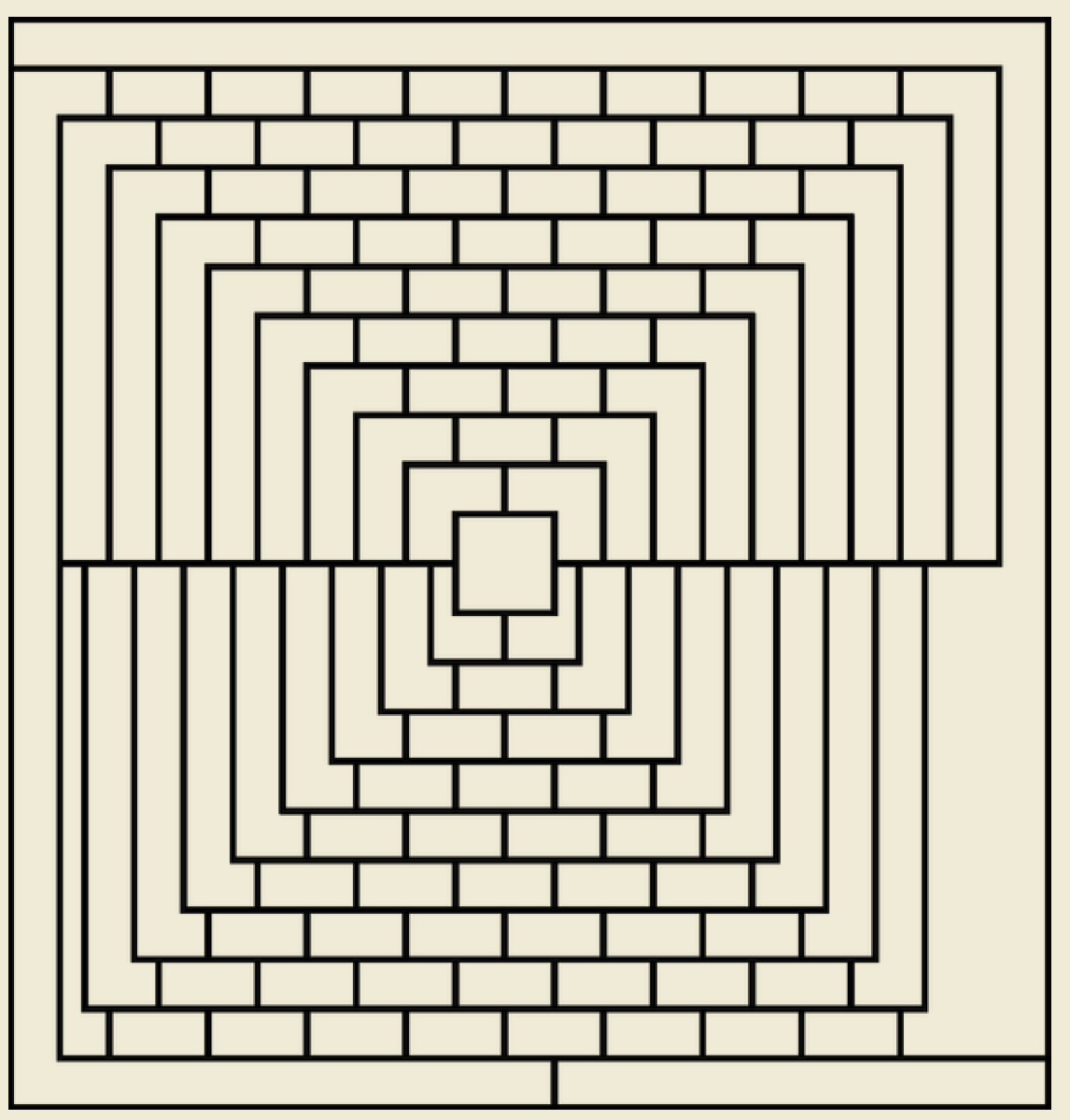
The McGregor Map
While McGregor's map is tricky to 4-color, it's not impossible.
In that same Scientific American article, Gardner claimed that University of Arizona mathematician John Brillo had shown

While John Brillo was a fictitious mathematician, John Brillhart of UA would have noted that

Depending on access to computing resources in 1975, this might have been an easy one to fall for. Today, tools like WolframAlpha can be used to quickly verify that the number is not an integer.
In 1999, Ray Girvan wrote an article on Udo of Aachen, a 13th century German monk who had penned the poem later adapted into O Fortuna.
Bob Schipke had recently discovered Udo's explorations into probability and fractals. The crowning achievement was a series of calculations leading to a rendering of the Mandelbrot set, centuries before Benoit Mandelbrot discovered it.

Rendering of the Mandelbrot Set by Wolfgang Beyer
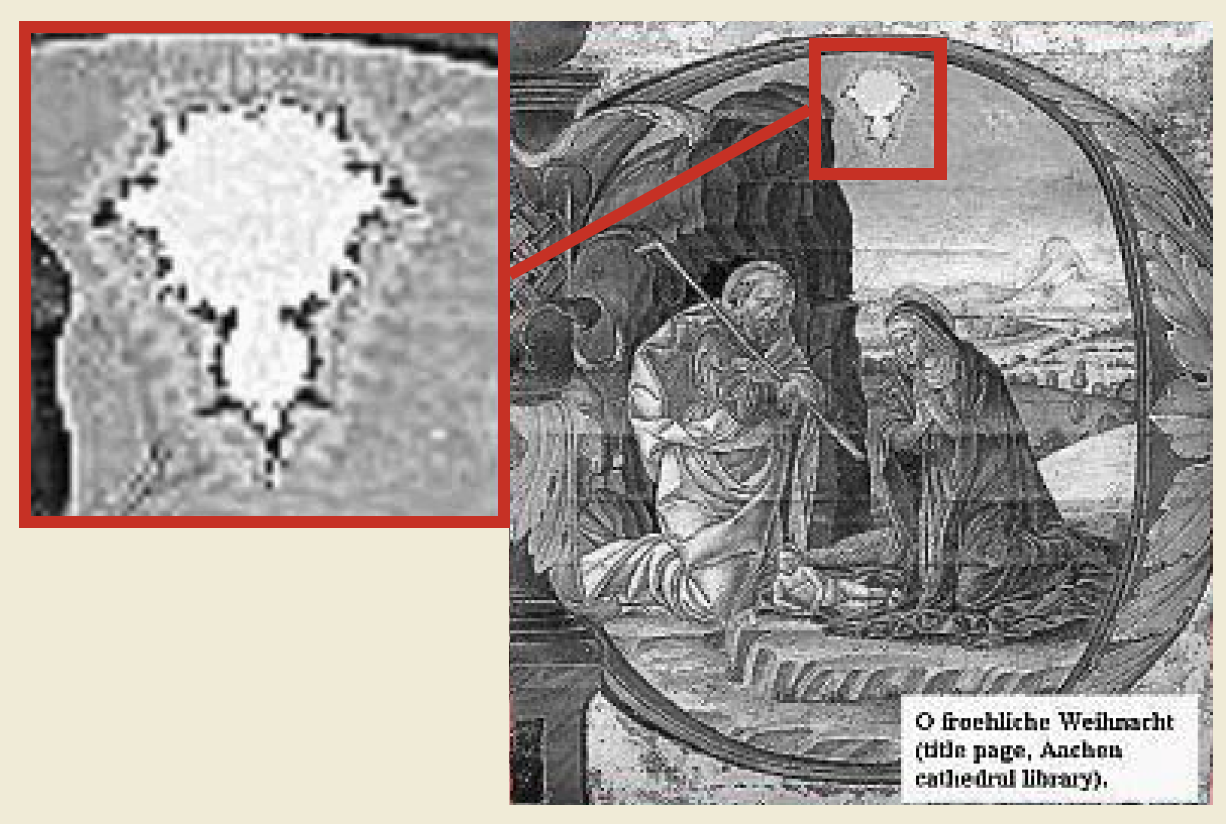
Rendering of the Mandelbrot Set by Udo of Aachen (via Girvan)
Fascinating – save for the hitch that neither Schipke nor Udo existed. It wasn't unusual for monks of the time to do laborious calculations, so this one actually fooled me until a friend pointed out the publication date of the ABC News article.
Shapes with only regular polygonal faces have been a well-explored topic for centuries. While Archimedean solids are uniform examples, with each vertex identical in the global context of the shape, Johnson solids are those which are convex but not vertex-transitive.
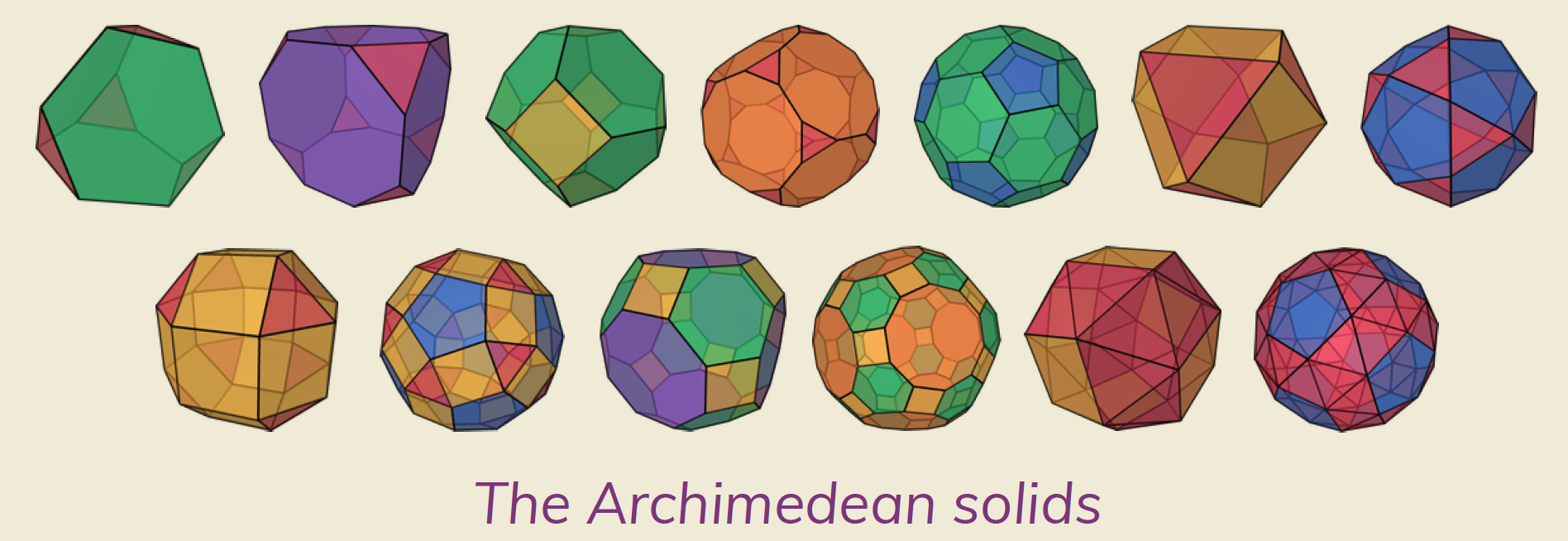
As related by John Baez in 2016 in his Visual Insight blog for the AMS, Craig Kaplan had been looking for "near-miss" Johnson solids when he shockingly discovered that the rectified truncated icosahedron was actually just a long-overlooked Johnson solid.
While Baez and Kaplan are both indeed real mathematicians, the triangles in this solid are isosceles, not equilateral.
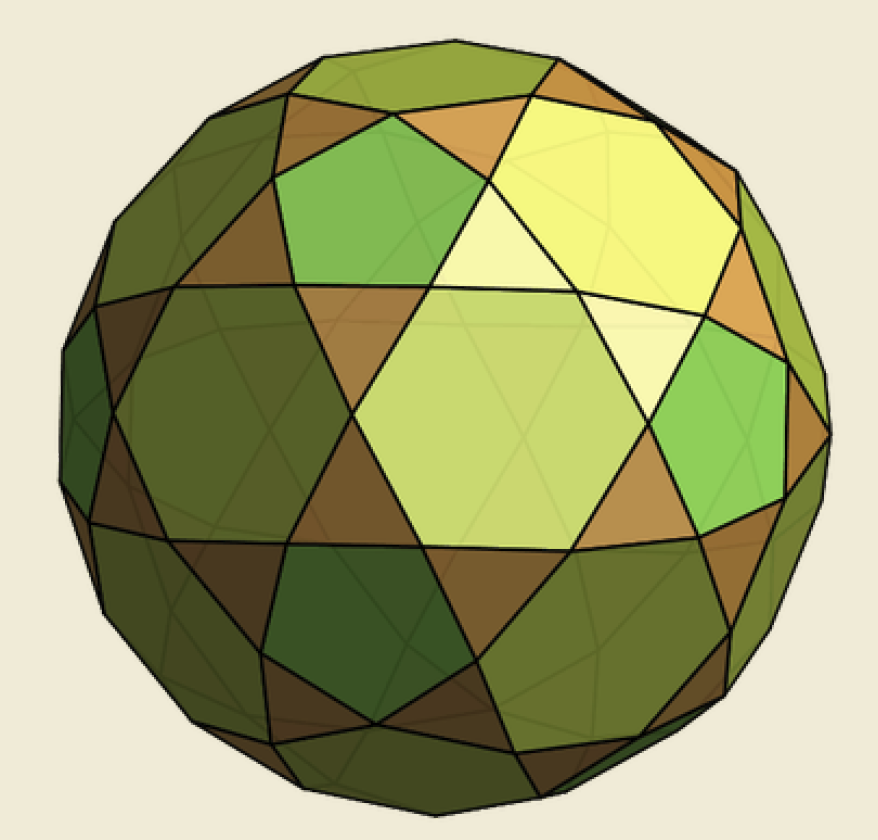
Rectified truncated icosahedron rendered by Craig Kaplan
If you read a mathematical headline or paper title that seems a little too good to be true, make sure the publication date isn't April 1st, since the math community enjoys a prank as much as anyone else!
Of course, April isn't the only time for mathematical hijinx. Perhaps you've seen this one before:
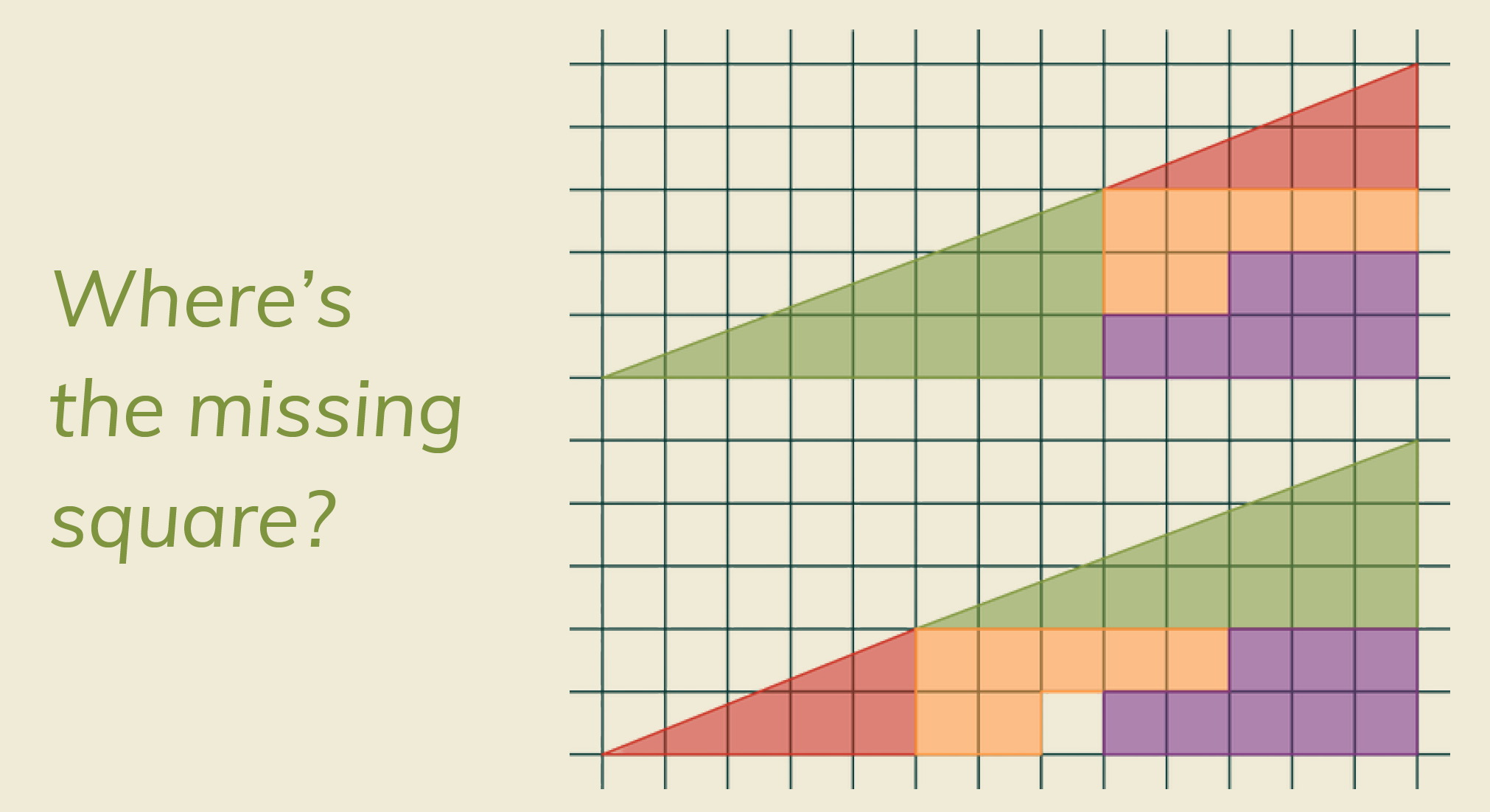
Where's the missing square?
Do you have any favorite math pranks? Share them in the comments!