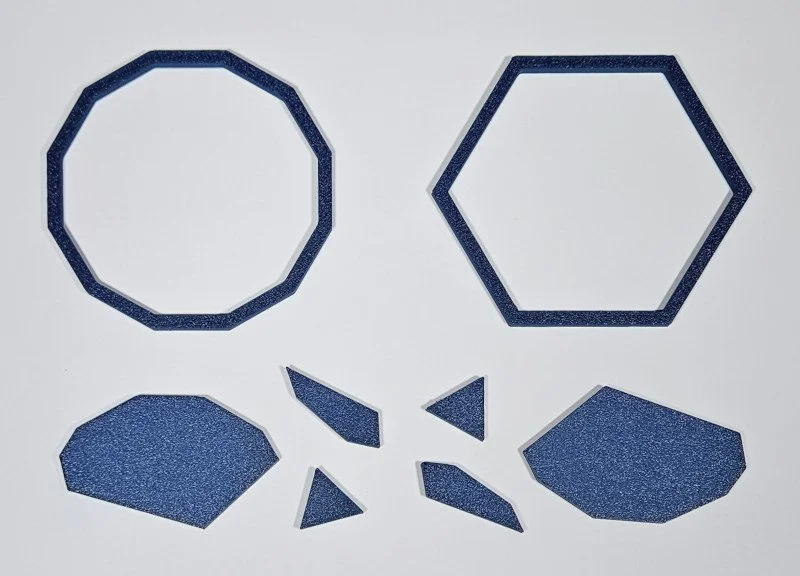

3D Printables
Polygon Dissection Puzzles
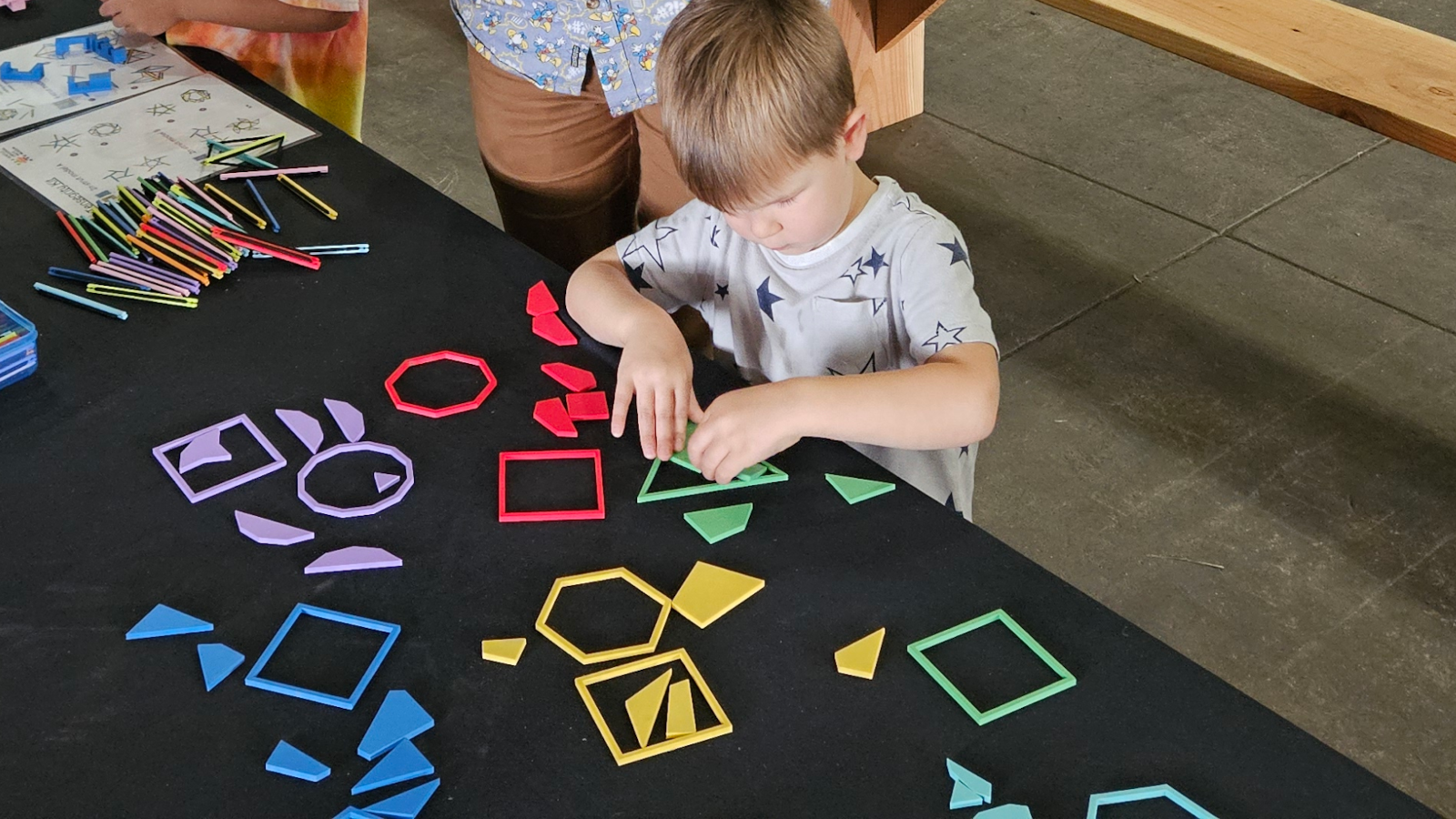
One of our most popular creations, this set of puzzles is based on best-known dissections between regular polygons. Each is two puzzles in one!
Introduction
We know from the Wallace-Bolyai-Gerwien theorem that if two polygons have the same area, then one can be carved into pieces that can be reassembled into the other. A fun challenge is to come up with a dissection that uses as few pieces as possible. In this puzzle collection, each puzzle is actually a pair of puzzles: two sets of frames and a set of pieces that can be assembled in either frame. All are best-known as of this writing, in the sense that each uses the fewest pieces known for a dissection between those two regular polygons. This is an ongoing area of mathematical research, so the records for fewest pieces may change.
Files
This zip contains two folders, STL and SCAD:
STL
The “STL” folder contains the *.stl files you’ll need to quickly get printing. Each includes both frames and the pieces, assuming your print bed can accommodate all of them. If not, you will want to use your slicer to delete components until you have a collection that fits.
In our naming convention, dissection_M-N.stl is a dissection between a regular M-gon and a regular N-gon. For example, if you want a dissection between a square and octagon, print using the dissection_4-8.stl file.
We recommend printing each file in a distinct color so you can tell your puzzles apart!
SCAD
The SCAD folder contains *.scad files that can be opened and edited with OpenSCAD. These contain the code used to create the models. If you find yourself wanting to modify the files (for example, scale up the puzzles but keep the tolerances the same), you’ll want to play around with these files.
Puzzles
There are currently 17 puzzles in the set.
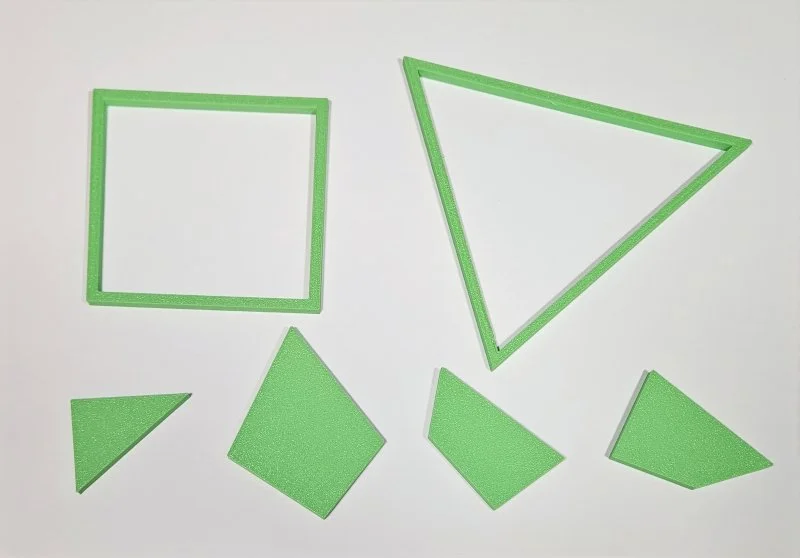
3-4: Triangle/Square (4 pieces)
Published by Henry Ernest Dudeney, possibly based on the work of C. W. McElroy.
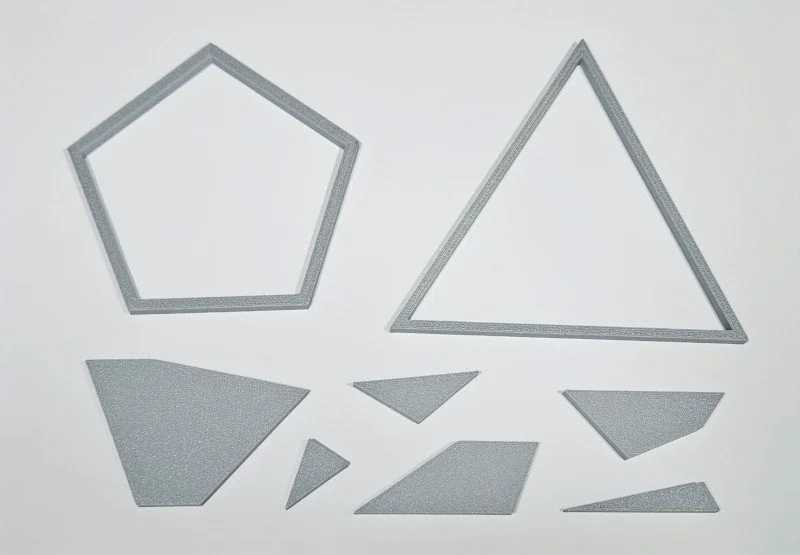
3-5: Triangle/Pentagon (6 pieces)
Discovered by Harry Lindgren.
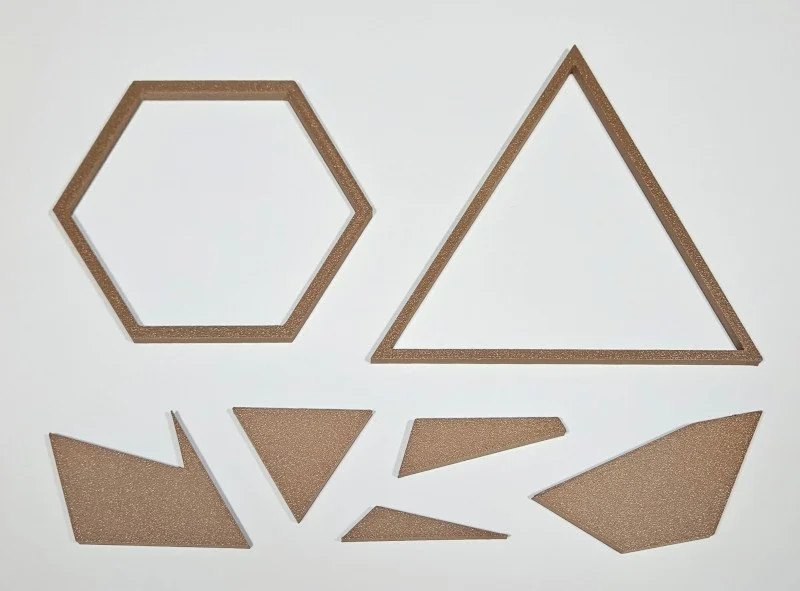
3-6: Triangle/Hexagon (5 pieces)
Discovered by Harry Lindgren.
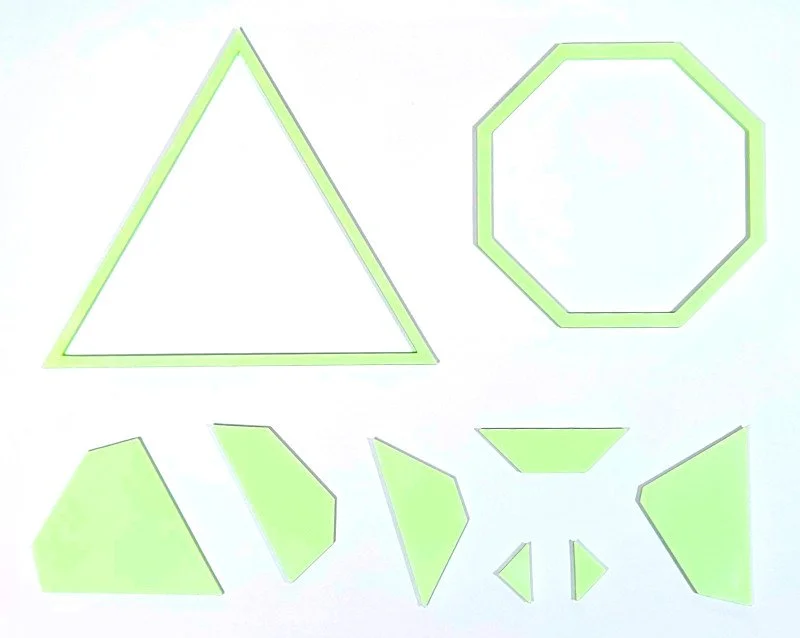
3-8: Triangle/Octagon (7 pieces)
Discovered by Gavin Theobald.
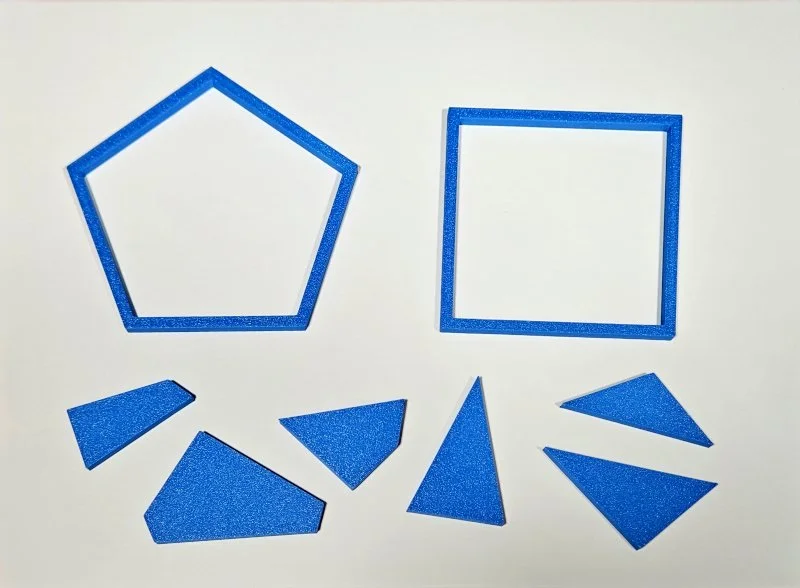
4-5: Square/Pentagon (6 pieces)
Discovered by Ernest Irving Freese.
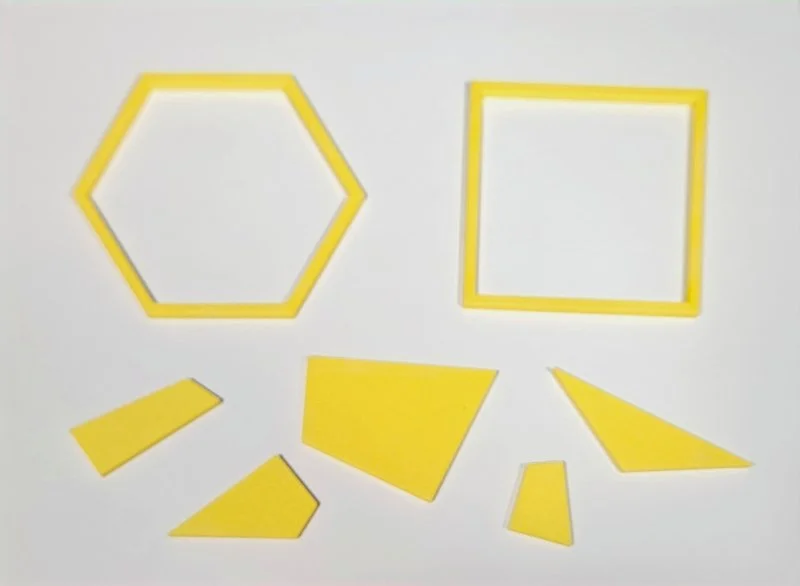
4-6: Square/Hexagon (5 pieces)
Discovered by Harry Lindgren.
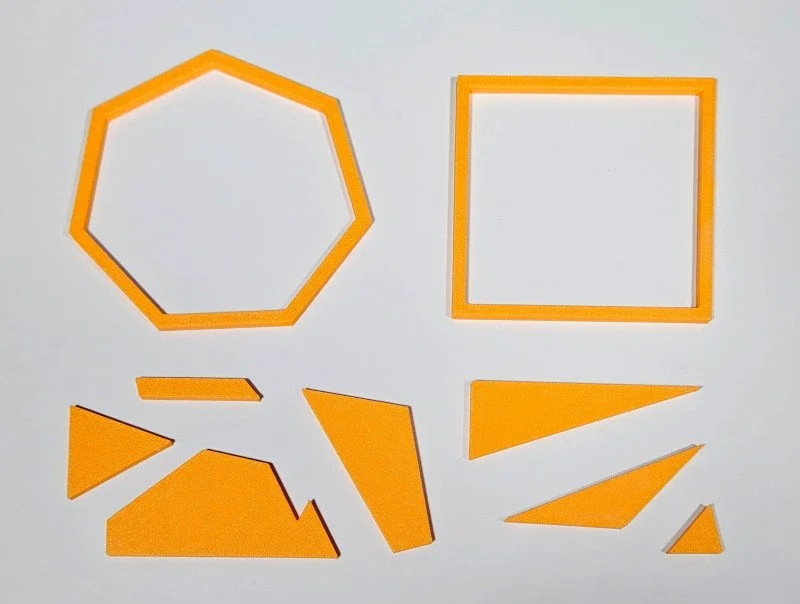
4-7: Square/Heptagon (7 pieces)
Discovered by Gavin Theobald.
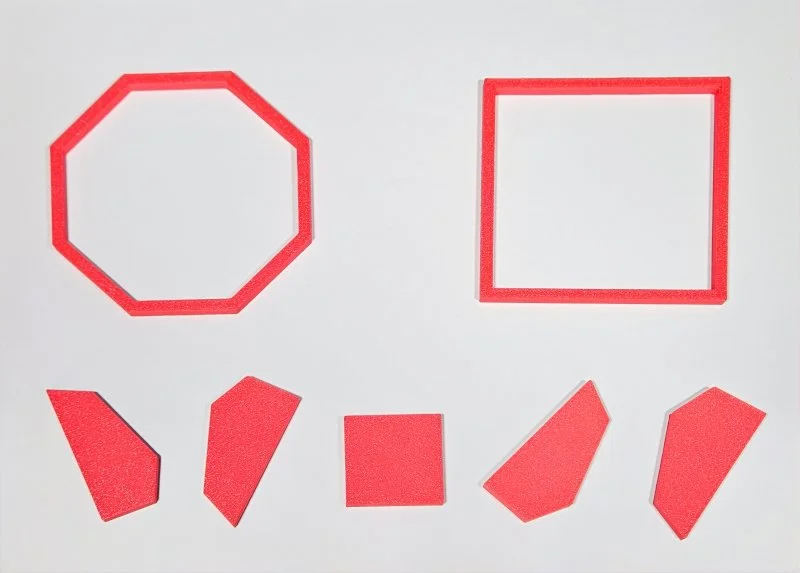
4-8: Square/Octagon (5 pieces)
From the anonymously authored Persian text, Interlocks of Similar or Complementary Figures, circa 1300 C.E.
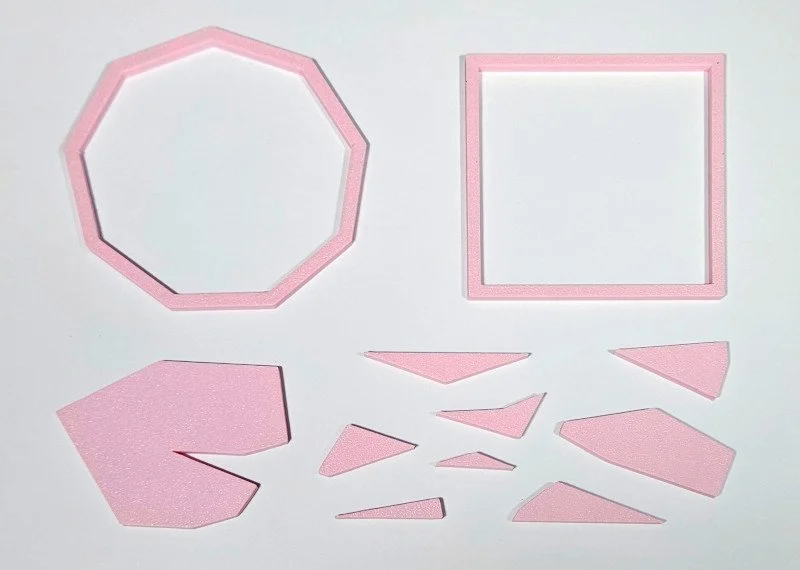
4-9: Square/Nonagon (9 pieces)
Discovered by Gavin Theobald.
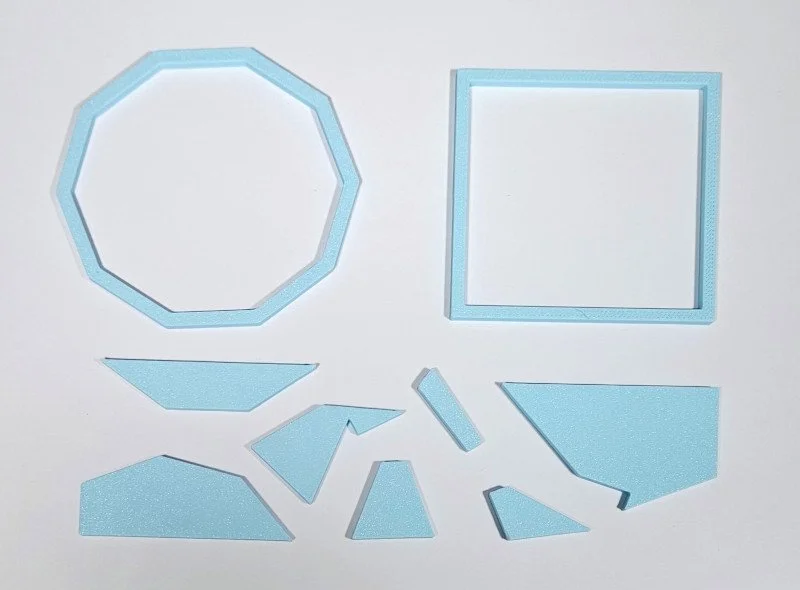
4-10: Square/Decagon (7 pieces)
Discovered by Gavin Theobald.
4-11: Square/Hendecagon (10 pieces)
Discovered by Gavin Theobald.
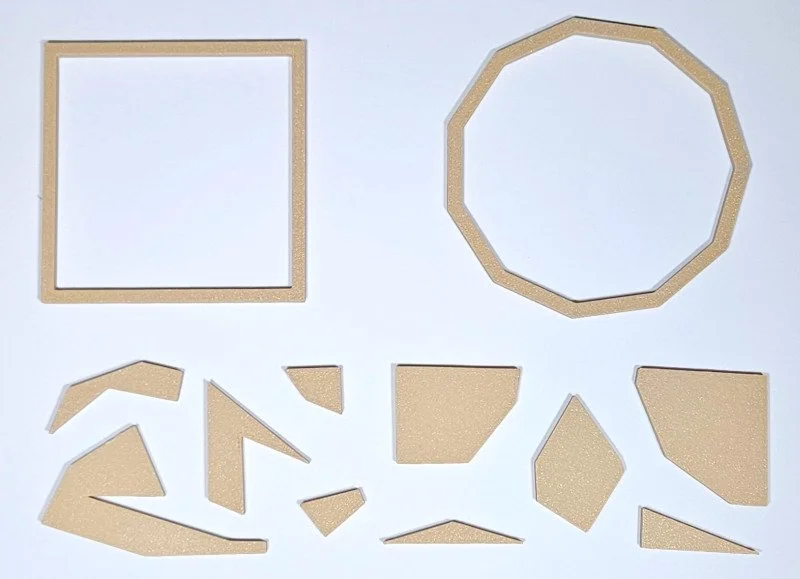
4-12: Square/Dodecagon (6 pieces)
Discovered by Harry Lindgren.
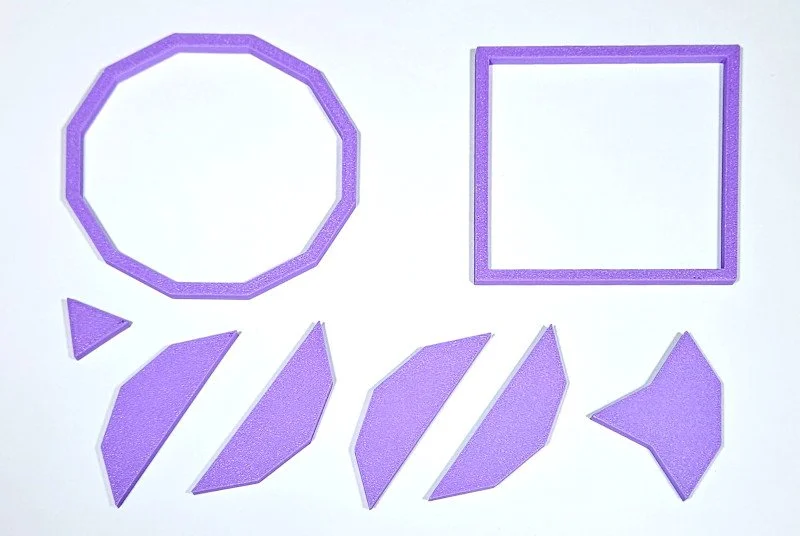
5-6: Pentagon/Hexagon (7 pieces)
Discovered by Ernest Irving Freese.
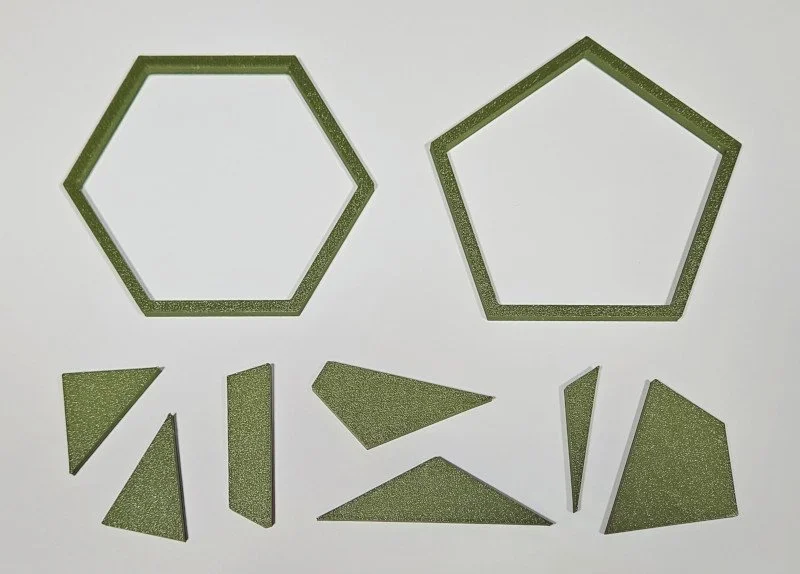
5-8 Pentagon/Octagon (9 pieces)
Discovered by Gavin Theobald.
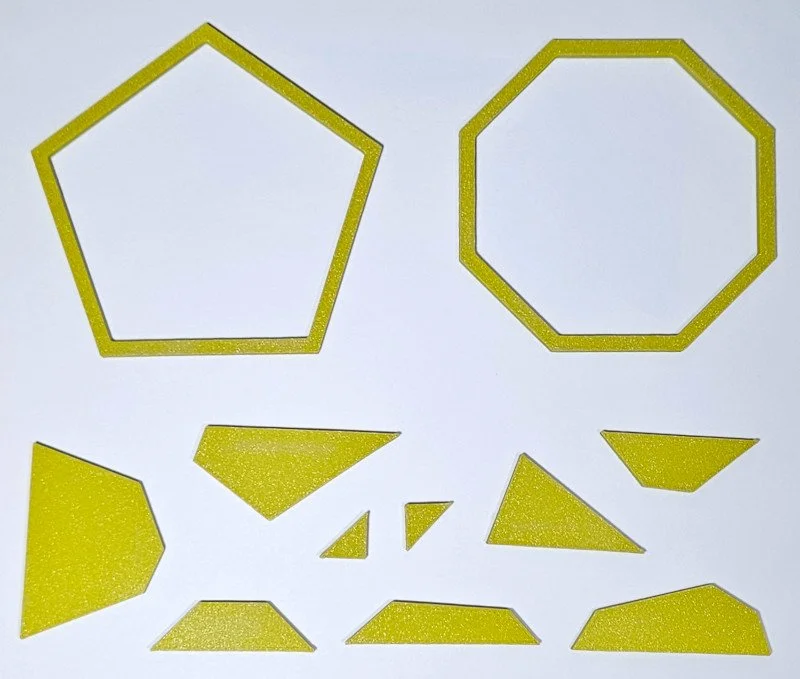
6-8: Hexagon/Octagon (8 pieces)
Discovered by Gavin Theobald.
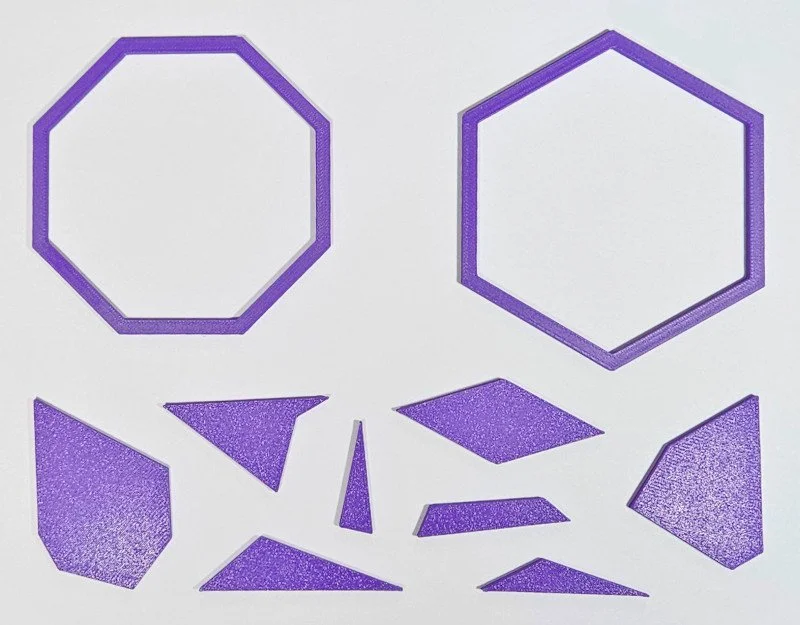
6-12: Hexagon/Dodecagon (6 pieces)
Discovered by Ernest Irving Freese.