
Intersections
A Public Art Exhibition
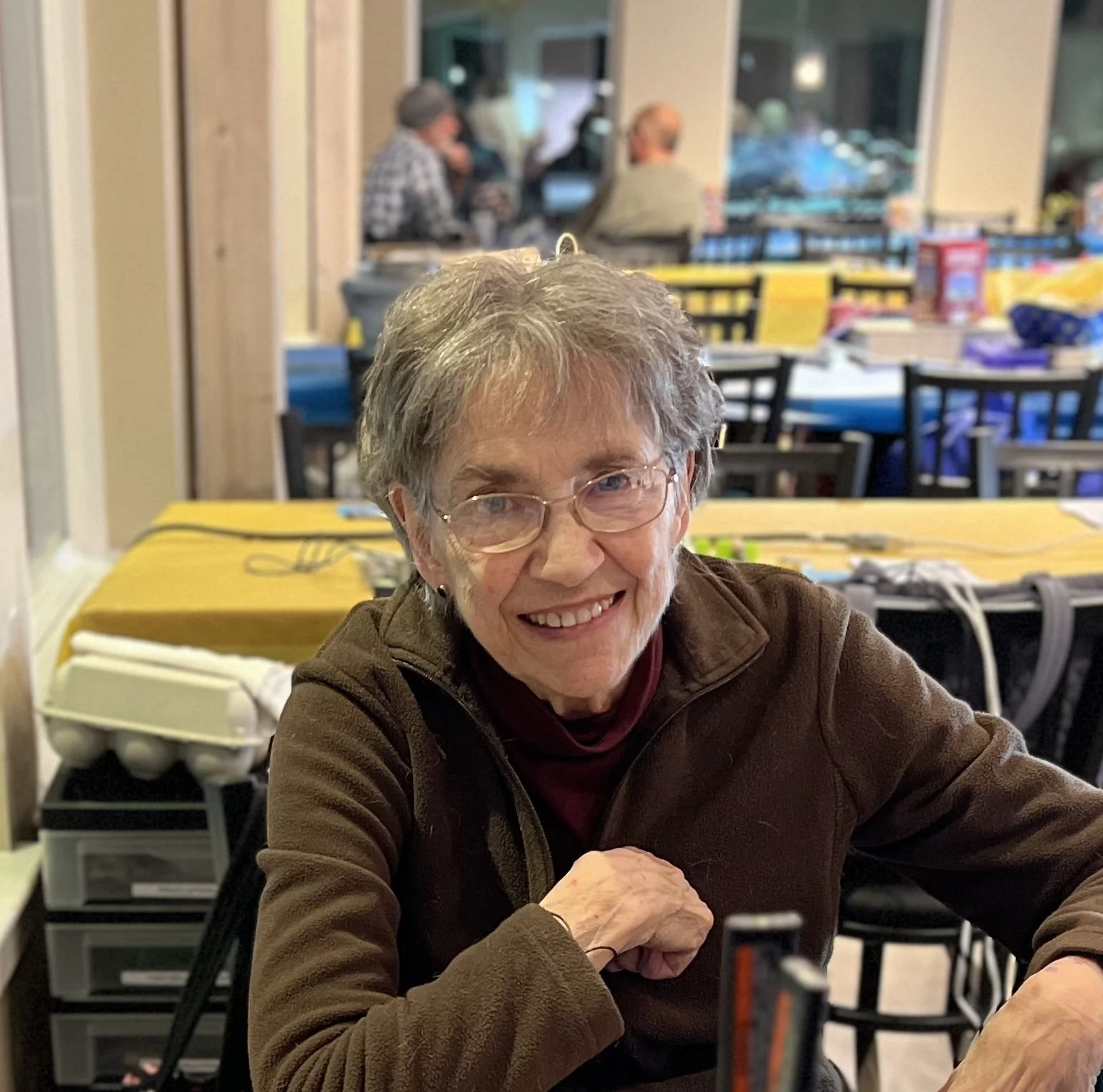
Susan Jones
Susan Jones discovered the art of Ukrainian Easter Eggs (pysanky) in the 1970’s and realized that the dividing lines on an egg are solid geometry (polyhedra). She challenged herself to adapt as many polyhedra to eggshells as she could, and it has been an incredibly fun project. A book is in the works!
Artwork
Roman Seniuk Woven Bands
Wax resist and chemical dyes on chicken egg
3” x 1.75” x 1.75”
$133
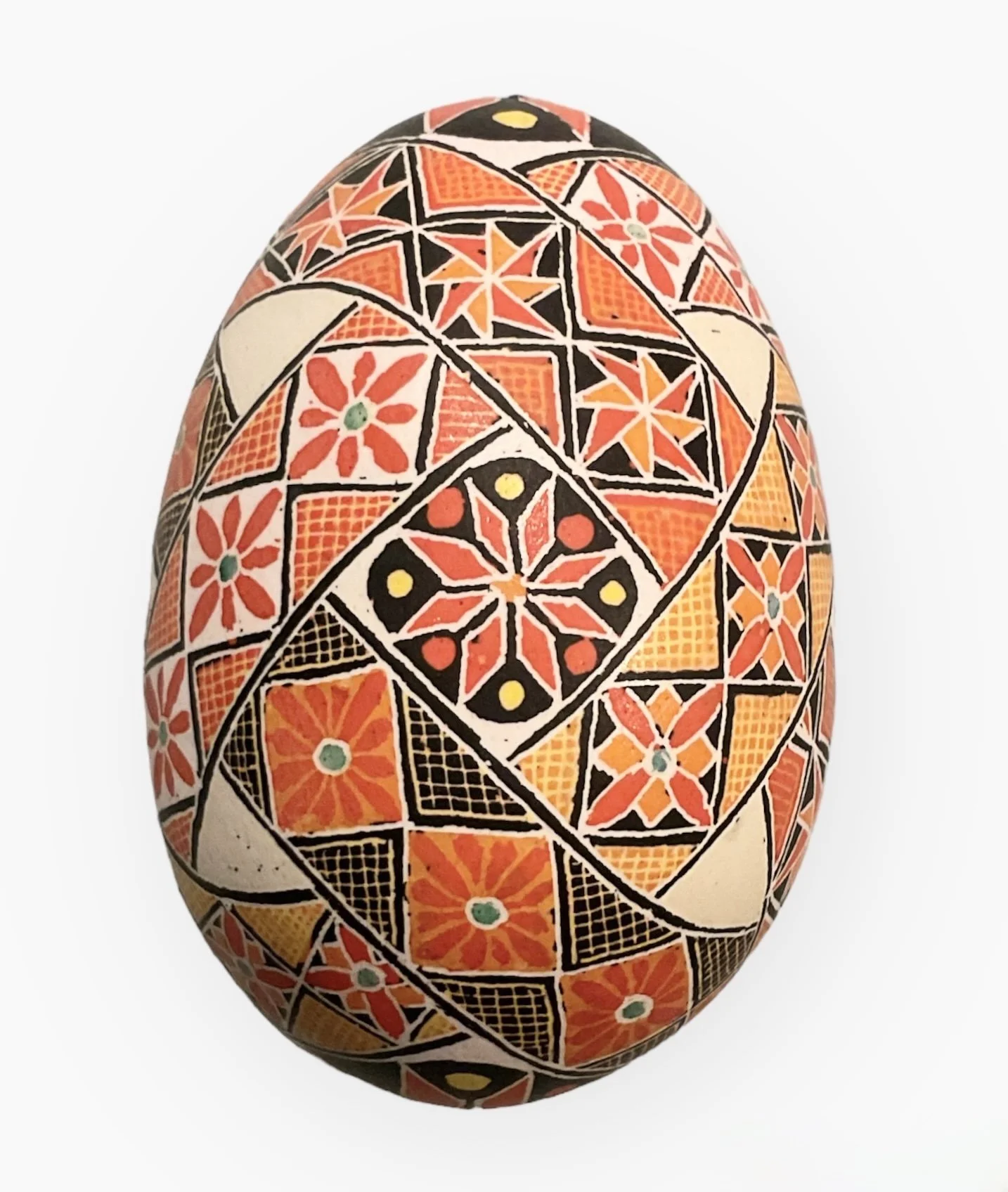
Decorating eggs using wax resist and dyes is the Ukrainian art of pysanky, and it is very ancient. Traditionally created to bless or protect home and harvest, pysanka patterns evolved in modern times into more elaborate — and more mathematical — designs, especially as Ukrainians emigrated to the United States and Canada. This egg is divided into what is close to a cuboctahedron with six square shapes and eight triangles. Each edge of the polyhedron is widened into a band and woven over and under as the four bands circle the egg. The design of this pysanka was copied from one written by the late Roman Seniuk, a Ukrainian-American from Detroit. The flower motif was one he often used. I see the Math and the Art of this egg as obvious, and the woven bands of pattern representing Truth and Humanity in an interweaving of our knowledge and our different cultures. (Notes: pysanka is the singular and pysanky the plural, from the Ukrainian verb pysaty, to write. Hence, these eggs are written, not drawn or painted or simply “made.”)