
Intersections
A Public Art Exhibition


Sabetta Matsumoto
Elisabetta (Sabetta) Matsumoto is an associate professor in the School of Physics at Georgia Institute of Technology. Her physics research centers around the relationship between geometry and material properties in soft systems, including liquid crystals, 3D printing and textiles. Her lab studies knitted textiles from the point of view of knot theory and as an additive manufacturing technique. She is also interested in using sewing, 3D printing and virtual reality in mathematical art and education.
Henry Segerman
Henry Segerman is an associate professor in the department of mathematics at Oklahoma State University. His research interests are in three-dimensional geometry and topology, and in mathematical art and visualization. In visualization he works in 3D printing, spherical video, virtual, and augmented reality. He is the author of the book "Visualizing Mathematics with 3D Printing".
Artwork
Geared Cube Net
3D-printed plastic
2” x 13” x 10”
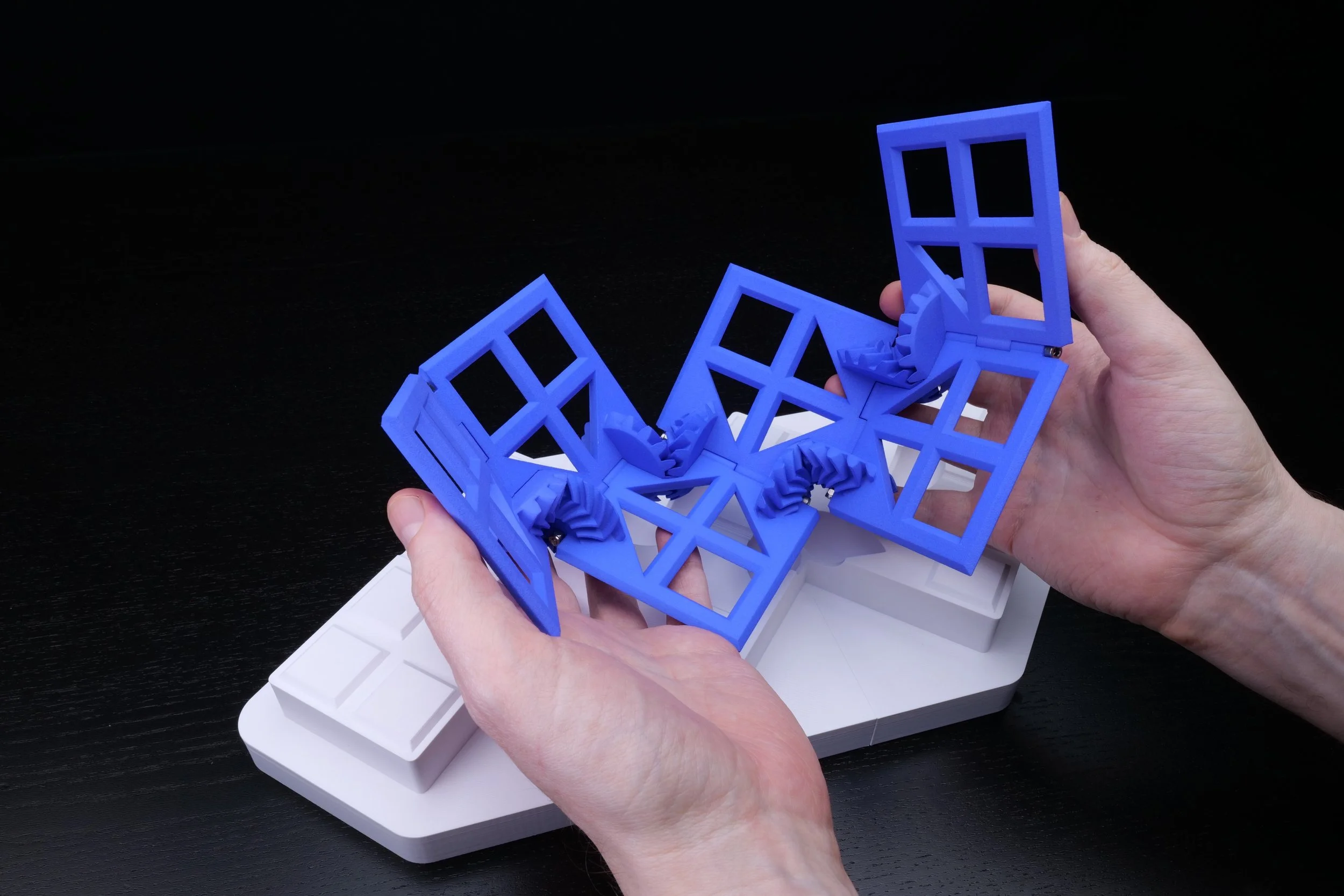
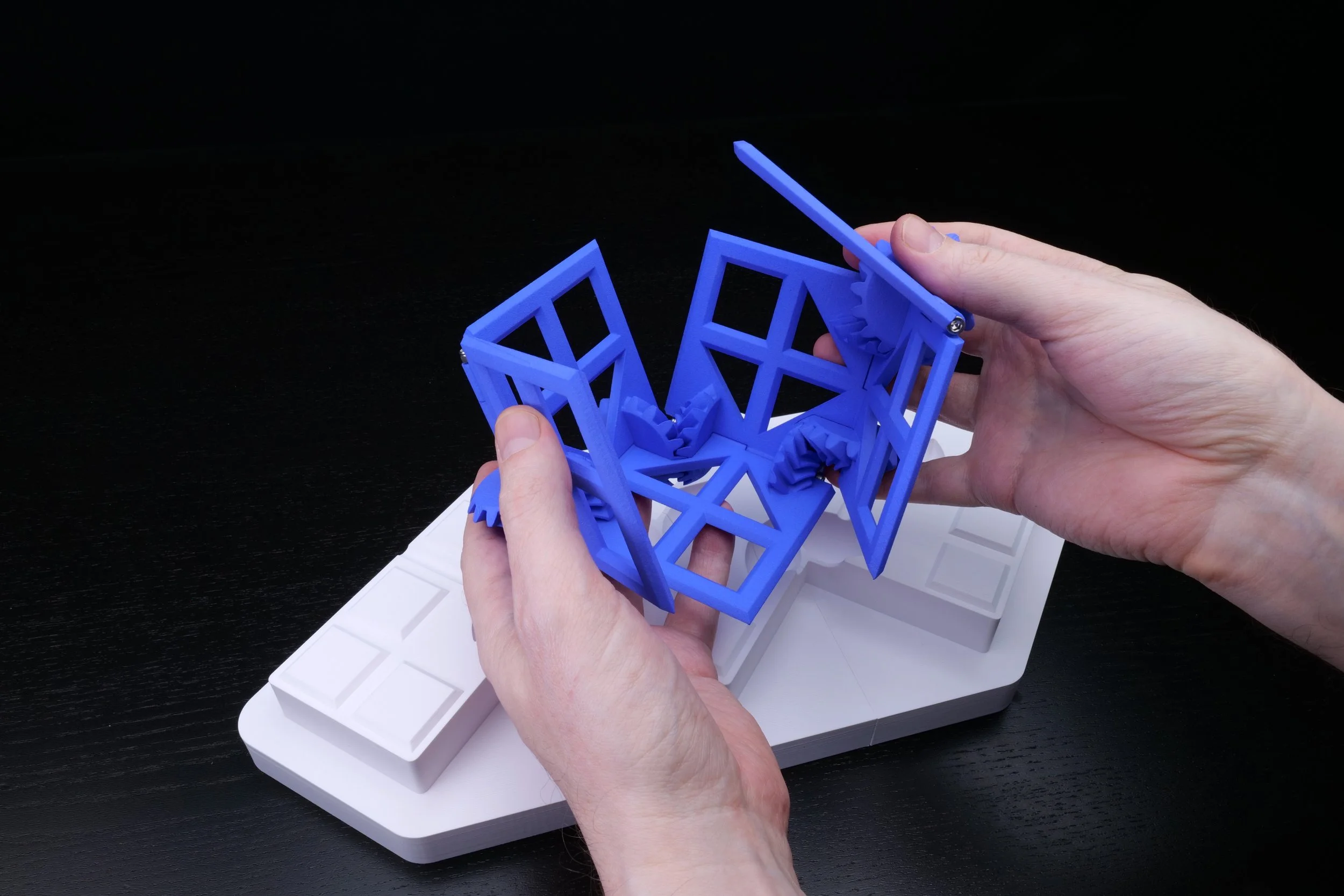
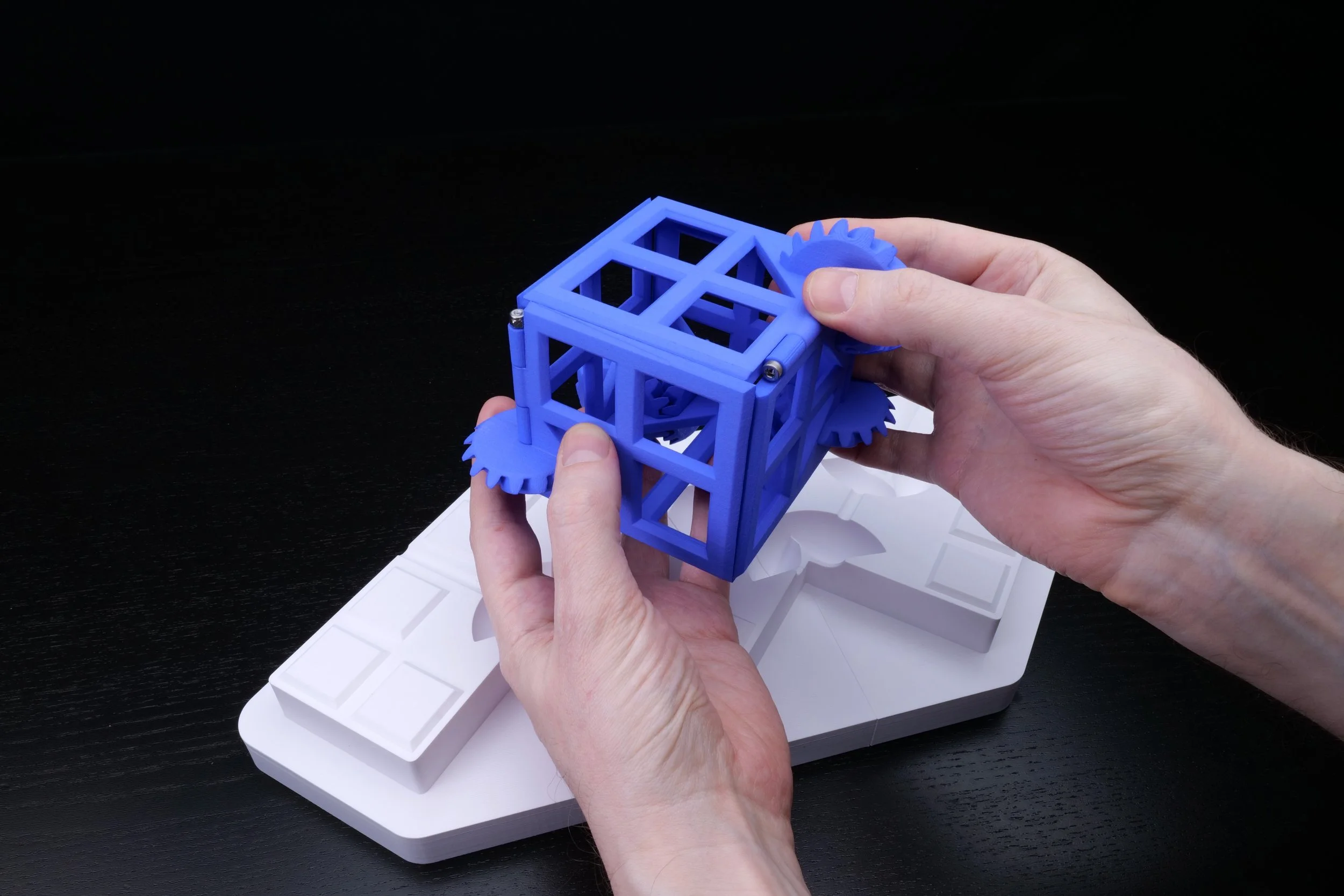
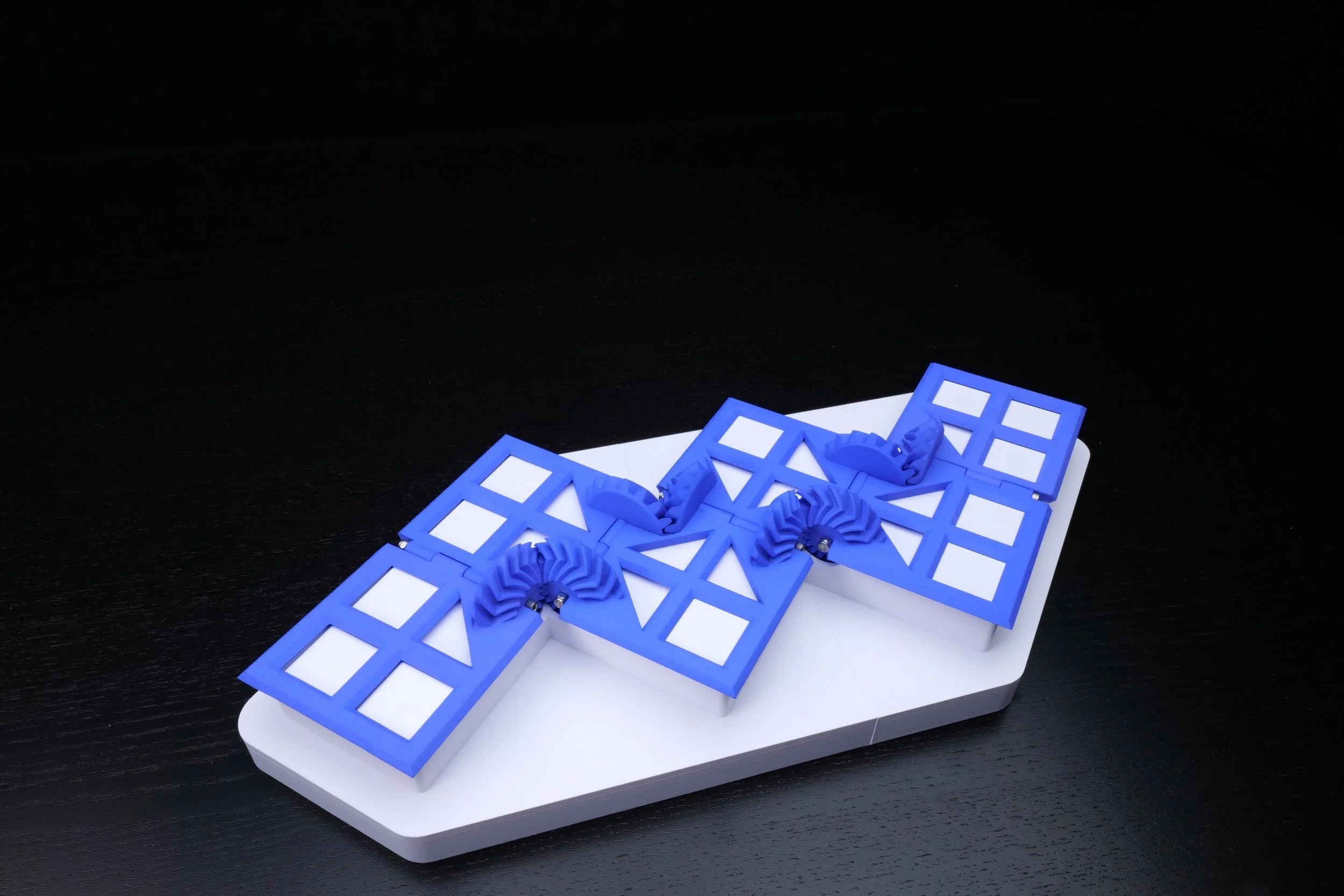
A net of a polyhedron is a way to cut the polyhedron along its edges so that it can be opened up and laid flat. Perhaps the most well-known net of the cube is a "cross" shape, but there are many others, including the zigzag pattern of six squares illustrated by this mechanism. The gears restrict the movement to a single degree of freedom.
This means that when someone picks up the mechanism, they cannot help but discover that the zigzag folds up to make a cube. (Video link to YouTube explanation)