
Math in… Raindrops
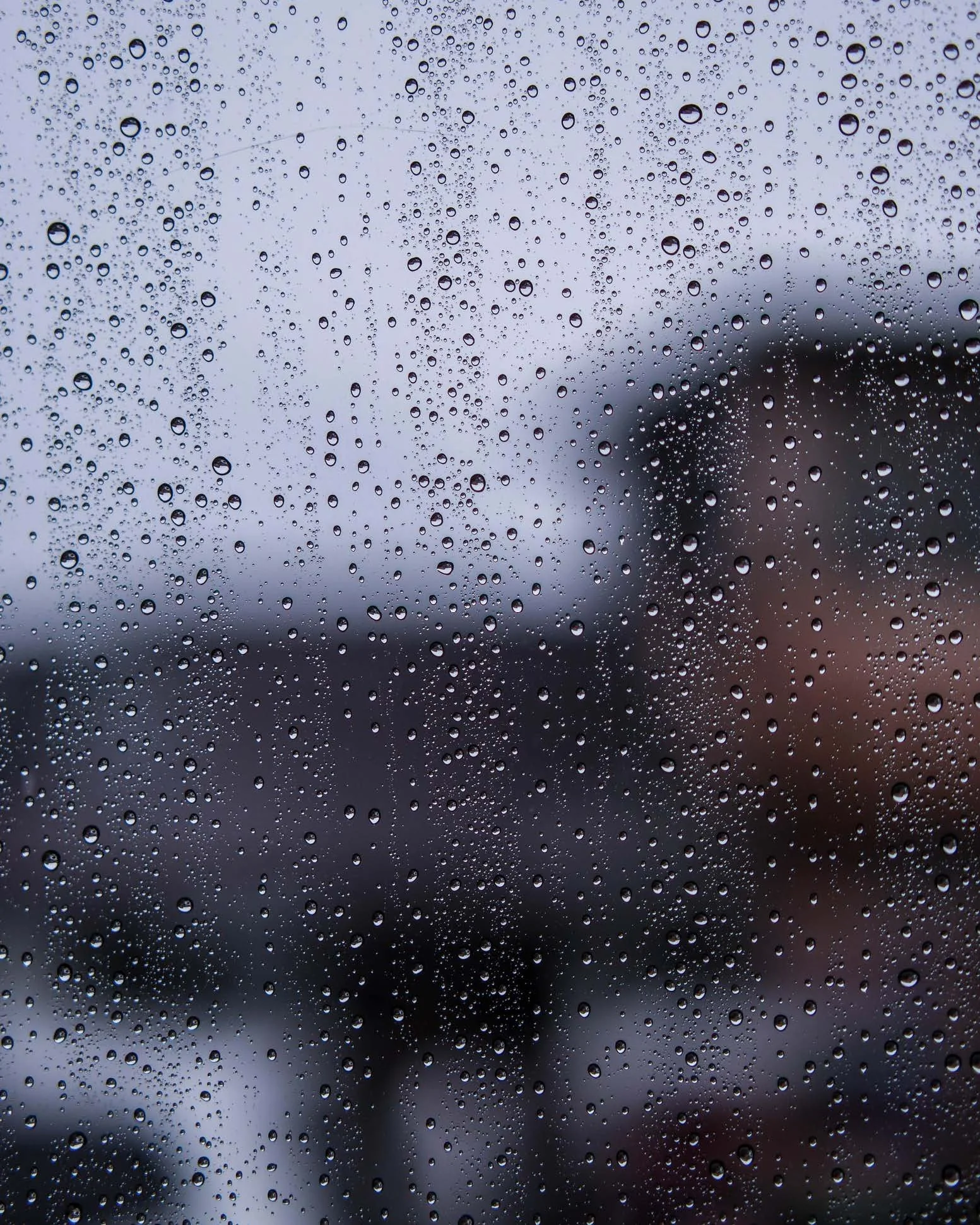
When you picture a falling raindrop, do you picture the teardrop shapes on the right? Most people do, but it turns out that's not quite right!
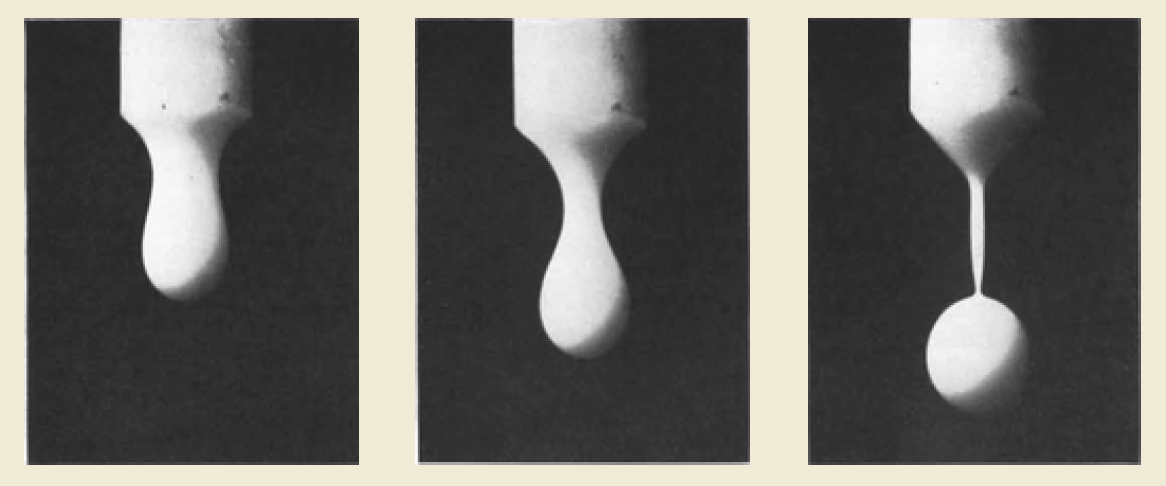
Below are some photos of a milk droplet taken by engineer and photographer Harold E. Edgerton.
The droplet starts out in a promising teardrop shape, but after it tears away from the dropper, it looks more spherical:
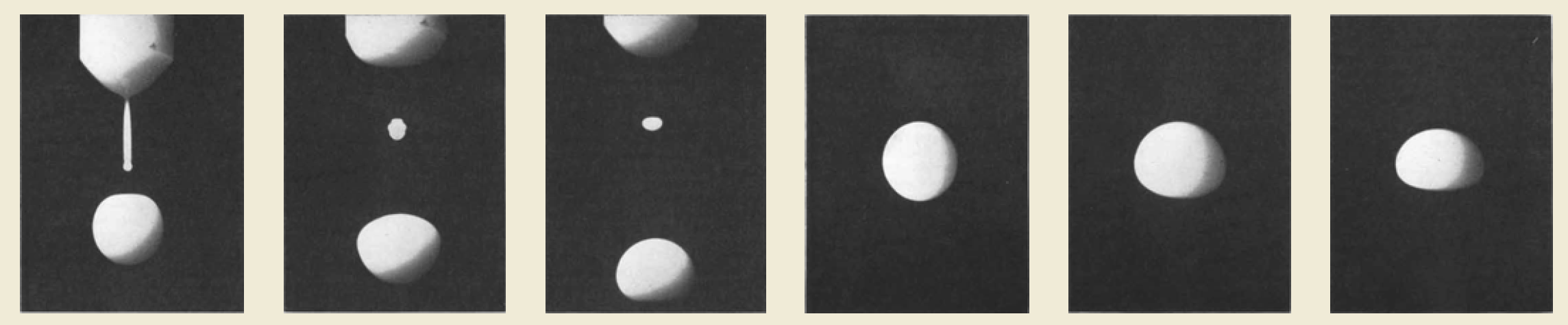
As it falls, we see it morph between shapes on a spectrum from sphere to hamburger bun:
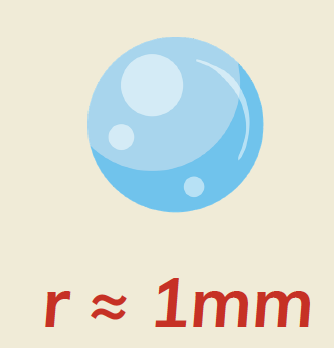
Per meteorology professor emeritus Alistair B. Fraser, there is different behavior for different sized drops. Take radius (r) to mean the radius of a sphere-shaped drop of the same volume.
Surface tension fights to keep water drops roughly spherical. Small raindrops maintain this shape.
For medium raindrops, the tug of war between surface tension and air resistance results in a drop shaped like a hamburger bun – round on top and flat on the bottom.
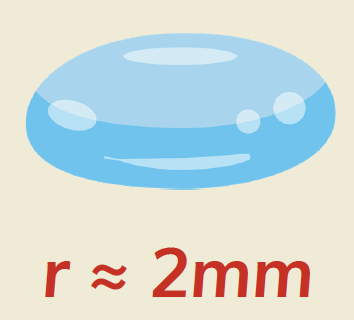
For large raindrops, air resistance starts to win out, making them concave on the bottom like a parachute.
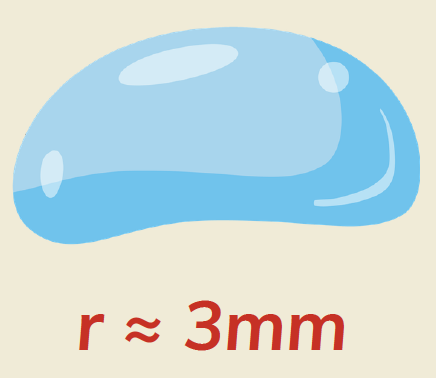
If a raindrop is very large (r > 4.5mm), the dimple on the bottom becomes the site where air pressure cleaves it into two or more drops.
One good reason people often assume raindrops have a teardrop shape is that the teardrop is a very aerodynamic shape. (There's a reason airplane fuselages taper to a point at the back!)

If we see a water droplet fresh from a faucet and still teardrop-shaped, we might just assume it takes on that aerodynamic shape to fall with minimal resistance.

However, the shape a raindrop takes as it falls seems to instead correlate with achieving the surface curvature required for maintaining uniform internal pressure.
Nature appears to be solving some sort of optimization problem with raindrop shapes – perhaps just not the one we might assume!
That said, lots of people use 💧 as a symbol for rain, including meteorologists.
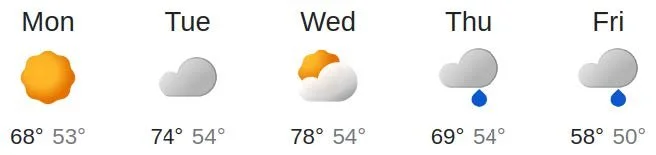
This coming week's forecast, as predicted on 5/8/26 (Google Weather)
If you know it's forecasted to rain on Thursday and Friday just by glancing at the graphic above, then 💧 is a great symbol for rain, even if it's not really what a raindrop looks like!
What other shapes in nature have surprised you?