
Math in… Vector Fields

Charged particles like electrons create electric fields. Physicists model these with vector fields. A field's strength follows an inverse-square law, stronger near the charge and weaker far away, as indicated by the lengths of the arrows.
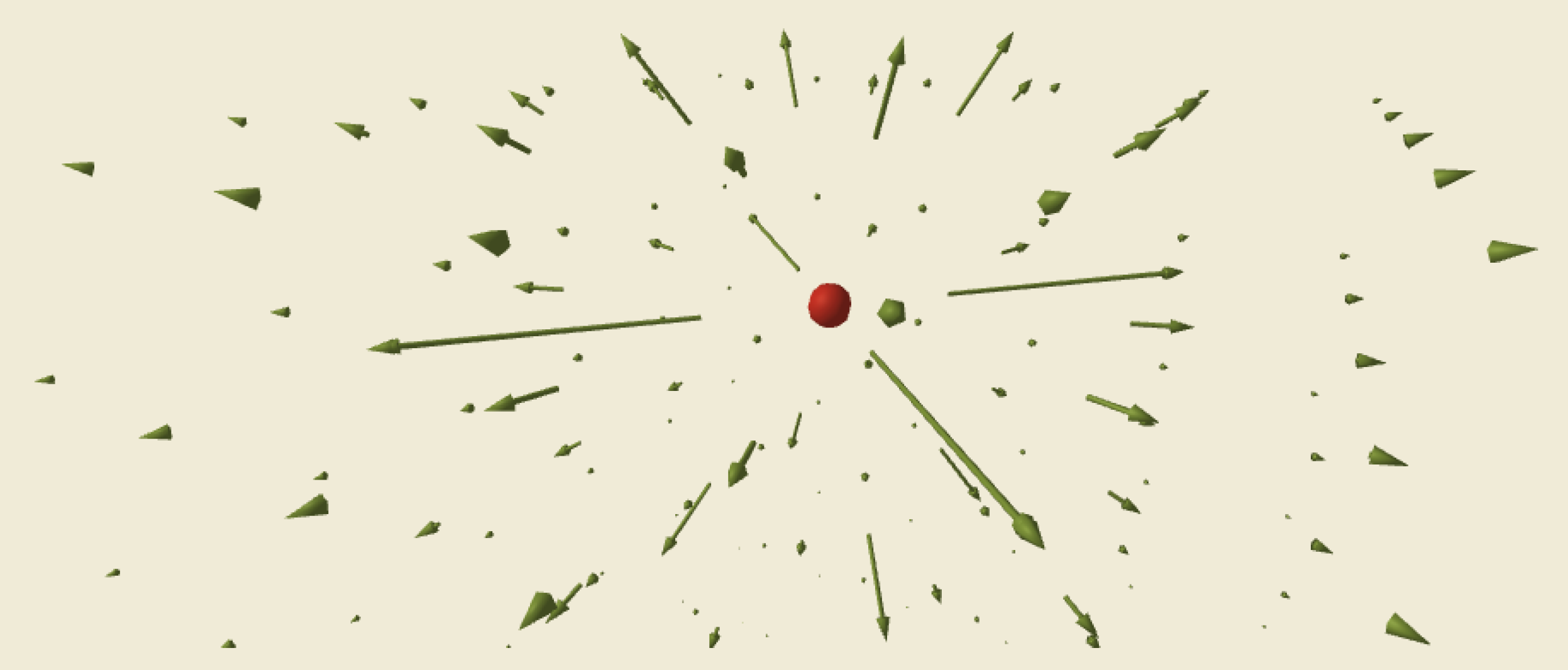
Whether a vector field's arrows point into or out of the electron is a matter of convention.
Outward-pointing arrows (like above) help you visualize how an electron pushes other negatively charged particles away.
Inward-pointing arrows could help you instead visualize how it pulls positively charged particles in.
When two charged particles are near each other, the resulting electric field is a superposition of their individual electric fields. Its vector field is what you get when you add the two vector fields, as pictured on the right for a (red) electron and (purple) proton.
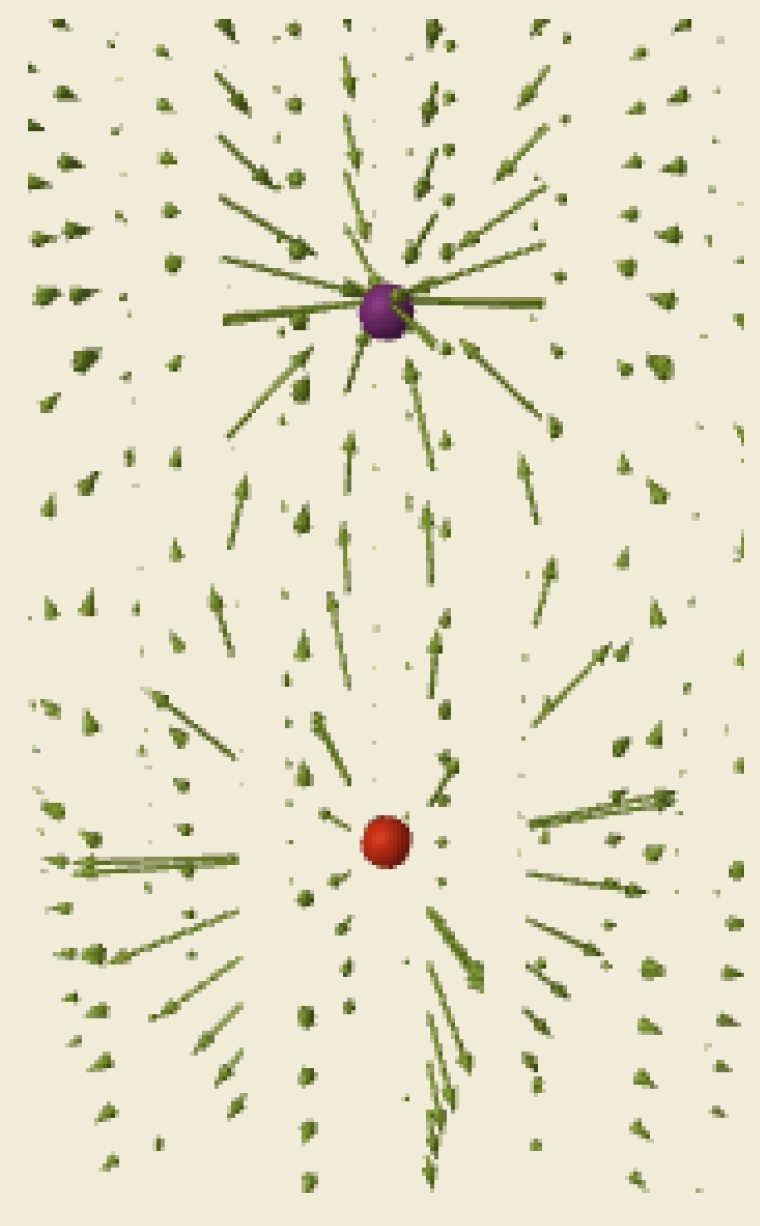
If we ignore the strength of the field and give every arrow the same length in our diagram, it's easier to see the curved paths a negatively charged particle would zip along as it moves away from the electron and toward the proton.
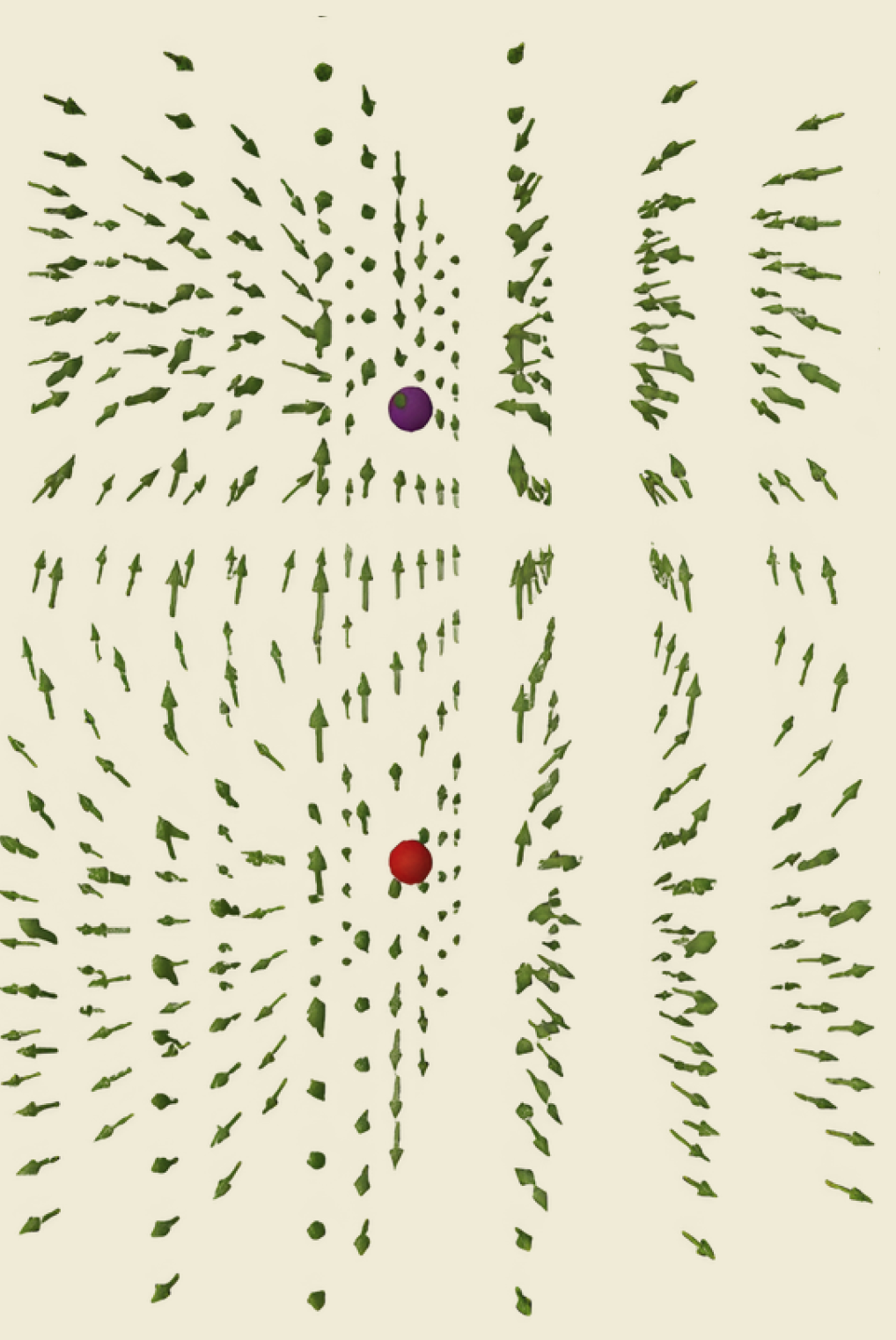
A single charged particle – like an electron or proton – is an electric monopole. Two oppositely charged particles form a dipole.
Magnets similarly create magnetic fields based on the dipoles formed by their north and south poles. If you place iron filings near a magnet, you'll see that they align with the magnetic field.
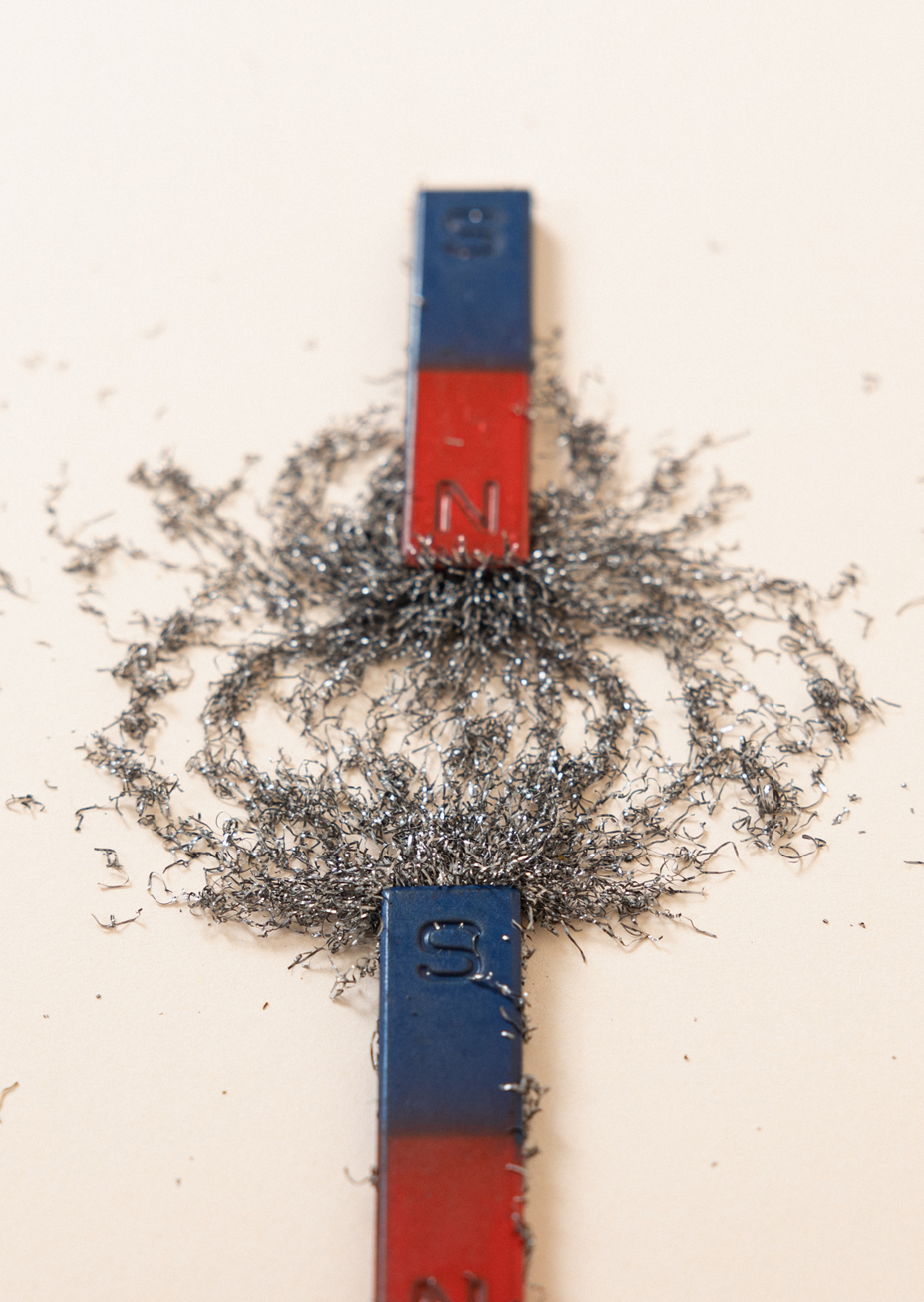
This gives a nice way to visualize an otherwise invisible magnetic field!
When you use a compass, the needle similarly aligns itself to Earth's magnetic field, allowing you to find your way to the magnetic north pole.

A model of Earth's magnetic field. Source: NASA
While there are plenty of examples of electric monopoles and dipoles in nature, scientists have never found a magnetic monopole – only dipoles!
How else can math help us understand electricity and magnetism?