
Intersections
A Public Art Exhibition

Alice Finch
Alice Finch is an award-winning LEGO artist, designer, builder, educator, and author. Her models combine intricate details with world building that tells stories, sparks meaningful conversations, and connects people. She often builds collaboratively and volunteers in schools so kids can use bricks as a collaborative creative medium. She also leads research and promotes ways to make the LEGO community more welcoming and equitable. She co-founded the Women’s Brick Initiative and the Brick Alliance to focus on the importance of equity, diversity, inclusion, and belonging across all aspects of the LEGO ecosystem.
Artworks
Embracing the Angles
LEGO bricks
20" x 30"
$1,500
“
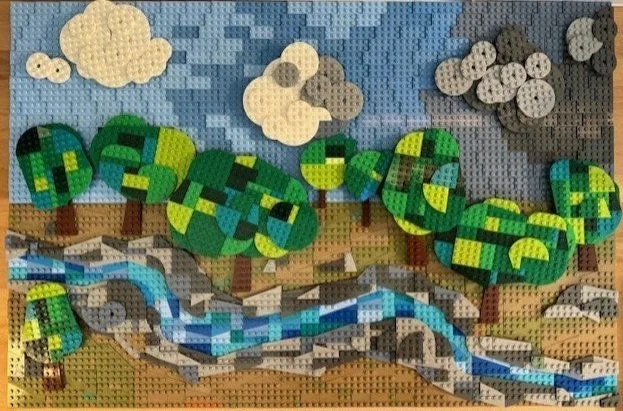
As part of an exploration of LEGO bricks as a painting rather than a building medium, this landscape uses elements that embrace the 'squareness' and make it a feature rather than an inconvenient drawback. Elements only come in certain angles/shapes and certain colors and that is part of the challenge of 'painting' with something that has built in limitations–you have to do the math to figure out how to make it do what you want it to do.
„
Local Leader Mosaic Portraits: Ijeoma Oluo and Gary Locke
LEGO bricks
20" x 30" each
$1,500 each
“
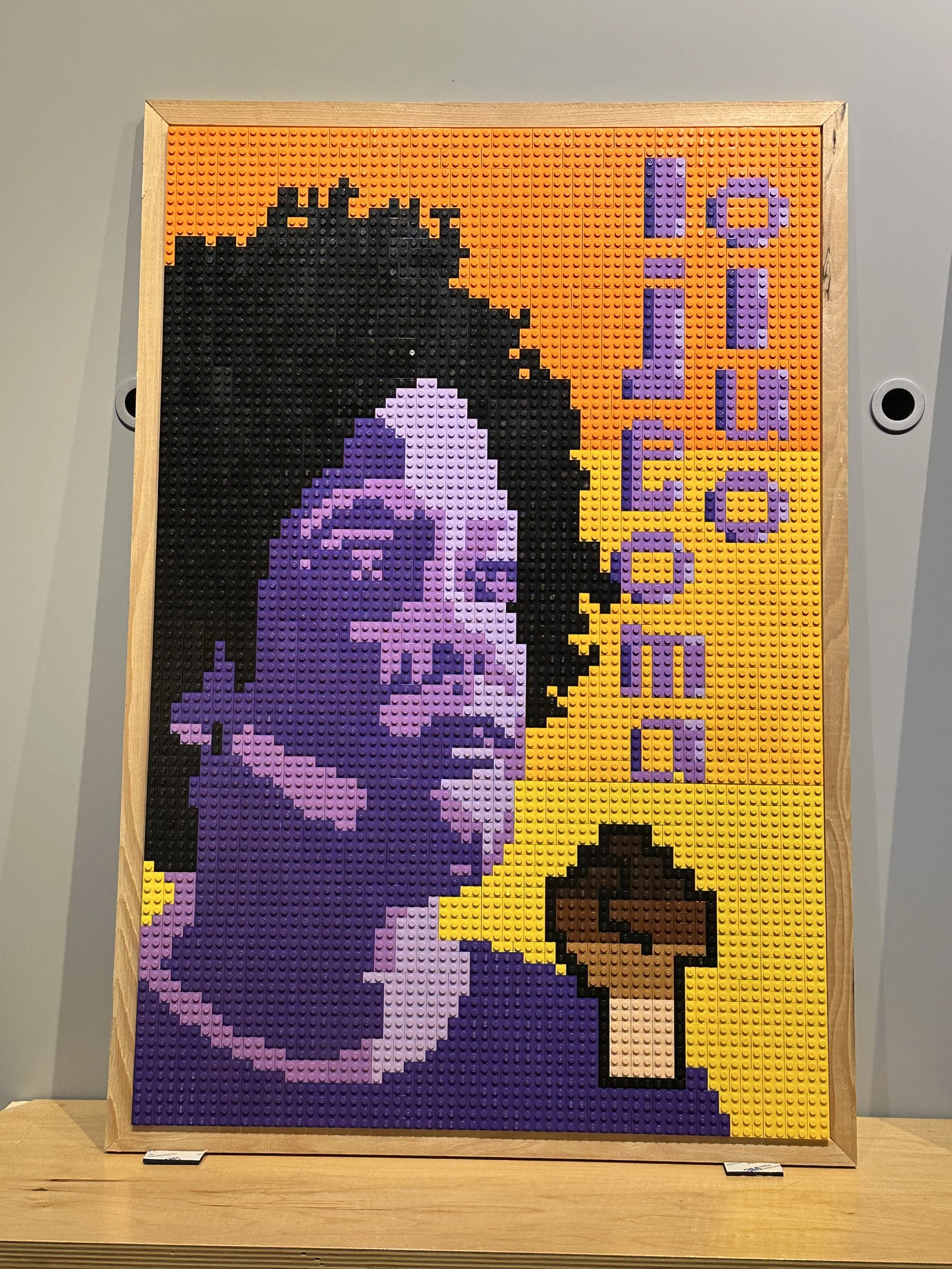
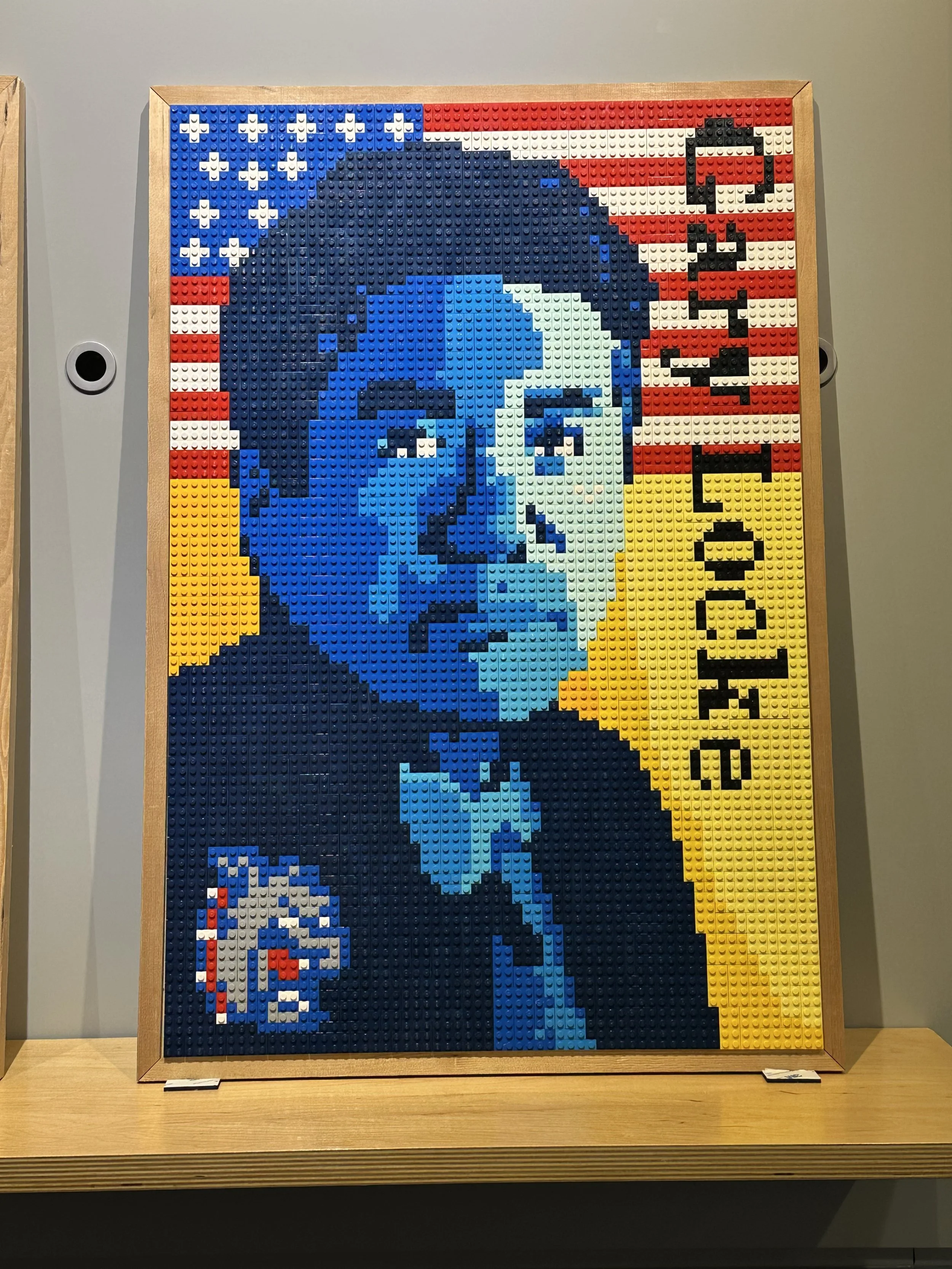
These portraits were part of a six week collaboration with Julie Biggs and her 7th and 8th grade students in her Art II classes at Islander Middle School on Mercer Island.
This project focused on portraiture in combination with the shading and contrast of the LEGO palette. The portraits of Ijeoma Oluo and Gary Locke are two of the best that achieved all of the goals of the project: work collaboratively to design and build a colorful portrait honoring the work of a local leader using LEGO bricks in the style of Shepard Fairey.
A significant part of building these portraits is figuring out what the most efficient use of five different types of bricks in the shapes created by layers of shading. It is a geometric puzzle that often requires building, unbuilding, and building again. In addition, the edges of the bricks create subtle patterns that have to be considered as they can become a positive emphasis or a negative distraction.